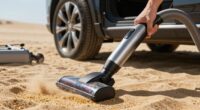
To clean rubber car mats without making them slick, start by removing them from your vehicle and shaking out loose debris. Use a vacuum for thorough cleaning on both sides, paying attention to grooves. Scrub with a neutral detergent using a soft-bristle brush, focusing on stains. Rinse well with a hose to remove all soap residue. After drying, avoid silicone-based dressings, as they can create a slick surface. Stick around to discover more tips for maintaining your mats!
Listen free for 30 days with Audible
Thousands of audiobooks and originals — cancel anytime.
As an affiliate, we earn on qualifying purchases.
Key Takeaways
- Use a neutral detergent or rubber-safe cleaner to avoid leaving a slick residue on mats.
- Rinse thoroughly with a hose to ensure all cleaning solution is removed.
- Air dry completely before reinstalling to prevent moisture that can cause slipperiness.
- Blot excess water with microfiber towels to reduce slickness during drying.
- Apply a silicone-free dressing to restore color without creating a slippery surface.
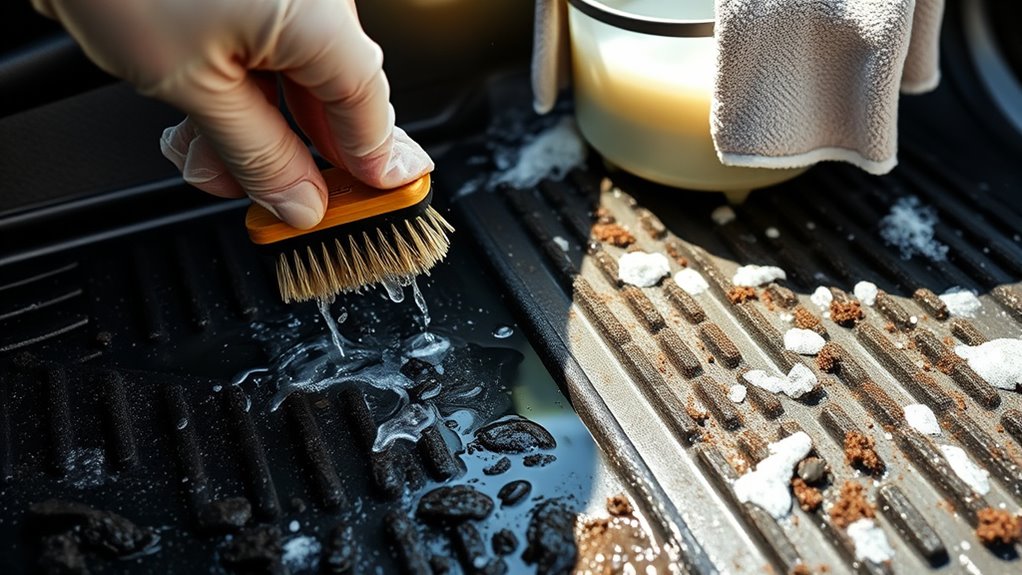
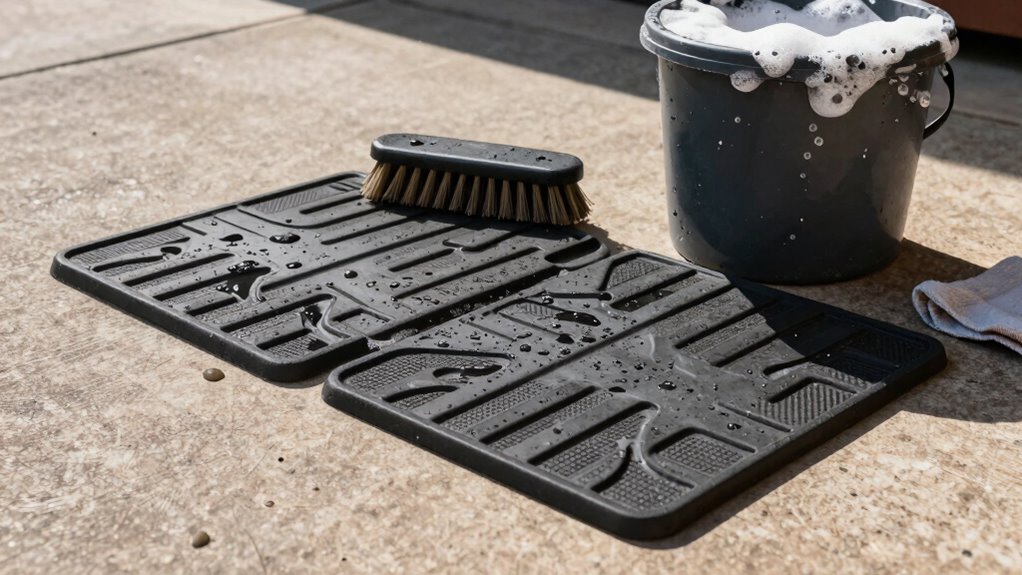
When it comes to maintaining your vehicle’s cleanliness, cleaning rubber car mats is vital, especially since they often trap dirt, mud, and spills. Start by removing the mats from your vehicle to prevent any mess inside. Shake them vigorously to dislodge loose dirt, sand, and debris. Vacuum both sides thoroughly, paying close attention to the grooves and crevices where dirt tends to hide. If you have a hose, give the mats a pre-rinse to remove surface debris before moving on to deeper cleaning.
For cleaning supplies, gather a hose with a spray nozzle or a bucket of warm water for rinsing, along with a soft-bristle or stiff-bristle brush for scrubbing. A vacuum cleaner will help with loose dirt removal, and microfiber or paper towels will be essential for drying. You can use a neutral detergent, light dish soap, or a rubber-safe cleaner for the cleaning solutions. If you’re facing particularly filthy mats, consider a product like Mat ReNew Rubber + Vinyl Cleaner, letting it sit for a few minutes before scrubbing. Gentle hand washing is a preferred method to preserve the longevity of your mats. Additionally, using connected equipment can help streamline your cleaning process by providing precise instructions and reminders.
When it’s time to scrub, use your brush in a circular motion to agitate the cleaner into the grooves and any tough stains. If necessary, spray the cleaner directly onto the brush for a deeper clean. Always let the cleaner dwell without drying before scrubbing to make sure it breaks down the grime effectively. After scrubbing, rinse the mats thoroughly with the hose, focusing on the grooves to blast out any remaining dirt and detergent. Make sure to give them a complete rinse to prevent any residue that could cause stickiness.
Once you’ve rinsed them, blot any excess water with microfiber towels or paper towels. It’s vital to air dry the mats completely before reinstalling them to avoid moisture buildup in your vehicle. If you’re in a hurry, a car blow dryer can help expedite the drying process. After drying, inspect the mats for any remaining spots or dark patches, indicating residual cleaner. If you spot any, give them another rinse.
To protect your mats, consider applying a silicone-free, water-based dressing that restores color without making the surface slick. Avoid harsh chemicals like chlorine bleach, as they can damage rubber. Always ensure the mats are completely dry before putting them back in your vehicle, as any moisture can lead to slipping or mold. With these steps, you’ll keep your rubber car mats clean and safe without leaving them slick.
Frequently Asked Questions
Can I Use Bleach to Clean Rubber Mats?
No, you shouldn’t use bleach to clean rubber mats. Mixing bleach with ammonia-based cleaners can create harmful fumes. Stick to mild all-purpose cleaners or citrus-based products instead. These will clean effectively without damaging the rubber or leaving residues. If you’ve got tough stains, consider a degreaser formulated for rubber. Always test any cleaner on a small area first to confirm it won’t affect the mat’s finish. Keep your mats safe and clean!
How Often Should I Clean My Rubber Car Mats?
Ever wondered how often you should clean your rubber car mats? You should clean them at least once a month, or more often if you live in a muddy area or during winter months. Regular cleaning prevents dirt buildup, keeps your mats looking fresh, and maintains their durability. If you notice grime or odors, don’t hesitate to give them a quick clean. After all, a clean car enhances your driving experience!
What Tools Do I Need for Cleaning Rubber Mats?
You’ll need a few essential tools for cleaning your rubber mats effectively. Grab a medium-stiff nylon brush or tire brush for scrubbing the grooves, and a soft-bristled brush for tight spots. A vacuum cleaner is vital for removing loose dirt, while a hose or pressure washer helps with rinsing. Don’t forget microfiber towels for drying and a mild all-purpose cleaner or dish soap to cut through grime. These tools will make your cleaning process smoother!
Are There Any Specific Brands of Cleaners Recommended?
For cleaning rubber car mats, you can use brands like Simple Green or Meguiar’s All-Purpose Cleaner. Both are effective and safe for rubber surfaces. If you need a degreaser, consider using Zep Heavy-Duty Citrus Degreaser. Always dilute according to the instructions. Just remember to avoid oil-based or silicone products, as they can create a slippery finish. Test any cleaner on a small area first to verify it won’t damage the mat.
Can Rubber Mats Be Machine Washed?
You might be tempted to toss your rubber mats in the washing machine, but hold on! It’s generally not recommended. The agitation and heat can warp or damage them, ruining their fit and function. Instead, stick to hand cleaning methods. With the right approach, you’ll maintain their shape and extend their life. So, keep those mats out of the machine and give them the care they truly deserve!
Conclusion
With a little effort, you can bring your rubber car mats back to life without a slick finish. Remember to rinse thoroughly and dry them well; it’s like giving your mats a invigorating drink after a long, dusty journey. By following these steps, you’ll ensure they stay clean and safe underfoot. So, roll up your sleeves, grab those supplies, and transform your mats into a fresh, non-slip haven. Your car—and your feet—will thank you!
Fall yard work Picks
leaf blowers
As an affiliate, we earn on qualifying purchases.