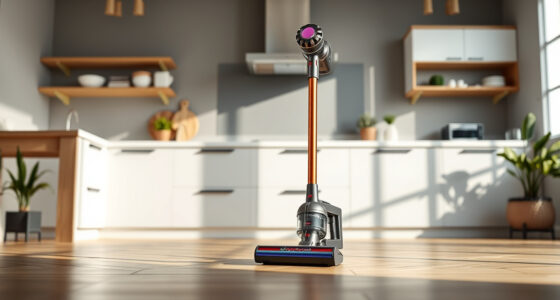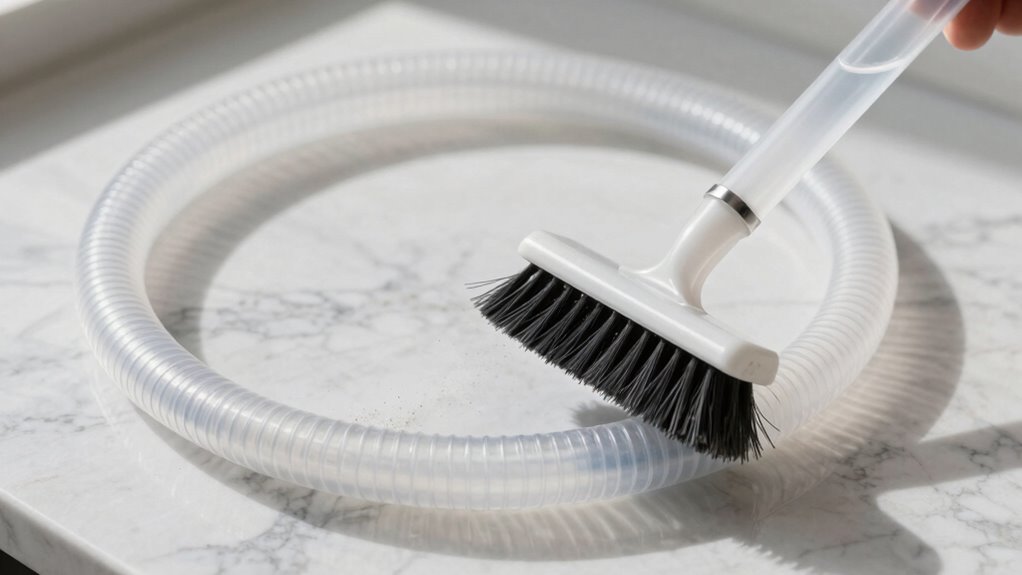

To clean your vacuum hose without puncturing it, unplug the vacuum and inspect the hose for damage. Remove loose debris by shaking it out, then use a long flexible brush to dislodge any clogs. Soak the hose in warm, soapy water for 10-15 minutes while keeping it in a U-shape. After scrubbing, rinse thoroughly and let it air dry completely. Check for issues before reattaching it to guarantee peak performance. You’ll find more detailed steps ahead.

Get cleaning gear delivered free — and shop member deals
- Fast, free delivery on millions of items
- Access to Prime Big Deal Days deals on October 6–7
- Prime Video, Amazon Music and more included
Key Takeaways
- Always unplug the vacuum and disconnect the hose before cleaning to ensure safety and prevent accidental activation.
- Use a long flexible brush to gently scrub the interior without applying excessive force that could puncture the hose.
- Soak the hose in a warm water and dish soap solution while holding it in a U-shape to cover the entire interior.
- Rinse the hose thoroughly with running water to remove all soap and debris, ensuring no residue remains that could cause blockages.
- Allow the hose to air dry completely before reattaching to the vacuum to prevent mold growth and damage.

Cleaning your vacuum hose is essential for maintaining its suction power and extending its lifespan. To get started, unplug your vacuum and disconnect the hose. This step is crucial to prevent any accidental activation and ensure your safety. Take a moment to inspect the hose for any visible damage; look for cracks or punctures that may worsen during cleaning. Gather your supplies: a long flexible brush, dish soap, clean towels, and a bucket or sink for soaking.
Cleaning your vacuum hose is vital for optimal suction and longevity; start by unplugging and inspecting for damage.
Begin by shaking out loose debris from both ends of the hose. If you notice clogs, insert a dryer vent brush or a broom handle gently to dislodge them. If the interior is heavily gunked, consider using a drill with a long rod and a brush attachment for a more thorough clean. Once the initial debris is removed, prepare a soaking solution using warm water and a few drops of dish soap. Submerge the hose in the solution for about 10-15 minutes to loosen any stubborn grime. If odors or heavy dirt are an issue, you can add diluted bleach to your soak. Just remember to dilute it heavily to avoid damaging the hose material. Additionally, you can consider using natural cleaning products for a more eco-friendly solution that helps maintain your vacuum.
While the hose is soaking, you can scrub the interior with your long flexible brush. Use a gentle motion to avoid puncturing the lining. If necessary, hold the hose in a U-shape to ensure you reach all areas. After scrubbing, rinse the hose thoroughly with running water. Ensure you flush both the inside and outside, shaking it to agitate any remaining dirt. It’s vital to eliminate all soap residue to prevent future blockages. Regular checks can also help to ensure optimal vacuum performance.
Once rinsed, shake off excess water and lay the hose flat on a clean, dry towel or hang it over a rod to air dry completely. This step is crucial to avoid mold growth inside the hose. Wipe down any non-soakable parts with an all-purpose cleaner on a microfiber cloth. Before reattaching the hose, ensure it’s entirely dry. If you notice any debris or damage during your inspection, address those issues before putting the hose back on your vacuum.
Finally, reconnect the hose and run the vacuum briefly to check for any unusual noises or reduced suction, indicating incomplete cleaning or new punctures. By following these steps, you’ll keep your vacuum hose in excellent condition, ensuring it works effectively for years to come.
Frequently Asked Questions
How Often Should I Clean My Vacuum Hose?
You should clean your vacuum hose at least once every few months, but if you notice a decrease in suction or see visible debris buildup, it’s time for a cleaning. Regular maintenance helps prevent clogs and keeps your vacuum running efficiently. If you use your vacuum frequently or have pets, consider cleaning more often. Just make sure to inspect it for any damage while you’re at it to prolong its lifespan.
Can I Use Bleach to Clean the Hose?
No, you shouldn’t use bleach to clean your vacuum hose. It’s too harsh and can damage the materials, weakening the structure over time. Instead, opt for mild detergents or a vinegar-baking soda mix to sanitize without the risk of punctures. You’ll want to protect your hose’s integrity while ensuring it’s clean. So, stick with gentler options to keep your vacuum in top shape and avoid any unexpected mishaps.
What if My Vacuum Hose Is Too Long to Clean?
If your vacuum hose is too long to clean easily, try using a long flexible brush specifically designed for vacuum hoses. You can also detach the hose and shake or tap it to dislodge debris. For stubborn blockages, consider flushing the hose with a low-pressure garden hose. Just make certain you keep both ends elevated during the process for effective drainage. Regular maintenance will help prevent future buildup in hard-to-reach areas.
Is It Safe to Wash the Hose in a Washing Machine?
No, it isn’t safe to wash your vacuum hose in a washing machine. The agitation and heat can damage the hose material, leading to punctures or warping. Instead, opt for manual cleaning methods that allow you to control the process and avoid potential harm. Always inspect the hose for wear before cleaning, and use gentle techniques to maintain its integrity while ensuring it remains free of debris and odors.
How Can I Tell if My Hose Needs Replacing?
If your vacuum hose is a weary soldier, showing signs of wear and tear, it might be time for a replacement. Check for cracks, punctures, or kinks that compromise its integrity. If it’s losing suction or you hear strange noises, those are red flags. A hose that’s more patchwork than solid can hinder your vacuum’s performance. Trust your instincts; if it looks tired, it’s probably time to retire it for a new one.
Conclusion
Cleaning your vacuum hose is as essential as giving your car a tune-up; it keeps everything running smoothly. By following the steps outlined, you can easily remove clogs and debris without risking damage. Regular maintenance not only extends the life of your vacuum but also improves its performance. So, don’t wait until your vacuum loses suction—make cleaning the hose a part of your routine. A clean hose means a cleaner home, and that’s what we all want!
Fall Picks
fall essentials
As an affiliate, we earn on qualifying purchases.