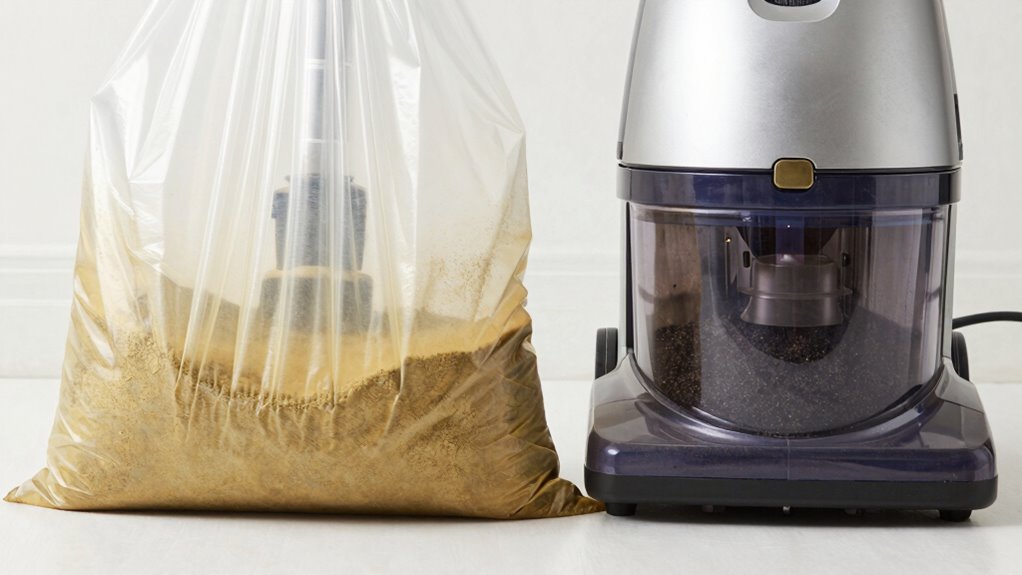

When choosing between bagged and bagless vacuums for allergies, the key is how well they trap dust and allergens. Bagged models often have sealed systems and disposable filters, reducing dust escape during emptying. Bagless vacuums with HEPA filters can also be effective if maintained properly, but they may release more dust if filters aren’t cleaned regularly. To protect your indoor air quality, it’s important to understand these differences—and there’s more to evaluate to make the best choice.

Get cleaning gear delivered free — and shop member deals
- Fast, free delivery on millions of items
- Access to Prime Big Deal Days deals on October 6–7
- Prime Video, Amazon Music and more included
Key Takeaways
- HEPA filters in both types effectively trap allergens, but bagged vacuums often maintain filtration efficiency longer.
- Bagged vacuums reduce allergen escape during disposal, improving indoor air quality for allergy sufferers.
- Bagless models require frequent filter cleaning or replacement to prevent allergen buildup and maintain suction.
- Proper emptying and filter maintenance are crucial for both types to minimize dust exposure and allergen release.
- Long-term costs and hygiene depend on correct handling, with bagged vacuums generally offering more consistent allergen control.
How Each Type Handles Dust and Allergens

When it comes to handling dust and allergens, bagless vacuum cleaners often have an advantage because you can see when the container is full and easily empty it before it overflows. This visibility helps prevent excessive dust accumulation inside the vacuum, reducing the chance of dust escaping back into the air. With a clear container, you can monitor dust levels and clean it frequently, ensuring better allergen containment. Bagless models allow you to empty the bin directly into the trash, which minimizes the risk of dust exposure during disposal. Additionally, understanding the importance of air filtration and the vacuum’s filtration system can significantly impact allergen control. However, unless you take proper precautions, some fine particles might escape during emptying. Overall, the ease of monitoring dust buildup makes bagless vacuums effective for managing dust and allergens in your home.
The Role of Filtration Systems in Allergy Control
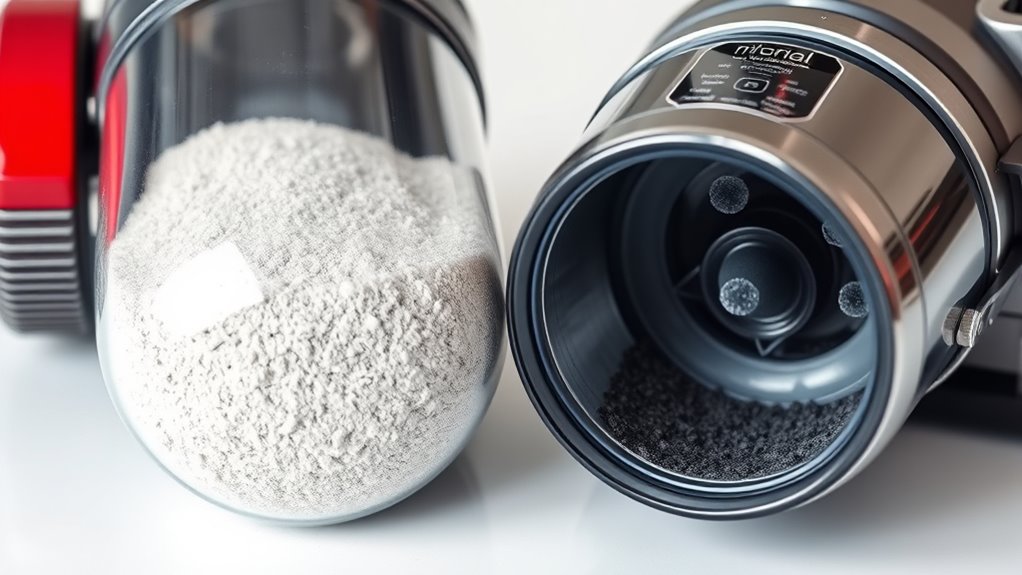
Effective filtration systems are key to reducing airborne allergens and improving indoor air quality. HEPA technology plays a crucial role, capturing tiny particles like pollen, pet dander, and dust mites. Proper air filtration guarantees allergens don’t circulate back into your breathing space. To understand different systems, consider this: air quality improvement is significantly enhanced through the right filtration choices, impacting overall health and comfort. Additionally, integrating natural pool design principles can further promote a healthier environment by reducing chemical reliance. Implementing these filtration techniques can also prevent airborne allergen spread, making your indoor space safer for allergy sufferers.
Comparing HEPA Filters in Bagged and Bagless Vacuums

When comparing HEPA filters in bagged and bagless vacuums, focus on their efficiency and how well they trap tiny allergens. You should also consider how much effort is needed to maintain and replace these filters over time. Understanding these factors helps you choose the best option for allergy relief. Additionally, the design and craftsmanship of the filter system can impact its overall performance and durability, especially when considering high-quality options like those used in haute couture for impeccable detail and longevity. Properly maintained filters, regardless of type, contribute to air quality and overall health benefits for allergy sufferers.
Filter Efficiency and Quality
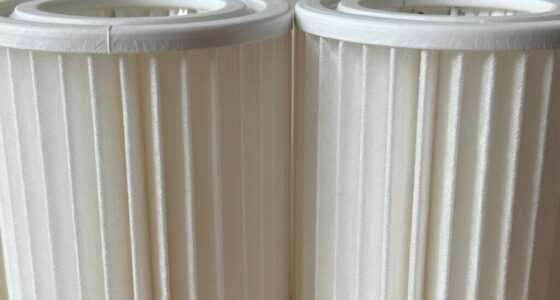
HEPA filters are essential for capturing allergens and improving indoor air quality, making their efficiency a key factor in vacuum choice. In bagged models, filters often maintain consistent airflow dynamics, ensuring ideal suction power over time. This stability helps prevent allergens from escaping back into the air. Bagless vacuums, however, rely on removable HEPA filters that can experience reduced airflow if they become clogged or dirty, affecting overall effectiveness. The filter lifespan also varies; bagged units typically have longer-lasting filters that are replaced during bag changes, while bagless filters need regular cleaning or replacement to sustain performance. Ultimately, the quality of the HEPA filter and how well it maintains airflow dynamics directly impact its ability to trap allergens and preserve indoor air purity. Filter performance is also influenced by the design and maintenance habits, which can make a significant difference in allergy mitigation.
Maintenance and Replacement
Maintenance routines and filter replacements substantially influence how well a vacuum continues to trap allergens, especially when comparing bagged and bagless models. Regularly replacing HEPA filters ensures ongoing allergen capture, but bagless vacuums often require more frequent filter changes due to dust buildup. Proper upkeep also extends battery life, allowing you to clean longer without interruptions, while neglected filters can strain the motor and increase noise levels. Bagged models generally have sealed systems that require less frequent filter changes, maintaining peak performance and quieter operation over time. In contrast, bagless vacuums demand more diligent maintenance to prevent loss of suction and excessive noise. Keeping up with maintenance not only improves allergen filtration but also prolongs your vacuum’s lifespan and ensures consistent, quiet operation.
The Impact of Emptying on Air Quality and Allergens
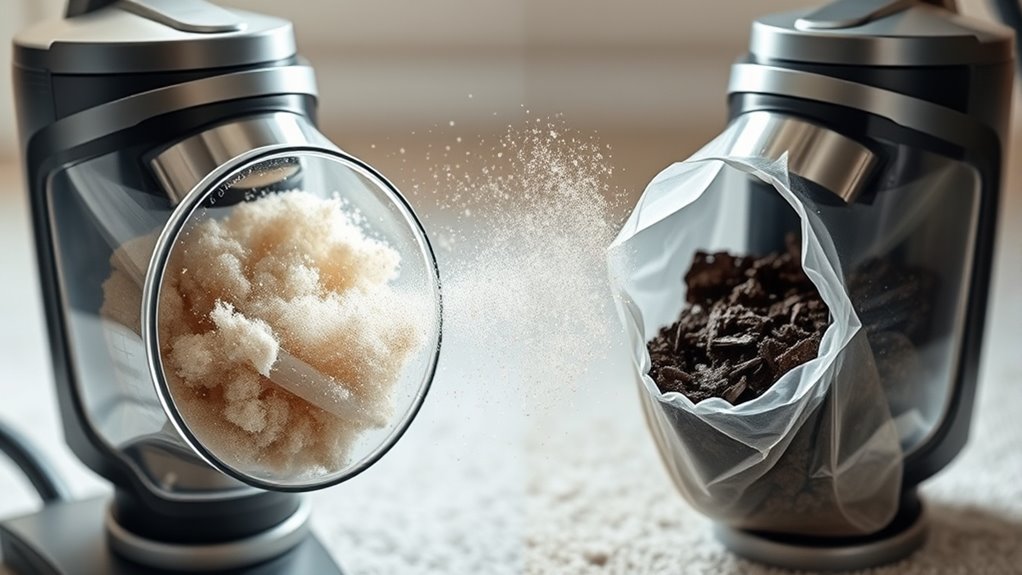
Emptying your vacuum cleaner can substantially impact indoor air quality and allergen levels. When you open the canister or replace the bag, dust and allergens are released into the air, potentially worsening allergy symptoms. Bagless models with small storage capacity can lead to frequent emptying, increasing this risk. Conversely, larger storage capacity vacuums allow you to wait longer before emptying, reducing dust dispersion. Keep in mind that emptying can also cause vacuum noise, which might disturb your environment or cause you to rush the process, risking spillage. Properly handling dust and allergens during emptying is vital. To minimize airborne particles, empty your vacuum outside or in a well-ventilated area. This guarantees your indoor air stays cleaner and healthier. Additionally, choosing a vacuum with effective filtration systems can help trap allergens more efficiently and improve overall air quality. Using a vacuum with high-efficiency HEPA filters is especially recommended for allergy sufferers, as it can significantly reduce airborne allergens during the cleaning process. Incorporating vacuum maintenance practices can further enhance your device’s ability to filter out irritants and maintain optimal performance, especially when combined with regular filter replacements.
Maintenance and Long-Term Effectiveness
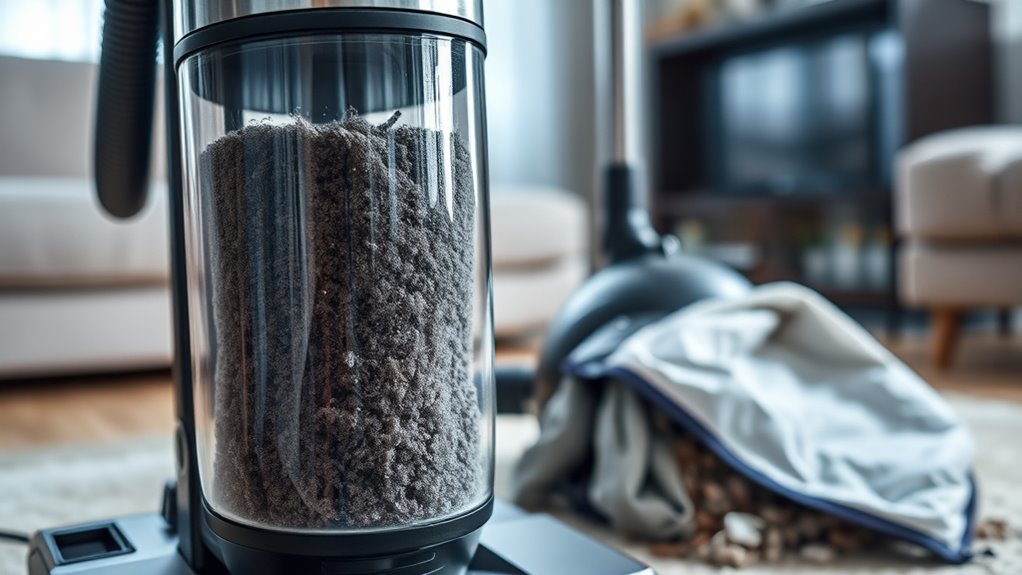
Maintaining your vacuum involves more than just occasional emptying; you also need to consider how often you replace filters. Ease of emptying can affect how consistently you clean, impacting long-term performance. Over time, the filtration efficiency plays a vital role in how well your vacuum continues to reduce allergens. Regularly upgrading to high-quality filters ensures sustained effectiveness in allergen removal. Additionally, understanding the filtration lifecycle can help you determine when it’s time for replacements to maintain optimal allergen control. Proper filter maintenance practices, including following manufacturer guidelines, can further extend the effective lifespan of your vacuum’s filtration system. Being aware of vetted wave and wind effects can also help in choosing the right vacuum for your allergy needs, ensuring consistent performance over time.
Filter Replacement Frequency
Regularly replacing filters is essential to keep your vacuum working efficiently and to protect your indoor air quality. If you neglect filter replacement, your vacuum’s ability to handle tasks like carpet cleaning and pet hair removal diminishes greatly. Over time, filters trap dust, allergens, and pet dander, but they become less effective when clogged. For maximum performance, check your manufacturer’s guidelines—some filters need changing every 3 to 6 months. Bagless models often require more frequent filter changes since debris passes through the filter more often. In contrast, bagged vacuums tend to keep filters cleaner longer, but regular replacement still ensures the vacuum maintains strong suction and improves allergy relief. Proper filter maintenance extends your vacuum’s lifespan and keeps your indoor air healthier. Additionally, understanding the importance of air quality can motivate consistent filter upkeep to create a healthier home environment. Maintaining clean filters also helps in reducing allergen buildup, which is crucial for allergy sufferers. Regular filter checks can also prevent issues related to odor, especially in models that handle pet hair or other debris. Moreover, consistent filter replacement can help prevent vacuum malfunctions, ensuring your appliance operates smoothly over time. Regular maintenance of filters is also an effective way to enhance vacuum efficiency, making your cleaning routine more effective.
Ease of Emptying
Have you ever struggled with the hassle of emptying your vacuum? Bagged vacuums tend to be simpler, as you just remove the bag without dealing with dust escaping. Bagless models, however, require you to handle dust accumulation directly, which can be messy. Consider these points:
- Bagless vacuums often have a transparent container for easy monitoring.
- Emptying can be quick but may expose you to dust and allergens.
- Bagged models usually have a lighter vacuum weight during use since they don’t include a full dust container.
- Frequent emptying of a bagless bin might increase dust buildup in your space.
- The process of emptying a full container can be more cumbersome if dust has accumulated heavily.
- Additionally, market trends show that many consumers prefer bagless models for their convenience, though they must weigh this against potential allergen exposure.
- Proper dust containment techniques can help minimize allergen release during emptying, making the choice more manageable.
Your choice depends on convenience and how much dust buildup you’re comfortable handling.
Long-Term Filtration Efficiency
Ever wondered which vacuum type offers better long-term filtration? Over time, air filtration and allergen removal can decline if filters aren’t maintained properly. Bagged vacuums often include disposable filters that trap allergens more effectively over extended use, maintaining consistent performance. Bagless models rely on washable filters, which may lose efficiency if not cleaned regularly. Proper maintenance ensures ideal filtration, reducing allergen presence in your home. Consider this comparison:
| Feature | Bagged Vacuum | Bagless Vacuum |
|---|---|---|
| Filter Replacement | Regularly replaced for efficiency | Washable filters need frequent cleaning |
| Air Filtration Quality | Maintains high standards over time | Performance can decline if neglected |
| Allergen Removal | Better containment over long term | May release allergens if filters clog |
| Long-Term Effectiveness | Consistent, reliable filtration | Varies with maintenance habits |
Choosing the right vacuum depends on your commitment to ongoing filter care.
Common Myths About Bagged and Bagless Vacuum Cleaners

Many people believe that bagless vacuum cleaners are always more hygienic and easier to maintain than bagged models, but this isn’t necessarily true. While bagless models save you from replacing bags, they often produce more vacuum noise during operation and require frequent emptying, which can release dust back into the air. A common myth is that bagged vacuums are dull and limited in style; in reality, they come in various color options to suit your decor. Additionally, some believe bagless vacuums are better for allergies, but the dust can escape during emptying if not handled carefully. It’s important to contemplate these factors, rather than relying on misconceptions. The choice isn’t just about convenience—it’s about understanding the real differences to suit your needs.
Which Option Is Safer for Allergy Sufferers?
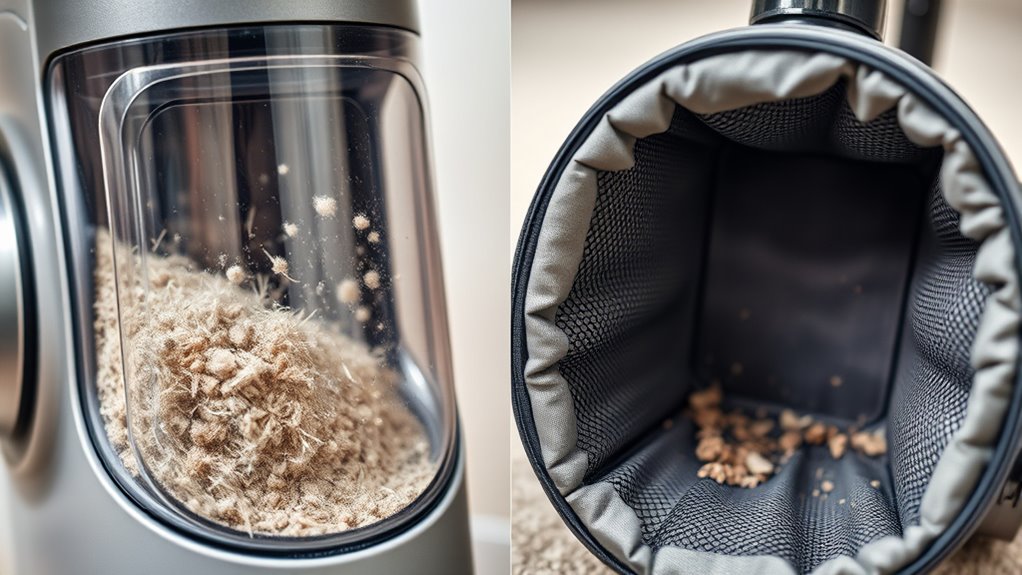
For allergy sufferers, choosing between bagged and bagless vacuum cleaners can considerably impact indoor air quality. Bagged models often provide better airflow optimization, reducing the chances of dust and allergens escaping back into the air during disposal. They also tend to have an ergonomic design that minimizes your contact with dust when changing bags, lowering exposure risk. Bagless vacuums, while convenient, can release fine particles if not emptied carefully, which may aggravate allergies. However, with proper maintenance and HEPA filters, some bagless options can be equally safe. Ultimately, the safest choice depends on your ability to maintain the vacuum properly and your preference for airflow control. Prioritizing models with good airflow and user-friendly ergonomics helps ensure cleaner air and less allergen exposure.
Cost Considerations and Replacement Parts

When choosing between bagged and bagless vacuum cleaners, cost considerations and replacement parts play a significant role in your decision. The cost comparison often depends on how frequently you’ll need to replace parts and the overall durability of each type. Bagged vacuums typically have higher replacement costs due to buying new bags, but they often last longer. Bagless models save money on bags but may require more frequent filter replacements or motor maintenance. Keep in mind:
- Cost of replacement bags or filters
- Frequency of part replacements
- Durability of the vacuum’s components
- Long-term maintenance expenses
- Potential savings on filters versus bags
Understanding these factors helps you predict your ongoing costs, ensuring you choose a vacuum that fits your budget without sacrificing performance or allergy protection.
Making the Best Choice for Your Home and Health
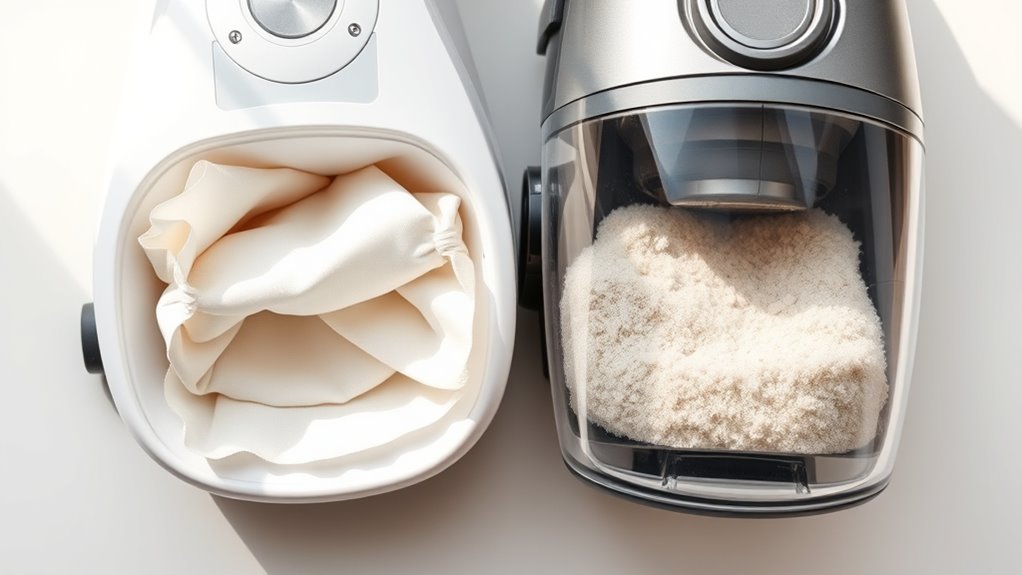
Choosing between bagged and bagless vacuums isn’t just about cost — it’s about how well each option supports your home environment and health needs. To make the best choice, consider the bag design, which impacts filtration and ease of disposal. Bagged vacuums often provide better sealing, reducing allergen escape, and may be better for sensitive airways. Bagless models, on the other hand, offer convenience with no bags to buy, but their dust bins can be less user-friendly if not designed for easy emptying. User comfort matters too; look for models with ergonomic features, easy-to-reach controls, and lightweight designs. Ultimately, your choice should balance effective allergen containment, ease of maintenance, and comfort during use to protect your health and keep your home clean.
Frequently Asked Questions
Do Bagged Vacuums Trap More Microscopic Allergens Than Bagless Models?
Yes, bagged vacuums generally trap more microscopic allergens than bagless models. They often feature HEPA filters and better dust containment, which prevent allergens from escaping back into the air. When you use a bagged vacuum, you’re less likely to release dust and allergens during emptying. This makes them a better choice for allergy sufferers, as they effectively contain smaller particles and improve indoor air quality.
How Does the Noise Level Differ Between Bagged and Bagless Vacuums?
Imagine a quiet forest clearing, where sounds softly drift through trees. Bagged vacuums often have better noise insulation, making their vacuum motors quieter during operation. In contrast, bagless models typically produce more noise due to less insulation and more exposed parts. If you value peaceful cleaning, opt for a bagged vacuum, as its superior noise insulation minimizes disturbance, allowing you to enjoy a calmer cleaning experience.
Can a Vacuum’s Design Affect Ease of Allergen Disposal?
Yes, your vacuum’s design considerably impacts allergen disposal. A well-designed vacuum with features like a sealed system and easy-to-open compartments makes allergen disposal easier and cleaner. Bagged vacuums often contain allergens better, reducing exposure during disposal. On the other hand, bagless models require you to empty the bin, which can release allergens if not designed for easy, contained disposal. So, choose a vacuum that prioritizes user-friendly allergen management.
Are Certain Vacuum Types Better Suited for Pet Allergies?
Did you know that 65% of pet owners struggle with allergies? For pet allergies, upright vacuums are best because they typically have stronger suction and HEPA filters, trapping more pet dander. Choose a lightweight model with a long cord, so you can easily maneuver around furniture. A vacuum with a manageable weight and extended cord makes cleaning pet hair more effective, helping reduce allergy symptoms markedly.
How Often Should Filters Be Replaced for Optimal Allergy Control?
You should replace your vacuum filters every 3 to 6 months for ideal allergy control, depending on filter lifespan and usage. Regular replacement ensures allergens and dust don’t accumulate, improving air quality. Check your filter’s manufacturer recommendations, as some filters last longer. If you have pets or allergies, consider replacing filters more frequently, say every 3 months, to maintain a cleaner environment and reduce allergy symptoms effectively.
Conclusion
Choosing between bagged and bagless vacuums isn’t just about convenience—it’s about safeguarding the air your home breathes. Think of your vacuum as a guardian, filtering out the invisible enemies that trigger allergies. By understanding how each type handles dust and allergens, you can pick the one that’s best for your health. Remember, the right choice creates a fortress of clean air, letting you breathe easy and live comfortably.
Fall Picks
fall essentials
As an affiliate, we earn on qualifying purchases.