To prevent internal wire breaks from cord wrap damage, always use effective wrapping techniques like the over-under method, which keeps cords in a natural shape. Avoid tight bends and stress points, and store cords on smooth hooks to prevent kinking. Inspect cords for damage before each use and guarantee they’re completely unraveled to avoid heat buildup. Keeping cords protected with covers or proper storage can further enhance their lifespan. There are more strategies to explore for cord safety.

Get cleaning gear delivered free — and shop member deals
- Fast, free delivery on millions of items
- Access to Prime Big Deal Days deals on October 6–7
- Prime Video, Amazon Music and more included
Key Takeaways
- Use the over-under wrapping method to maintain the cord’s natural shape and reduce internal tension.
- Store cords on smooth hooks or reels to prevent sharp bends and kinks.
- Conduct regular visual inspections for damage before each use to ensure safety.
- Fully unroll cords during use to avoid heat buildup that can degrade insulation.
- Utilize protective accessories like braided sleeving to shield cords from pets and crushing impacts.
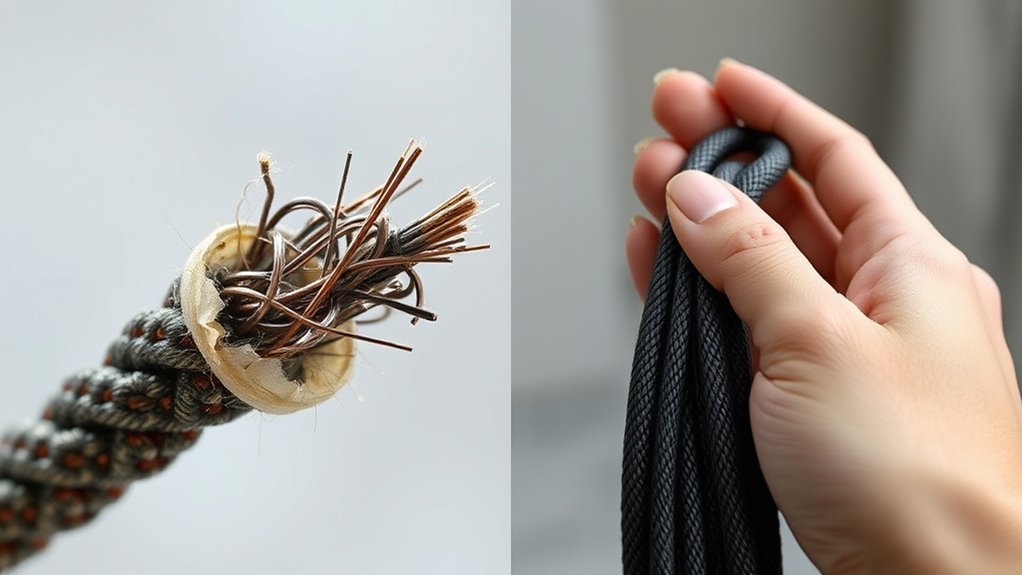
When you wrap cords for storage, you might not realize that improper techniques can lead to significant internal wire damage. Tight bends and kinks create stress points that weaken the wire strands over time, leading to fatigue and eventual breaks. If you twist the cord against its natural coil, you’re adding torsional stress, promoting strand separation. Additionally, pinching or crushing the cord can damage the insulation, exposing the wires to mechanical failure. Overheating is another risk, as coiling a hot cord before use can trap heat, further degrading the insulation. Regular inspections help ensure cord safety and compliance to prevent these issues.
To avoid these issues, adopt better wrapping techniques. The over-under method is a great choice; it alternates loops over and under your hand, preserving the cable’s natural geometry and minimizing internal tension. For long, flexible cords, try the figure-eight or elbow wrap techniques, which maintain a gentle loop radius without tight bends. Always secure your coils with Velcro or purpose-made ties instead of tight knots, as knots can pinch the insulation, increasing the risk of damage.
When storing cords, hang them on smooth, rounded hooks or reels to maintain their shape and avoid sharp bends. Keep them in dry, temperature-controlled areas to prevent thermal degradation or moisture-related issues. Use cord reels with guides to prevent kinking during retrieval and deployment. It’s also wise to separate power cords from heavy equipment and foot-traffic areas using cord covers or routed raceways—this can protect against crushing and abrasion.
Regular inspection is vital for maintaining cord integrity. Before each use, visually check for signs of damage, frays, or exposed conductors per OSHA guidelines. Unroll cords fully to avoid heat buildup when in use, and ensure the amperage matches your devices to prevent overheating.
Additionally, you can enhance cord protection with accessories like braided sleeving or rigid conduits. These options help shield against pets and crushing impacts, which can lead to internal wire breaks.
Frequently Asked Questions
What Types of Cords Are More Prone to Internal Wire Breaks?
Cords that are thin, flexible, or have poor insulation tend to be more prone to internal wire breaks. Extension cords and those with multiple bends or twists also face higher risks. Cords used in environments with heavy foot traffic or extreme temperatures can suffer from wear and tear more quickly. Additionally, low-quality cords may lack the durability needed to withstand repeated handling, increasing the chance of internal damage over time.
How Can I Tell if a Cord Is Damaged Internally?
Detecting damage’s dark side isn’t difficult! Start with a visual inspection for visible wear, frays, or cracks. Next, feel for any unusual flexibility or stiffness while bending the cord. Then, plug it in and listen for buzzing or crackling sounds, which could signal internal issues. Finally, use a multimeter to check for continuity; if there’s no current flow, you’ve likely got internal damage. Regular checks help keep your cords safe and sound!
Are There Specific Brands Known for Durability?
Yes, some brands are known for their durability. You might want to contemplate cords from companies like Anker, Belkin, or AmazonBasics, which have good reputations for quality. Look for models with reinforced ends and durable jackets. Reading customer reviews can also give you insights into performance over time. Always check the warranty, as a good warranty often indicates confidence in the product’s durability. Your investment in a reliable cord can save you hassle in the long run.
Can I Repair a Cord With Internal Breaks?
Did you know that nearly 30% of electrical cord failures stem from internal breaks? Unfortunately, you can’t reliably repair a cord with internal breaks. Attempting to fix it often leads to further issues or safety hazards. Instead, it’s best to substitute the cord entirely to ensure safety and functionality. Regularly inspect your cords, and when you see signs of wear or damage, don’t hesitate to retire them for a new one.
What Is the Average Lifespan of a Power Cord?
The average lifespan of a power cord typically ranges from 3 to 10 years, depending on usage and environmental factors. If you’re using it heavily or in harsh conditions, expect it to wear out faster. Regular inspections can help you catch any signs of wear early. If you notice frays or kinks, it’s best to replace the cord to guarantee safety and performance. Always prioritize quality and proper handling to extend its life.
Conclusion
Just like a tree needs strong roots to weather the storm, your cords need care to thrive. By avoiding tight wraps and giving them room to breathe, you’re nurturing their longevity. Remember, a little attention today can prevent a tangled mess tomorrow. So, treat your cords like precious vines, fostering their growth instead of binding them tightly. In doing so, you’ll make sure they remain strong and reliable, ready to support you through every twist and turn life throws your way.
Fall Picks
fall essentials
As an affiliate, we earn on qualifying purchases.