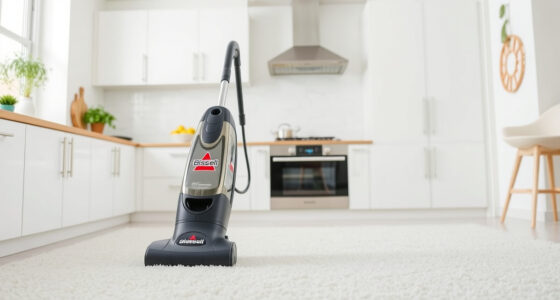
Static shocks while vacuuming are mainly caused by friction between dust and your vacuum’s plastic components, especially in low-humidity environments. When air is dry, it allows static charges to build up quickly. To reduce these shocks, try increasing indoor humidity, using anti-static sprays, and grounding your vacuum. Also, avoid vacuuming near fans to minimize charge buildup. If you want to know more tips and techniques to enjoy a shock-free vacuuming experience, just keep going!

Get cleaning gear delivered free — and shop member deals
- Fast, free delivery on millions of items
- Access to Prime Big Deal Days deals on October 6–7
- Prime Video, Amazon Music and more included
Key Takeaways
- Static shock during vacuuming is caused by friction between dust and vacuum components, especially in dry air conditions.
- Low humidity levels below 40% increase static electricity buildup, making shocks more frequent during winter months.
- Charge transfers to your body when touching grounded objects, leading to noticeable static discharges.
- To reduce shocks, maintain indoor humidity between 40% and 60% using humidifiers or anti-static sprays on vacuum parts.
- Regularly inspect your vacuum for static control measures and avoid vacuuming near high-airflow areas to minimize charge buildup.
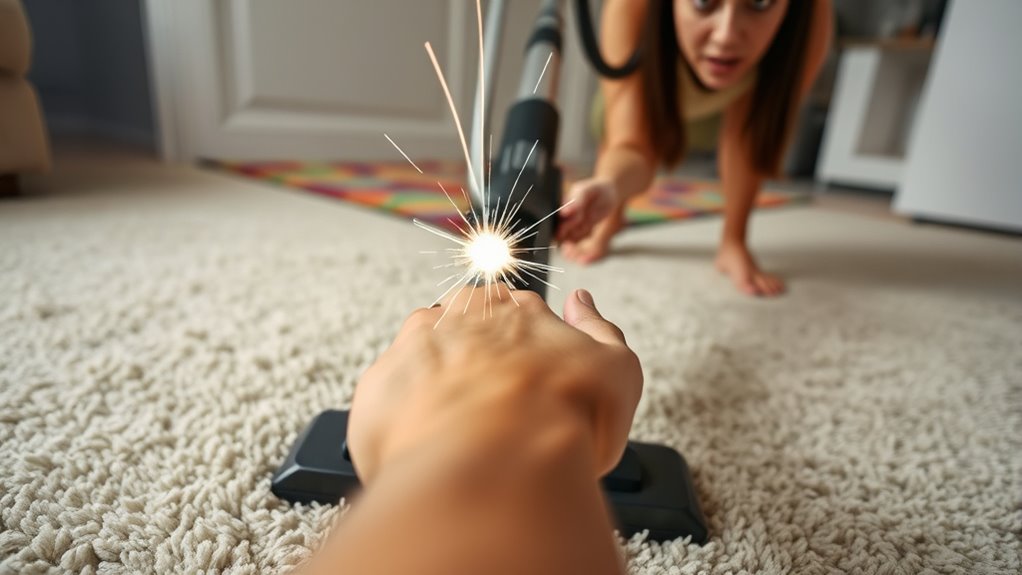
While vacuuming, you might experience an unexpected static shock, which can be surprising and even a bit alarming. This phenomenon primarily occurs due to the friction created as dust and debris rub against the plastic components of your vacuum cleaner. When particles collide with the inner walls of the vacuum hose or collection bin, they transfer charge to these surfaces, resulting in an accumulation of static electricity. This effect can be intensified by dry air, especially during cold winter days when humidity levels drop below 40%. In many cases, family caregivers must be mindful of their environment to ensure a safe and comfortable atmosphere for seniors.
Experiencing static shocks while vacuuming? It’s caused by friction between dust and plastic components, especially in dry air.
When there’s low humidity, the air becomes less conductive, allowing static charges to build up more readily. You may notice that you experience these shocks more frequently in environments with mainly plastic components, like your vacuum’s hoses and nozzles. The combination of high-speed airflow and fine, dry dust increases the chances of particle-surface impacts, leading to rapid charge generation. This is particularly noticeable when you’re vacuuming in areas with low ambient humidity or using synthetic materials that hold charge effectively.
You might feel a shock when you touch grounded objects, like light fixtures or metal pipes, after vacuuming. This is because your body carries the accumulated charge from the vacuum, and when you make contact with a conductive surface, a discharge occurs, resulting in that familiar zap. Additionally, reaching into the dustbin or bag area can expose you to concentrated charges, increasing the likelihood of shocks. To mitigate this issue, consider implementing humidity control techniques to maintain an optimal moisture level in your environment.
To reduce the chances of static buildup and shocks while vacuuming, consider maintaining indoor humidity levels between 40% and 60%. Using a humidifier can help combat dry air and neutralize static on surfaces. You might also want to employ anti-static sprays on your vacuum’s hoses and surfaces, which can help dissipate any charge that accumulates during use. Grounding your vacuum system is another effective method; this allows any built-up charge to safely dissipate, minimizing the risk of shocks.
Avoid using your vacuum near high-airflow areas like fans, as this can exacerbate charge buildup. Regularly inspect your vacuum for static control measures, ensuring that there are no non-conductive materials that could trap charges. By following these precautions, you can enjoy a more pleasant vacuuming experience without the jolt of static electricity.
Frequently Asked Questions
Can Certain Vacuum Cleaner Models Reduce Static Buildup?
Yes, certain vacuum cleaner models can reduce static buildup. Look for vacuums with anti-static features or those designed with materials that minimize charge accumulation. Models that have grounded systems or ionizers can help neutralize static electricity. Additionally, opting for vacuums with metal components instead of plastic can further decrease static shocks. Keeping humidity levels in check while using your vacuum also plays a vital role in reducing static electricity.
Do Pet Hairs Contribute to Static Shocks During Vacuuming?
Yes, pet hairs can contribute to static shocks during vacuuming. When you vacuum, the friction between the pet hair and the vacuum’s plastic components generates an electrostatic charge. This buildup can be especially noticeable in low humidity conditions. To minimize shocks, consider using anti-static sprays on your vacuum or maintaining indoor humidity levels between 40-60%. It’s a simple way to keep those annoying static shocks at bay while you clean.
How Often Should I Use Anti-Static Sprays?
You should use anti-static sprays every time you vacuum, especially in dry conditions. This helps reduce static buildup on your vacuum’s hoses and surfaces. If you notice more frequent shocks, consider reapplying the spray during your cleaning sessions. Additionally, applying it to areas prone to static, like carpets or rugs, can be beneficial. Keeping your vacuum and environment treated will make your cleaning experience much more comfortable and shock-free.
Is Static Electricity Harmful to Vacuum Cleaners?
“An ounce of prevention is worth a pound of cure.” Static electricity isn’t directly harmful to your vacuum cleaner, but it can lead to issues over time. Accumulated static can damage sensitive components or disrupt performance. To keep your vacuum running smoothly, you should reduce static buildup by maintaining proper humidity levels and using anti-static sprays. By taking these steps, you’ll extend the life of your vacuum and enhance its efficiency.
Can I Vacuum in Humid Conditions to Avoid Shocks?
Yes, you can vacuum in humid conditions to avoid shocks. Higher humidity levels help neutralize static electricity, making it less likely for you to experience shocks. Aim to keep indoor humidity between 40-60% for ideal results. It’s a great idea to use a humidifier if your space feels dry. Additionally, consider using anti-static sprays on your vacuum to further reduce any static build-up and make your cleaning experience more pleasant.
Conclusion
In conclusion, static shock while vacuuming can be frustrating and fear-inducing, but it doesn’t have to be a frequent foe. By incorporating simple strategies like using anti-static sprays, choosing the right vacuum, and wearing natural fabrics, you can greatly reduce those pesky little surprises. So, take charge, tackle the tension, and transform your cleaning experience into a smooth, shock-free session. Embrace a more enjoyable environment with every sweep of your vacuum!
Halloween Picks
halloween
As an affiliate, we earn on qualifying purchases.