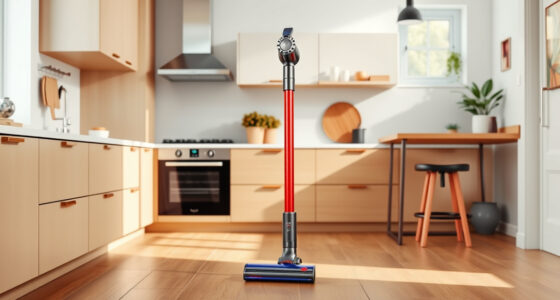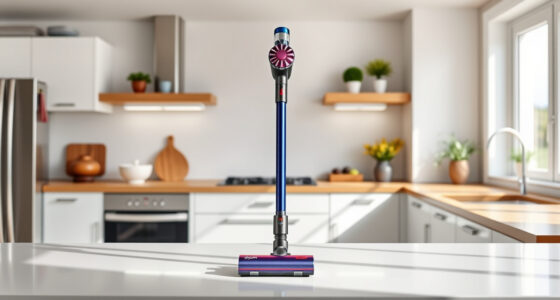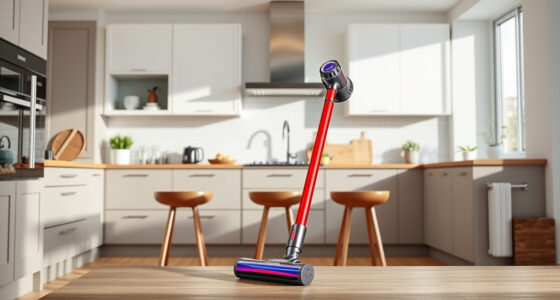

To make your carpet look new again, adjust your vacuum head height properly. Start at the highest setting and lower it until you hear a deeper suction sound and feel smooth motion. For low-pile carpets, use the lowest setting; medium-pile needs the middle setting, and high-pile requires a higher one to avoid damage. Regular maintenance and correct settings keep your carpet vibrant and fresh. Discover more tips to enhance your carpet care.

Get cleaning gear delivered free — and shop member deals
- Fast, free delivery on millions of items
- Access to Prime Big Deal Days deals on October 6–7
- Prime Video, Amazon Music and more included
Key Takeaways
- Set the vacuum head height to the lowest setting for low-pile carpets to maximize suction and dirt removal.
- For medium-pile carpets, use the middle height setting to ensure proper agitation without damaging fibers.
- High-pile or shag carpets require a higher setting to prevent pulling and damaging longer fibers.
- Regularly clean the brush roll and maintain a full bag or canister for optimal vacuum performance.
- Groom carpets against the pile before vacuuming for a polished look and to loosen embedded dirt.

When it comes to vacuuming, adjusting the head height is essential for effective cleaning and carpet care. You’ll want to make sure your vacuum head contacts the top third of the carpet fibers. This ensures proper agitation without blocking airflow. If you set it too low, the vacuum pulls the carpet into the inlet, reducing airflow and brush-roll rotation, making it less effective. Conversely, if it’s set too high, you won’t agitate the fibers enough, leaving dirt trapped and reducing your cleaning power.
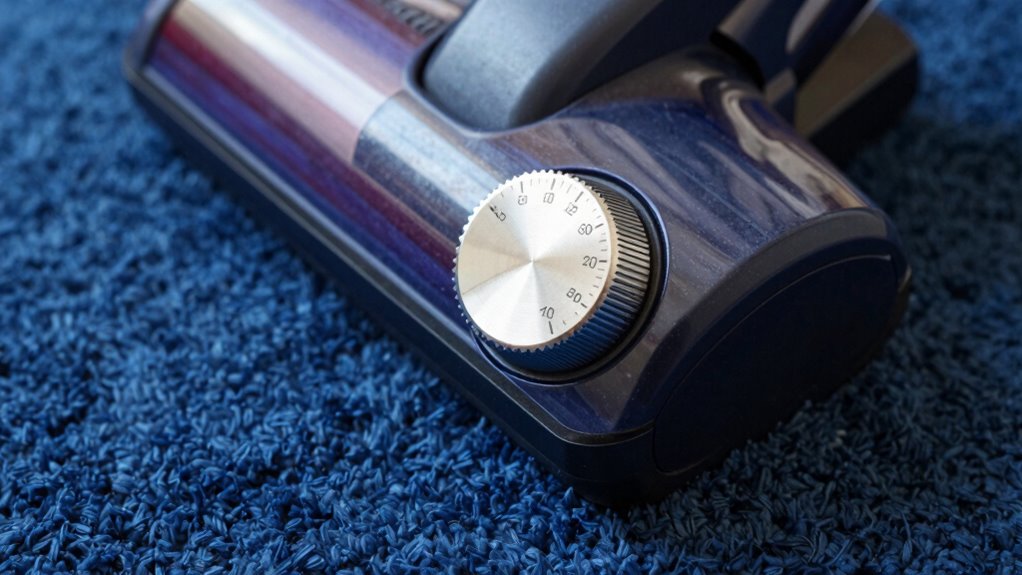
To find the right height setting, start with the highest adjustment and lower it gradually while listening for a change in the suction sound. A deeper, less airy sound indicates the correct contact, while a high-pitched sound means it’s too high. You can also feel for resistance; the vacuum should glide smoothly without excessive drag. Once the brushes lightly engage the top third of the fibers, back off one notch for ideal balance. Additionally, maintaining your vacuum settings is crucial for overall backyard transformation essentials and cleanliness in your home.
For different carpet types, you’ll need to adjust accordingly. Low-pile carpets, measuring less than 1/4 inch, require the lowest height setting for maximum suction. Medium-pile carpets, about 1/4 to 1/2 inch, do best at a middle height setting. When dealing with high-pile or shag carpets, set it higher to avoid damaging the longer fibers. Looped carpets, like Berber, benefit from medium suction and an appropriate head height to prevent snagging. Tailoring vacuum settings to carpet type optimizes cleaning and preserves carpet health.
Regularly check your vacuum’s maintenance, too. A clean brush roll ensures proper rotation at your chosen height, while a full bag or canister reduces suction and affects cleaning power. If you notice your carpet looking matted or flattened, it could be time to reassess your vacuuming technique and height settings.
After vacuuming, inspect the carpet fibers. They should stand up rather than mat. If they don’t, it may mean the height is incorrect or the brush is too aggressive. To keep your carpet looking new, consider grooming it against the pile first to loosen any embedded dirt, then vacuum with the pile for a polished finish.
Frequently Asked Questions
How Often Should I Vacuum My Carpet for Best Results?
You should vacuum your carpet at least once a week for best results. If you have pets or high foot traffic, consider vacuuming more frequently, like every few days. This helps remove dirt, dust, and allergens, keeping your carpet looking fresh. Don’t forget to pay attention to high-traffic areas and spots that accumulate debris. Regular maintenance not only enhances appearance but also prolongs the life of your carpet.
Can I Use My Vacuum on Different Carpet Types?
Yes, you can use your vacuum on different carpet types, but you’ll need to modify the height setting accordingly. For low-pile carpets, use the lowest setting for maximum suction. For medium-pile, the middle height works best, while high-pile carpets require a higher setting to avoid damaging fibers. Always check for any drag or resistance while vacuuming, and listen for the suction sound to ensure you’re optimizing your cleaning performance effectively.
What Are the Signs My Vacuum Needs Maintenance?
If your vacuum’s performance is sputtering like an old engine, it’s time for maintenance. Look for signs like reduced suction, strange noises, or a brush roll that’s not spinning. If you notice clogs in the hose or a full dust container, that’s a clear signal too. Pay attention to any burning smells, as they often indicate a bigger issue. Regular checks will keep your vacuum running smoothly and your carpets looking great!
Is Professional Cleaning Necessary for All Carpets?
No, professional cleaning isn’t necessary for all carpets. Regular vacuuming and maintenance can keep many carpets looking great. However, if you notice persistent stains, heavy soil, or flattened areas, it might be time to think about professional help. High-traffic areas or delicate fibers could benefit from a deep clean. Trust your judgment—if your carpet looks tired despite your efforts, a professional can restore its appearance and extend its lifespan.
How Can I Prevent Carpet Matting Between Cleanings?
To prevent carpet matting between cleanings, vacuum regularly and adjust your vacuum’s head height correctly for your carpet type. Use a vacuum with a beater bar to lift fibers, but avoid excessive suction on delicate rugs. Consider using a carpet rake to fluff the fibers after vacuuming. Also, avoid walking on high-traffic areas in socks or shoes to minimize dirt transfer and wear. Finally, rearranging furniture can help distribute foot traffic evenly.
Conclusion
By finding the perfect vacuum head height setting, you’re not just cleaning your carpet; you’re breathing new life into it, like a painter restoring a masterpiece. Each pass transforms dull fibers into a vibrant tapestry, reminiscent of a garden in full bloom. So, adjust that height, and watch your carpet flourish, as if it’s shedding winter’s chill for the warmth of spring. In this simple act, you’re not just vacuuming—you’re revitalizing your home’s heart.
Fall Picks
fall essentials
As an affiliate, we earn on qualifying purchases.