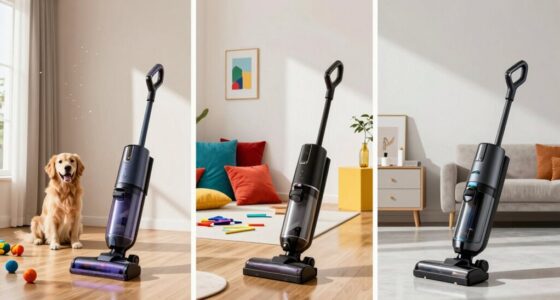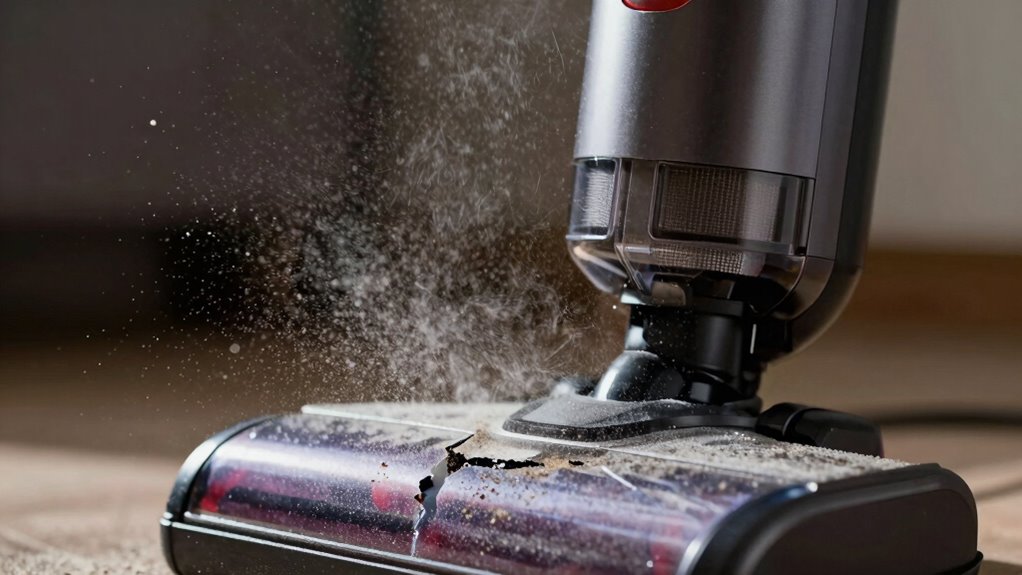
Fine dust blows out of some vacuums because of ineffective filtration systems and clogged filters. When you neglect filter maintenance, dirt builds up, reducing suction power and allowing fine particles to escape back into your home. Additionally, older vacuum motors can emit hazardous ultrafine particles. Poor sealing and full dust bags can further contribute to the problem. Want to learn how to improve your vacuum’s performance and air quality? There’s more to uncover about effective solutions.
Key Takeaways
- Poor filtration systems in vacuums fail to capture fine particles, allowing them to escape back into the air.
- Clogged or neglected filters decrease suction power and increase the likelihood of dust being blown out.
- Vacuum motors can emit ultrafine particles, contributing to indoor air pollution and health risks.
- Dust resuspension occurs when vacuums stir up settled dust, worsening air quality instead of improving it.
- Improper sealing or full dust bags can release trapped bacteria and volatile organic compounds into the home environment.
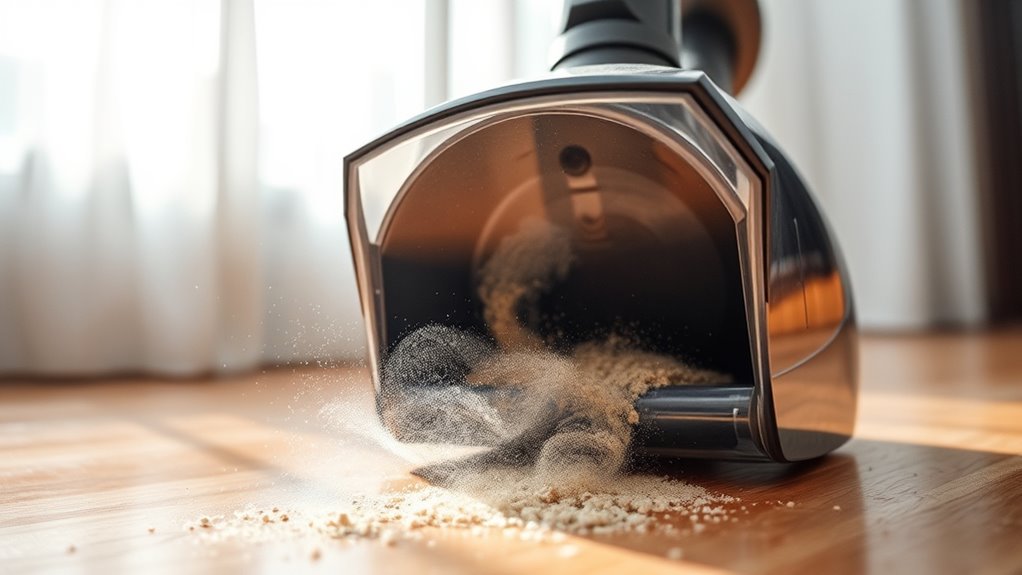
Have you ever wondered what happens to the fine dust when you vacuum? You might think your vacuum cleaner’s job is done once it picks up dirt, but that’s not the whole story. Many vacuums struggle with ineffective filtration, which allows fine particles to escape back into the air. This usually happens when filters clog with dirt and debris over time. If you don’t clean or replace these filters regularly, you’ll notice reduced suction power, and those pesky particles start to recirculate in your home.
Many vacuums fail to filter fine dust effectively, allowing harmful particles to recirculate into your home. Regular filter maintenance is crucial.
Vacuum motors often contribute to the problem too. They can generate ultrafine particles that contain harmful substances like copper and carbon. These tiny particles aren’t just a nuisance; they can lead to serious health issues, including allergies and asthma, especially since they’re small enough to be inhaled. You may not realize that particle emissions can vary greatly among different vacuum models, and price doesn’t guarantee better filtration.
Another issue is dust resuspension. When you vacuum, you stir up settled dust, releasing allergens into the air. Traditional vacuums often re-suspend this dust before adequately filtering it, substantially increasing airborne particulate matter. This is especially problematic if your vacuum lacks high-efficiency filters, making your cleaning efforts counterproductive.
Then there are bacterial emissions to consider. Many dust bags can trap live bacteria for weeks, potentially releasing harmful pathogens like Salmonella back into your home. The emissions can range greatly, so it’s vital to be aware of the type of vacuum you’re using and how it’s maintained.
Chemical and volatile organic compound (VOC) release is another concern. Vacuuming can agitate harmful chemicals from cleaning agents, carpets, and other sources, sending them airborne. These particles often carry allergens like pollen and pet dander, which can trigger allergic reactions.
If you’ve ever noticed fine dust blowing out of your vacuum, it’s likely due to a combination of full bags, clogged filters, and failed seals. When bags are full, or if filters are clogged, airflow gets blocked, causing dirt to be pushed right back out. Even small tears in gaskets can create gaps, allowing dust to escape. Regular inspection and clearing of the entire air path can also prevent airflow disruption and reduce the chances of dust blowing out.
To maintain better air quality in your home, ensure your vacuum is equipped with a HEPA filter, keep it clean, and always check for clogs or damaged seals. Taking these steps can help you avoid turning your vacuum into a source of indoor air pollution.

ECOVACS WINBOT W2 PRO Omni Portable Window Cleaning Robot with Multi-Functional Station, Charging While Working, Intelligent Cleaning with Triple Nozzle Water Sprayer, 12-Level Protection
Dual Power Modes for Flexible Charging - WINBOT W2 PRO OMNI offers two power modes for flexible use:...
As an affiliate, we earn on qualifying purchases.
Frequently Asked Questions
How Often Should I Replace My Vacuum’s Filter?
You should replace your vacuum’s filter every three to six months, depending on usage. If you vacuum frequently or have pets, consider changing it more often. Regularly checking the filter for clogs is important, too. A clogged filter reduces suction and allows fine dust to escape back into the air, which can worsen indoor air quality. Keeping your filter clean and fresh helps maintain your vacuum’s performance and keeps your home healthier.
Are Bagless Vacuums Better for Filtration?
Bagless vacuums can be better for filtration, but it really depends on the model. About 99.97% of particles 0.3 microns and larger can be captured by high-quality HEPA filters. However, many bagless vacuums lack effective sealing, allowing fine dust to escape back into the air. If you choose a bagless vacuum, make certain it has a robust filtration system to avoid recirculating allergens and dust particles while you clean.
Can I Use Regular Vacuum Bags for HEPA Filtration?
No, you can’t use regular vacuum bags for HEPA filtration. HEPA filters are designed to trap tiny particles that standard bags can’t handle. If you’re looking for effective filtration, it’s best to utilize HEPA-certified bags specifically made for your vacuum model. This ensures you capture allergens and fine dust, improving your indoor air quality. Regular bags may allow these particles to escape, undermining your cleaning efforts and potentially affecting your health.
What Types of Vacuums Are Best for Allergy Sufferers?
For allergy sufferers, HEPA filter vacuums are your best bet. They trap 99.97% of particles, including allergens like pollen and pet dander. Look for vacuums with sealed systems to prevent dust from escaping back into the air. Bagless models can stir up allergens, so consider bagged options. Regular filter maintenance is essential for peak performance. Choosing the right vacuum can greatly improve your indoor air quality and reduce allergy symptoms.
How Do I Reduce Motor-Generated Particles While Vacuuming?
To reduce motor-generated particles while vacuuming, you’ve gotta choose a vacuum with a sealed HEPA filter. It’s like picking the superhero of cleaning! Regularly clean or replace the filters to maintain peak performance. Also, try vacuuming at a slower pace to minimize dust resuspension. Consider running an air purifier during vacuuming to capture any stray particles. By taking these steps, you’ll breathe easier and keep your indoor air cleaner.
Amazon Product B0FBWP9DH2
As an affiliate, we earn on qualifying purchases.
Conclusion
Ultimately, the fine dust blowing out of some vacuums can be as frustrating as a leaky faucet. It often comes down to inadequate filtration systems, which fail to trap tiny particles effectively. To keep your home clean and healthy, consider upgrading to a vacuum with a high-efficiency particulate air (HEPA) filter. By choosing wisely, you’ll breathe easier and enjoy a fresher living space, free from the sneaky dust that can hitch a ride on your vacuum.

Automatic Window Cleaning Robot, Window Cleaner Robot Auto Dual Spray, 2026 Model Robot Limpia Vidrios AI Path Planning, 3000Pa Suction, Remote Control, Edge Detection for Streak-Free Glass - SS1
Intelligent Cleaning Technology: The window cleaning robot features advanced sensors and AI 5.0 path planning, enabling it to...
As an affiliate, we earn on qualifying purchases.
Amazon Product B0FCX32WXP
As an affiliate, we earn on qualifying purchases.