
Pre-motor filters sit between the air intake and the motor, capturing larger particles like dust and pet hair to protect your system. Post-motor filters, often featuring HEPA technology, tackle smaller particles and clean the air before it exits your appliance. Both filters work together to enhance air quality and prolong the life of your equipment. You’ll discover more about their maintenance and impact on efficiency as you explore further.
Key Takeaways
- Pre-motor filters capture larger particles like dust and pet hair, preventing damage to the motor.
- Post-motor filters, often utilizing HEPA technology, target smaller particles, including allergens and fine contaminants.
- Pre-motor filters require monthly cleaning and replacement every 3-6 months, while post-motor filters have less frequent maintenance.
- Effective pre-motor filtration reduces the load on post-motor filters, enhancing overall system efficiency.
- The combination of both filters ensures optimal airflow and improves indoor air quality by trapping various contaminants.

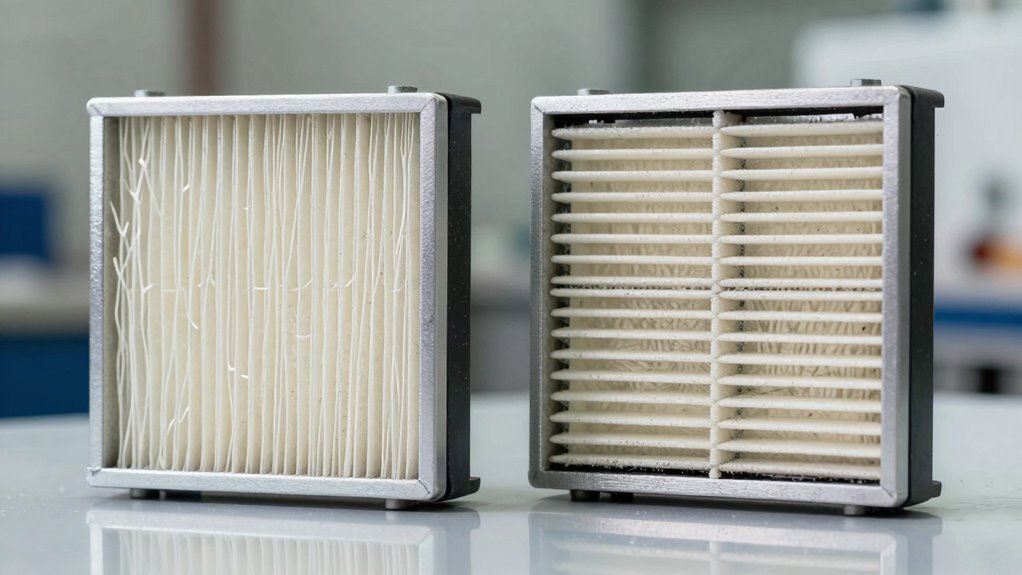
When it comes to maintaining clean air in your home, understanding the roles of pre-motor and post-motor filters is vital. Pre-motor filters act as the first line of defense in your air purification system, capturing larger particles such as dust and pet hair before they reach the motor. Typically located between the air intake and the motor, these filters, often made from foam or felt, help prevent clogging and damage to the motor. By screening out debris larger than 5 microns, they guarantee that the airflow remains efficient and the motor operates smoothly. This initial filtration step ensures that the pre-filters effectively reduce the load on subsequent filters that target smaller particles.
On the other hand, post-motor filters are positioned after the motor in the exhaust path. Their primary function is to catch any dust and particles that may have escaped the pre-motor filter. These filters are vital for ensuring that the air expelled from your vacuum or HVAC system is clean. Many post-motor filters utilize HEPA technology, capturing up to 99.97% of particles as small as 0.3 microns, which can include allergens and other fine contaminants. By filtering out these smaller particles, post-motor filters considerably improve your home’s air quality.
In terms of maintenance, you’ll find that pre-motor filters require more frequent attention. Since they capture larger debris, they can quickly become clogged, especially in high-dust environments. You should clean these filters monthly and replace felt types every 3 to 6 months to maintain ideal performance. Foam filters can be washed with mild detergent, but ensure they are completely dry before reuse. Conversely, post-motor filters typically require less frequent upkeep. You should check them monthly, replacing them every 3 to 6 months or when they appear dirty, as washing them can reduce their efficiency over time.
The efficiency of your air filtration system heavily relies on the interplay between these two filters. Pre-motor filters reduce the load on post-motor filters, allowing them to focus on finer particles and allergens. If the pre-motor filter is functioning well, it eases the burden on the post-motor filter, ultimately extending its lifespan. However, if the post-motor filter becomes too restrictive, it can lead to overheating issues in the motor, particularly in ECM motors.
Frequently Asked Questions
Can I Use My Vacuum Without a Pre-Motor Filter?
You can technically use your vacuum without a pre-motor filter, but it’s not a good idea. Doing so exposes the motor to larger debris, which can clog it or cause damage. This shortens the vacuum’s lifespan and reduces its suction efficiency. You’ll likely find yourself dealing with more maintenance issues down the line. It’s best to keep that pre-motor filter in place for peak performance and protection.
What Happens if I Don’t Replace My Post-Motor Filter?
If you don’t replace your post-motor filter, you risk allowing dust and allergens to escape back into your home. Over time, a clogged filter can hinder your vacuum’s performance and reduce air quality. You’ll notice less suction and possibly even unpleasant odors from the exhaust. Regularly replacing this filter helps maintain a healthy environment and guarantees your vacuum runs efficiently, protecting both the motor and the air you breathe.
How Do I Know When My Filters Are Dirty?
Your filters might seem like they’re hosting a dust party, but you can easily tell when they’re dirty. Check for visible dirt, reduced suction power, or unusual motor sounds. If your vacuum’s working harder than a marathon runner, it’s time to inspect the filters. A good rule of thumb is to replace or clean them every 3-6 months, or sooner if they look clogged or you’ve been vacuuming more than usual.
Are There Vacuum Models Without Pre-Motor Filters?
Yes, there are vacuum models without pre-motor filters. Some designs rely solely on post-motor filters to capture dust and allergens. However, these models might not offer the same level of protection for the motor, potentially leading to reduced suction efficiency and increased wear over time. If you’re considering one of these vacuums, just make sure to stay vigilant with maintenance to keep your vacuum running smoothly and efficiently.
Can I Clean a Post-Motor HEPA Filter?
No, you can’t clean a post-motor HEPA filter. These filters aren’t designed for washing; doing so can damage them and reduce their effectiveness. Instead, you should replace the HEPA filter every 3-6 months or whenever it looks dirty. Regular maintenance ensures your vacuum runs efficiently and keeps your air clean. Always check it alongside the pre-motor filter for maximum performance and to maintain good air quality in your home.
Conclusion
In the world of motor control, understanding the roles of pre-motor and post-motor filters is vital. Pre-motor filters prepare your brain for action, while post-motor filters refine the outcomes of your movements. So, the next time you’re fine-tuning your skills, ask yourself: how can these filters enhance your performance? By recognizing their unique functions, you’ll not only improve your coordination but also elevate your overall efficiency in both sports and daily activities.