

Cleaning with a shedding dog requires a room-by-room game plan to keep fur at bay. Start at the entry by using washable mats and a grooming station. In the living room, vacuum daily and use lint rollers on furniture. Keep your bedroom fur-free with a no-pets-on-bed rule and regular washing of bedding. In the kitchen, wipe surfaces often with damp cloths. Focus on laundry by pre-treating pet-hairy clothes. Stick around to discover more detailed strategies for each area!
Key Takeaways
- Establish entryway strategies by using washable mats and grooming tools to prevent fur from spreading inside your home.
- Maintain living areas with daily vacuuming and lint rollers to manage fur buildup on furniture and rugs.
- Implement a no-pets-on-the-bed rule or use washable protectors to keep fur off bedding and ensure a cleaner sleep environment.
- Clean kitchen surfaces with damp microfiber cloths daily to capture stray hairs and maintain hygiene in food preparation areas.
- Regularly groom your dog with deshedding tools and wash pet bedding separately to minimize fur transfer to your laundry.
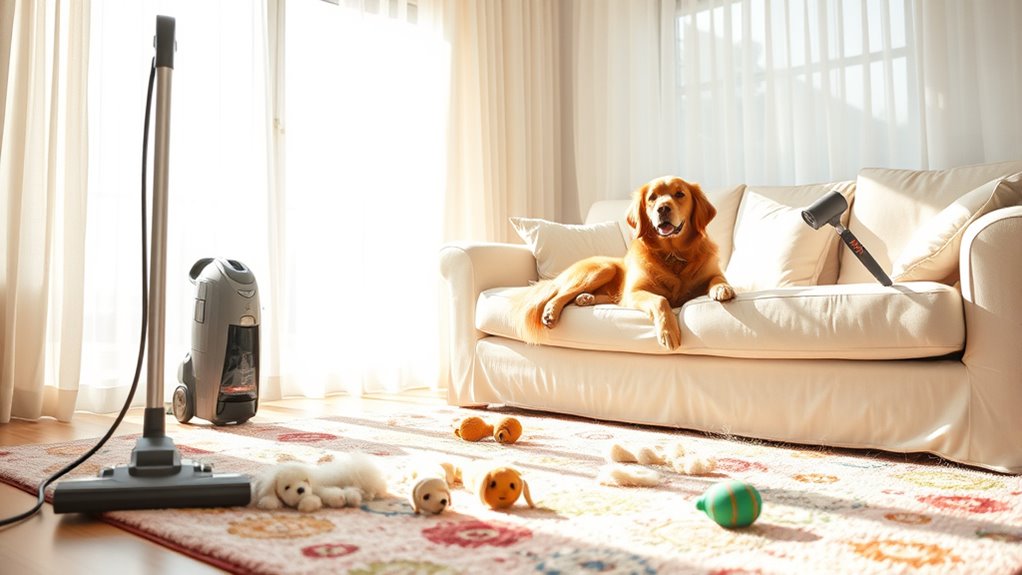
If you share your home with a shedding dog, you’re likely familiar with the constant battle against fur. To keep your living space under control, tackling each room with a focused strategy can make a world of difference. Start at the entryway. Place washable mats and set up a grooming station near the door. This will help you catch loose fur and dirt before it spreads throughout your home.
Moving into the living room, make daily vacuuming a priority, especially during heavy shedding periods. Use a high-suction vacuum with pet-specific attachments to effectively capture embedded fur from carpets and upholstery. Keep lint rollers handy for quick clean-ups on sofas and rugs. Consider using washable throws or slipcovers on your furniture to confine fur to easily removable items, and machine-wash these covers regularly. Additionally, don’t forget that regular brushing can help reduce shedding and keep your dog’s coat clean and healthy. Maintaining high suction in your vacuum can significantly enhance your cleaning efficiency.
In the bedroom, it’s wise to enforce a “no pets on the bed” rule. If that’s not feasible, invest in machine-washable mattress protectors. Wash your bedding weekly to reduce allergens and hair accumulation. A little effort here can drastically improve your sleep quality.
The kitchen often gets overlooked in cleaning routines, but stray hairs can easily collect on counters and floors. Use damp microfiber cloths to capture these fine hairs, ensuring your surfaces stay clean and hygienic. A quick daily wipe can keep the fur at bay, making your kitchen a more pleasant space.
When it comes to laundry, pre-treating pet-hairy clothes is essential. Use a dryer cycle with dryer sheets or a dry tumble to loosen hair before washing. Clean your washer and dryer lint traps frequently to avoid hair transfer between loads. Consider washing pet bedding separately to prevent human laundry from becoming fur-covered.
Throughout your home, make use of grooming tools like deshedding rakes and slicker brushes. Regular grooming sessions not only keep your dog looking good but also reduce the amount of loose hair that ends up on your floors and furniture. Combine this with a consistent vacuuming schedule, focusing on high-traffic areas daily, and you’ll be well on your way to a fur-free environment.
Incorporating these targeted tactics room by room can transform your cleaning routine, ensuring you have a clean and comfortable home despite sharing it with a furry friend. With a little organization and the right tools, managing shedding becomes a manageable task rather than an overwhelming chore.
Frequently Asked Questions
How Can I Reduce My Dog’s Shedding Overall?
To reduce your dog’s shedding overall, groom your pet regularly with the right tools, like a deshedding rake or slicker brush, and bathe them with a dog-formulated shampoo. Make certain your dog’s diet includes omega-3 fatty acids for healthier skin and coat. Keep their environment clean by vacuuming frequently and washing bedding weekly. If shedding is excessive or sudden, consult your vet to rule out any underlying health issues.
What Are the Best Grooming Tools for My Breed?
The best grooming tools for your dog depend on their coat type. If you’ve got a double coat, a deshedding rake works wonders. For long-haired breeds, a slicker or pin brush is ideal. Short-haired pups benefit from a rubber curry brush. Regularly brushing helps control shedding and keeps their coat healthy. Don’t forget to bathe them with a dog-formulated shampoo to loosen any dead hair, making grooming easier and more effective.
Is There a Specific Diet to Minimize Shedding?
To minimize shedding, you’ll want to feed your dog a balanced diet rich in omega-3 fatty acids. Picture shiny coats glistening in the sunlight as you nourish their skin from the inside out. Incorporate high-quality proteins and fresh vegetables, ensuring they get the nutrients needed for a healthy coat. If you notice excessive shedding despite diet changes, consult your vet to rule out any underlying health issues that might be causing it.
How Often Should I Take My Dog to a Groomer?
You should take your dog to a groomer every 4 to 8 weeks, depending on their breed and coat type. Regular grooming helps manage shedding and keeps their coat healthy. If your dog has a double coat or long hair, more frequent visits may be necessary, especially during shedding season. Pay attention to your dog’s coat condition and consult your groomer to tailor a grooming schedule that suits your pet’s specific needs.
What Are Signs of Abnormal Shedding in Dogs?
Signs of abnormal shedding in dogs include excessive fur loss that’s noticeable beyond normal seasonal changes, bald patches, skin irritation, or redness. You might also see changes in your dog’s behavior, like increased scratching or licking, and notice an unusual amount of dander. If your dog experiences weight loss or changes in appetite alongside shedding, it’s essential to consult your veterinarian to rule out any underlying health issues.
Conclusion
As you put the final touches on your cleaning routine, take a moment to appreciate the effort you’ve put in. But wait—what’s that? A stray clump of fur lurking in the corner? Just when you think you’ve conquered the shed, your furry friend might surprise you again. Embrace the challenge; every sweep, every vacuum, and every lint roll is a step toward a cleaner home. Can you keep up with your shedding companion? The game is on!