To sanitize your litter box area without harsh fumes, scoop clumps daily and wash the box weekly with hot water and mild dish soap. Use a 1:1 vinegar-water solution for stubborn stains, then rinse thoroughly. Sprinkle baking soda in the litter for odor neutralization, and opt for low-dust, unscented clumping litter. For best hygiene, maintain ventilation and clean regularly. Stick with these practices, and you’ll discover even more effective tips ahead.
Key Takeaways
- Use a vinegar-water solution (1:1 ratio) to effectively sanitize without harsh fumes while addressing stubborn stains or odors.
- Opt for natural, non-toxic cleaning agents to avoid exposure to harmful chemicals during the cleaning process.
- Rinse litter boxes outdoors or in utility sinks to prevent indoor humidity and residual odors from lingering.
- Sprinkle baking soda in the litter to neutralize odors and enhance freshness without using harsh chemicals.
- Ensure proper ventilation while cleaning by opening windows or using exhaust fans to disperse any residual vapors.
When it comes to maintaining a clean litter box area, regular cleaning is essential for both your cat’s health and your home’s hygiene. To minimize harsh fumes while keeping the space sanitized, you can adopt various effective strategies. Start by scooping clumps and solids at least once a day to prevent odor buildup. This simple daily task makes a significant difference in maintaining a pleasant environment for both you and your feline friend.
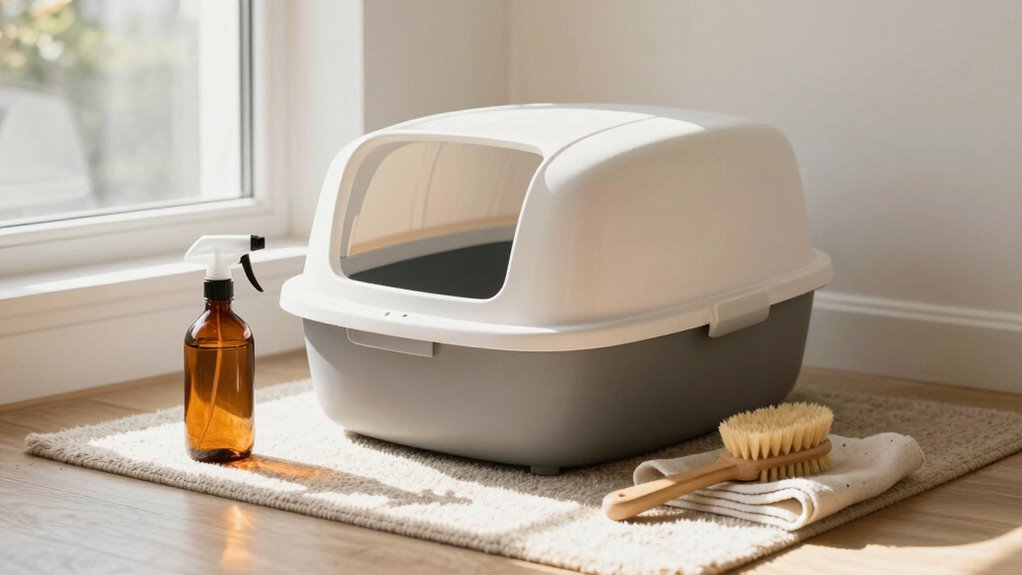
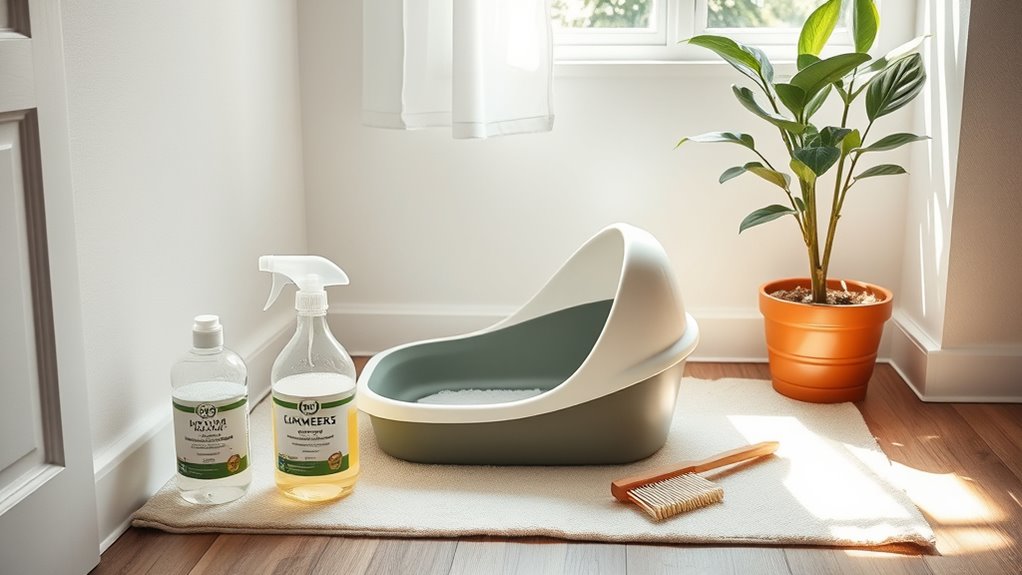
For a more thorough clean, aim for a full wash of the litter box once a week. Use hot water mixed with mild dish soap, which effectively removes organic residue without leaving harsh fumes. If you encounter stubborn stains or odors, consider using a vinegar-water solution (1:1 ratio) for a few minutes before scrubbing. This method not only helps reduce bacterial load but also avoids toxic fumes common with many commercial cleaners.
When it comes to deodorizing, sprinkle a bit of baking soda under or on top of the litter. This non-toxic option neutralizes odors without the risk of harsh chemicals. If you need to tackle specific stains or odors, small amounts of hydrogen peroxide can serve as an effective aid when followed by thorough rinsing. Choose enzyme-based cleaners designed for organic waste, as they break down odor-causing compounds without leaving harmful residues. Additionally, compassionate caregiving can extend to pets by ensuring their living spaces are clean and healthy.
In terms of litter selection, opt for low-dust, unscented clumping litter. These options minimize airborne particulates and don’t irritate your cat’s sensitive nose. Additionally, consider using larger-grain or pellet-style litters, which track less than fine-grain alternatives. Regularly topping up the litter and replacing it entirely each week keeps the area fresh and lessens the bacterial load. Using multiple litter boxes can also enhance hygiene and odor control, especially in multi-cat households.
To further reduce odors, place the litter box on a nonporous surface like tile or vinyl. This makes cleaning easier and prevents litter from embedding into carpets. Utilizing a litter mat with deep grooves can capture over 50% of tracked granules, keeping your floors cleaner and minimizing mess.
Finally, ensure proper ventilation while cleaning. Open windows or use exhaust fans to disperse any residual vapors. Always rinse cleaned boxes outdoors or in utility sinks to avoid indoor humidity buildup. By following these practices, you can maintain a clean, safe litter box area without exposing yourself or your cat to harsh chemicals. Regular maintenance not only enhances your cat’s comfort but also contributes to a healthier living environment for everyone.
Frequently Asked Questions
How Often Should I Replace My Cat’s Litter Entirely?
You should replace your cat’s litter entirely at least once a month for a single cat. If you have multiple cats, consider changing it every two weeks to prevent odors and maintain hygiene. Always keep an eye out for persistent smells or staining, which can signal it’s time for a change. Regular scooping will help, but fresh litter is essential for your cat’s comfort and health.
Can I Use Bleach to Clean the Litter Box?
You shouldn’t use bleach to clean the litter box. It emits strong fumes that can irritate your cat’s respiratory system and create a hazardous environment. Instead, opt for mild dish soap or a vinegar-water solution to sanitize without harmful effects. Always make certain proper ventilation while cleaning, and thoroughly rinse the box to prevent any residue that could affect your cat’s health. Keeping the area safe and comfortable is essential for your furry friend.
Are There Any Essential Oils Safe for Cats?
While the scent of lavender may evoke a calming garden, not all essential oils are safe for your cat. In fact, many can be toxic! If you’re looking for safer options, consider using small amounts of cat-safe oils like chamomile or copaiba, but always dilute them. Monitor your feline friend for any unusual reactions. Remember, less is often more, so stick to minimal usage to keep your home and kitty happy and healthy!
What Should I Do if My Cat Avoids the Litter Box?
If your cat avoids the litter box, check for cleanliness first; they might dislike the smell or texture. Make sure it’s scooped daily and cleaned weekly. Consider the litter type—some cats prefer unscented, clumping options. Check for any health issues, like urinary problems, by consulting your vet. Create a quiet, private space for the box, and avoid placing it near loud appliances or busy areas. Patience and observation will help you understand their needs.
How Can I Prevent Litter Box Odors in My Home?
When it comes to preventing litter box odors, you’ve got to stay ahead of the game. Scoop daily to keep waste at bay, and change the litter regularly. Use baking soda to neutralize smells and consider natural litters that minimize odors. Maintain ventilation by keeping the area airy, and place an air purifier nearby. Finally, clean the box weekly with mild solutions to guarantee a fresh environment for your furry friend.
Conclusion
Cleaning your litter box area doesn’t have to be a battle zone of harsh fumes and overwhelming scents! With a few simple, non-toxic methods, you can transform it into a fresh, inviting space that even your cat will appreciate. Picture your furry friend strutting around like royalty, basking in the glory of a sparkling clean throne! So, toss out those chemical-laden products and embrace the power of natural sanitizers—your nose and your pet will thank you for it!