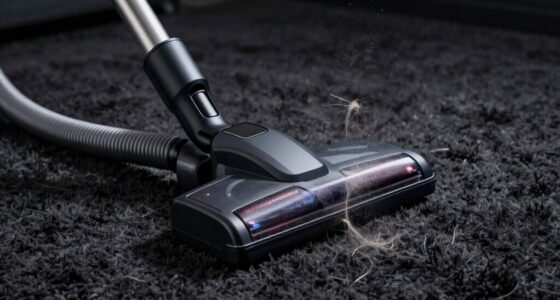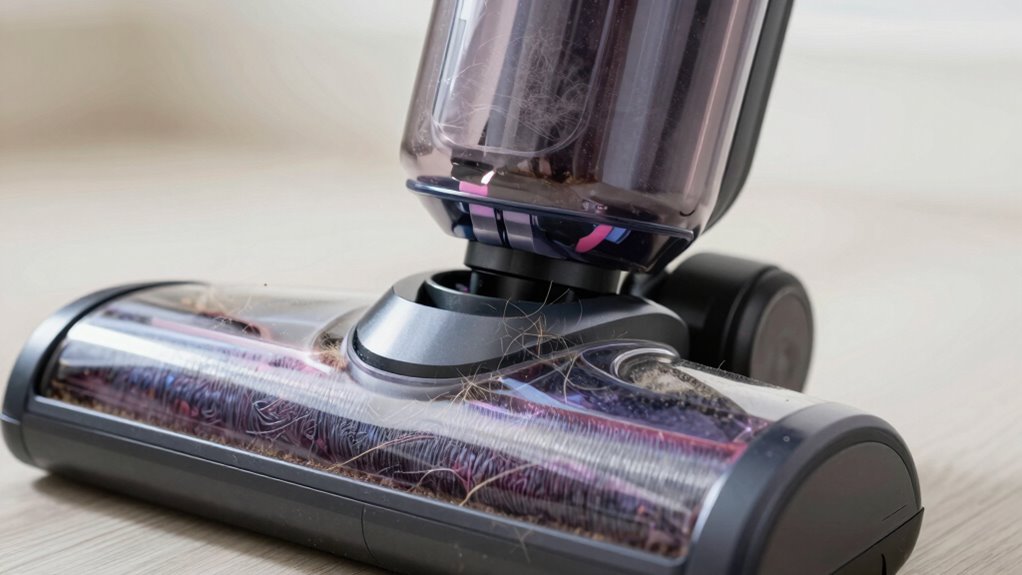

Vacuum clogs often hide in areas like the hose, filter, or around internal components, reducing suction and cleaning power. Signs include noticeable loss of suction, strange noises, or smells. To clear clogs, always unplug your vacuum, gently remove debris with flexible tools, and check filters and hoses regularly. Staying vigilant helps prevent issues, but if problems persist, there’s more to discover about safe removal techniques and prevention strategies.
Key Takeaways
- Common clog locations include filters, hoses, and the airflow pathway; regular inspection prevents buildup.
- Signs of clogs are reduced suction, strange noises, and performance issues; prompt detection is key.
- Always unplug the vacuum before clearing clogs; use flexible hoses, brushes, and gentle tapping techniques safely.
- Maintain filters, belts, and debris management routines to prevent clogs and ensure optimal performance.
- Seek professional help if cleaning doesn’t restore suction, or if there are unusual smells, noises, or electrical issues.
Common Areas Inside the Vacuum Susceptible to Clogs

Inside your vacuum, certain areas are more prone to clogs due to the buildup of debris and tangled fibers. The filter is a common trouble spot; if it’s dirty or clogged, airflow decreases, causing clogs further down the line. Regular filter maintenance ensures debris doesn’t back up and helps your vacuum run smoothly. The hose is another critical area; over time, hair, string, or small objects can wrap around the hose or cause blockages. It’s important to inspect the hose periodically for obstructions and remove any debris. Keeping these areas clear improves suction and prolongs your vacuum’s lifespan. Additionally, understanding how airflow dynamics affect vacuum performance can help you identify potential clog points early, especially when considering the impact of filter quality on overall efficiency. Properly maintaining vacuum components can prevent many issues related to clogs and improve your device’s longevity. Being aware of how clog-prone zones develop during regular use can help you take proactive steps to avoid major repairs. Regularly checking for obstructions in the hose and filter can help prevent buildup that leads to decreased performance and potential damage. By paying attention to filter maintenance and hose inspection, you can prevent many common clogs before they become major issues.
How to Recognize Signs of a Blocked Vacuum Line

A blocked vacuum line often shows subtle but noticeable signs that you shouldn’t ignore. If your vacuum isn’t suctioning as well as it used to, it could signal a clog. Check for reduced airflow, which might feel like weaker cleaning power or strange noises during operation. Regular filter maintenance is essential; a dirty or clogged filter can mimic or contribute to vacuum line blockages. Additionally, perform a hose inspection—look for kinks, cracks, or debris that might restrict airflow. You might notice an unusual smell or inconsistent vacuum performance. Staying attentive to these signs helps you identify a blocked line early, preventing further damage. Regularly maintaining filters and inspecting hoses keeps your vacuum running smoothly and reduces the risk of clogs forming unnoticed. Understanding how vacuum components work can help you troubleshoot issues more effectively. Proper disposal practices are also crucial, as improper disposal of debris can contribute to clogs in the vacuum system. Incorporating routine cleaning procedures can further extend the lifespan of your vacuum and maintain optimal performance. Being aware of common clog causes can help you take proactive steps to prevent issues before they become serious.
Tools and Techniques for Safe Clog Removal

To safely remove a vacuum clog, having the right tools and knowing proper techniques are essential. Start by disconnecting the vacuum from the power source. Use a flexible vacuum hose to reach into tight spaces and dislodge debris. A long, sturdy brush attachment can help loosen stubborn blockages inside the hose or at the intake. Avoid forcing objects through the hose, as this can damage components. Instead, gently work the brush or a straightened wire into the hose to clear the clog. For more stubborn blockages, you might consider using a combination of a gentle tap and airflow to loosen debris. Always inspect the hose afterward and ensure all attachments are clean before reassembling your vacuum to prevent re-clogs. Additionally, understanding clog locations can help you anticipate and prevent future blockages more effectively. Regularly checking the airflow pathways can also reduce the likelihood of blockages forming over time. Proper maintenance and awareness of potential obstruction points are key to keeping your vacuum functioning efficiently. Being aware of potential hazards during cleaning can also improve safety and prevent accidental damage.
Preventative Measures to Keep Your Vacuum Running Smoothly

Regular maintenance and mindful usage are key to preventing vacuum clogs before they happen. To keep your vacuum running smoothly, focus on a few simple steps. First, regularly check and clean your vacuum filter to prevent dust buildup that can block airflow. Second, replace the belt promptly when you notice it’s worn or slipping, ensuring proper suction and movement. Third, avoid vacuuming large debris or tangled cords that can jam the system. Use these belt replacement tips to keep parts aligned and functioning efficiently. By staying proactive with vacuum filter maintenance and timely belt replacements, you reduce the risk of clogs. Additionally, understanding common clog locations can help you target problem areas early. Implementing these habits helps your vacuum perform better, lasts longer, and keeps your cleaning routine hassle-free.
When to Seek Professional Assistance

Knowing when to call in a professional can save you time and prevent further damage to your vacuum. If you’ve tried troubleshooting and clearing clogs but still experience poor suction or strange noises, it’s time to seek professional repair. Attempting DIY safety fixes beyond basic maintenance can risk injury or worsen the problem. If you notice burning smells, sparks, or if the vacuum won’t turn on, don’t delay—these are signs of complex issues requiring expert attention. Professionals have the tools and expertise to diagnose hidden clogs, motor problems, or damaged parts securely. Regular maintenance, such as cleaning vacuum components, can help prevent these issues from escalating. Using proper troubleshooting techniques can also reduce the likelihood of damage. Additionally, understanding vacuum clog locations can assist in explaining the problem to your repair specialist. Recognizing signs of failure early can help you address issues before they become costly repairs. Incorporating routine inspections and understanding the internal vacuum design can further aid in maintaining optimal operation. Remember, timely professional repair can extend your vacuum’s lifespan and ensure it operates safely and efficiently.
Frequently Asked Questions
Can Vacuum Clogs Cause Permanent Damage to My Vacuum Cleaner?
Vacuum clogs can cause permanent damage if you ignore them. When a clog blocks airflow, your vacuum motor works harder, risking overheating and possible motor burnout. Additionally, excessive strain may lead to belt damage, reducing your vacuum’s efficiency. Regularly clearing clogs and maintaining your vacuum helps prevent these issues, ensuring your cleaner runs smoothly and lasts longer without costly repairs.
Are There Specific Vacuum Models More Prone to Clogs?
Some vacuum models are more prone to clog susceptibility patterns due to their design and build quality. You’ll find that less reliable vacuum model reliability often correlates with higher clog risks, especially in models with narrow hoses or weaker motors. To minimize clog issues, choose models known for their durability and easy maintenance. Regularly check for blockages and clear them promptly to keep your vacuum running smoothly and prevent damage.
How Often Should I Check for Clogs to Prevent Damage?
Think of your vacuum as a diligent guardian, protecting your home. To keep it strong, follow a maintenance schedule with regular inspection frequency—every 1-2 months. Check for clogs in hoses, filters, and brushes to prevent damage. If you notice a loss of suction or strange noises, inspect immediately. Staying vigilant guarantees your vacuum remains a reliable protector, saving you costly repairs and prolonging its lifespan.
Do Vacuum Clogs Pose Any Health Risks?
Vacuum clogs can pose health risks by trapping airborne allergens and dust, which might be released back into your home if not cleared properly. Mold growth can also develop in the moist, clogged areas, increasing allergy and asthma symptoms. To stay safe, regularly check your vacuum for clogs, clean filters, and guarantee proper maintenance. This helps prevent the spread of airborne allergens and mold, keeping your indoor air healthier.
Can Using a Wet/Dry Vacuum Reduce Clogging Issues?
Using a wet/dry vacuum can help reduce clogging issues by improving vacuum maintenance and removing debris more effectively. It’s especially useful for clearing wet or heavy materials that might cause blockages. To prevent clogs, you should regularly check and clean filters, hoses, and brushes, and employ clog prevention techniques like avoiding vacuuming large or non-bagged debris. This keeps your vacuum running smoothly and extends its lifespan.
Conclusion
Now, as you’ve learned where clogs hide and how to clear them safely, you might just find that your vacuum becomes more reliable than ever. Sometimes, a simple check reveals a hidden blockage, saving you a trip to the store or a costly repair. Keep an eye on those common areas, and your vacuum’s performance could surprise you—almost like it was waiting for you to notice. With a little care, your cleaning routine stays smooth and effortless.