
Soap scum on your shower tiles forms when soap reacts with hard water minerals like calcium and magnesium. This creates a stubborn buildup that clings to surfaces, making cleaning challenging. To remove it, rinse tiles with hot water, apply a cleaner, and let it sit before scrubbing. You can also use natural solutions like vinegar or baking soda. By following some preventive measures, you can keep your shower cleaner for longer, and there’s more helpful info ahead for you.
Key Takeaways
- Soap scum forms when soap reacts with hard-water minerals like calcium and magnesium, creating insoluble compounds that cling to surfaces.
- Hard water and traditional bar soaps increase the speed of soap scum buildup, especially in humid shower environments.
- To remove soap scum, rinse tiles with hot water, apply a cleaner, let it sit, and then scrub thoroughly.
- Natural cleaning solutions like vinegar and dish soap or baking soda paste effectively remove soap scum without harsh chemicals.
- Prevent soap scum by switching to liquid shower gels, squeegeeing tiles after showers, and maintaining proper ventilation to reduce moisture.

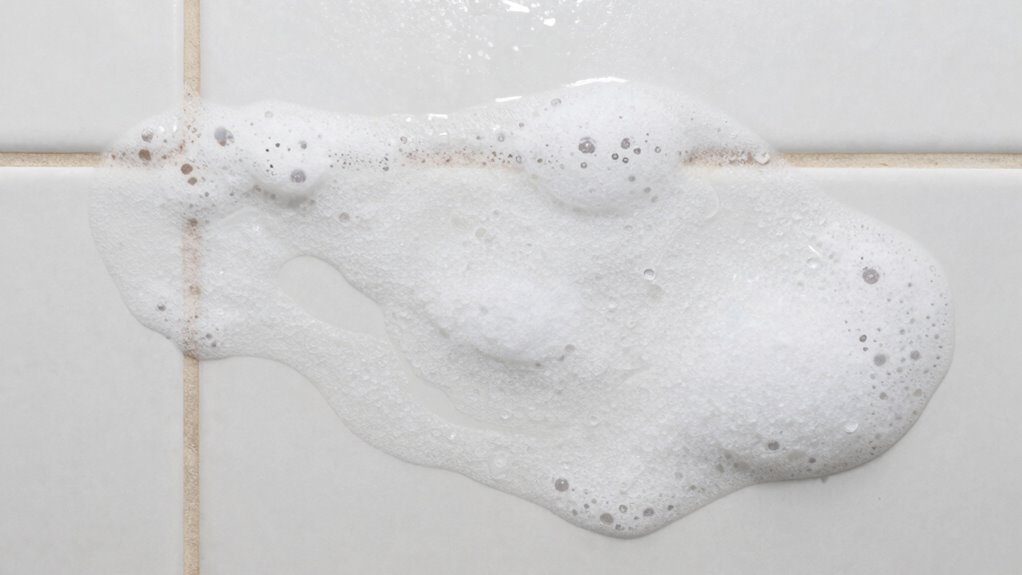
If you’ve ever stepped into your shower and noticed a cloudy, whitish-gray film on the tiles, you’ve encountered soap scum. This stubborn residue forms when soap, particularly bar soap, reacts with hard-water minerals like calcium and magnesium. As the soap interacts with these minerals, it produces insoluble compounds that cling to your shower surfaces. Over time, this thin film thickens, resulting in a rough, patchy appearance that not only looks unappealing but can also harbor dirt and bacteria.
The formation of soap scum is accelerated by hard water. If you live in an area with high mineral content, the combination of calcium, magnesium, and soap leads to rapid accumulation on your tiles, glass doors, and fixtures. Additionally, when you use traditional bar soaps, you’re more likely to leave behind residues compared to modern liquid cleansers. The steam from your showers and the slow-drying surfaces only compound the problem, allowing the soap scum to adhere more strongly. Soap scum buildup tends to be more persistent with frequent use of bar soaps, oily body washes, and conditioners. Proper ventilation considerations in your shower area can also help reduce the moisture that contributes to this buildup.
To combat this unwelcome buildup, you can utilize several effective removal methods. Start by rinsing the tiles with hot water, which helps loosen the scum. After that, apply a cleaner and let it sit for about 10-15 minutes before scrubbing. If you prefer natural solutions, a mixture of vinegar and dish soap can work wonders, as can a paste made of baking soda. Just remember to rinse thoroughly afterward. While chemical cleaners may act faster, they require good ventilation and can be harsh on your surfaces, so use them with caution.
Prevention is key to avoiding soap scum altogether. Switching to liquid shower gels can considerably reduce residue. After each shower, take a moment to squeegee or towel-dry your tiles. Establishing a daily cleaning routine, even if it’s just a quick scrub with a gentle cleaner, ensures that soap scum doesn’t have a chance to build up. Using Epsom salt in your baths can also soften the water, minimizing interactions that lead to scum.
If you’re dealing with persistent soap scum, consider installing a water softener to remove those troublesome minerals. While it might take a bit of effort, keeping your shower clean not only enhances its appearance but also improves overall hygiene, making your bathing experience more enjoyable.
Frequently Asked Questions
Can Soap Scum Cause Health Issues or Allergies?
Soap scum itself isn’t directly linked to health issues or allergies, but it can contribute to an unhealthy environment. The buildup can harbor bacteria and mold, which might trigger respiratory problems or skin irritations for sensitive individuals. If you notice increased allergies or skin reactions, it’s wise to clean your shower regularly. Using proper cleaning methods will help you maintain a healthier space and minimize potential health risks associated with soap scum.
How Often Should I Clean to Prevent Soap Scum?
Cleaning your shower at least once a week can markedly reduce soap scum buildup. Studies show that regular maintenance can cut down on up to 70% of stubborn residue. After each use, squeegee or towel-dry surfaces to minimize water droplets. Consider using liquid shower gels instead of bar soaps to lessen residue. If you notice buildup, address it promptly to make future cleaning easier and keep your shower looking fresh.
Are There Eco-Friendly Products for Removing Soap Scum?
Yes, there are eco-friendly products you can use to remove soap scum. Try a mixture of vinegar and baking soda; this natural solution effectively cuts through the buildup. You can also use lemon juice, which has natural acids that break down residue. Additionally, look for commercial cleaners labeled as eco-friendly, which often contain biodegradable ingredients. Regularly using these products helps maintain a clean shower without harsh chemicals harming the environment.
Does Soap Scum Affect the Lifespan of Shower Tiles?
Soap scum can wear down your shower tiles over time, like a relentless tide eroding a sandy beach. You might notice that the once-smooth surface becomes rough and discolored. This buildup traps moisture and grime, leading to potential cracks or stains. If you don’t clean it regularly, you could shorten your tiles’ lifespan. Keeping your shower tiles clean not only preserves their beauty but also enhances their durability, ensuring they last longer.
Can I Use a Magic Eraser on Soap Scum?
Yes, you can use a magic eraser on soap scum. It’s effective for tackling tough stains and buildup on tiles. Just dampen the eraser and gently scrub the affected areas. However, be cautious; magic erasers can be abrasive and might scratch certain surfaces. Always test a small, inconspicuous area first. After scrubbing, rinse the tiles thoroughly to remove any residue and enjoy your cleaner shower!
Conclusion
In the battle against soap scum, your shower tile is a canvas, waiting to shine. Just like a knight wielding a trusty sword, you have the power to reclaim its brilliance. With each scrub, you’re not just cleaning; you’re restoring a once-vibrant kingdom, bringing back the sparkle that time and grime have hidden. So gear up, take on the challenge, and let your efforts transform that dull surface into a gleaming reflection of your home’s beauty.