
TL;DR

Get cleaning gear delivered free with Prime
- Fast, free delivery on millions of items
- Prime Video, Amazon Music and more included
- Member-only deals all year
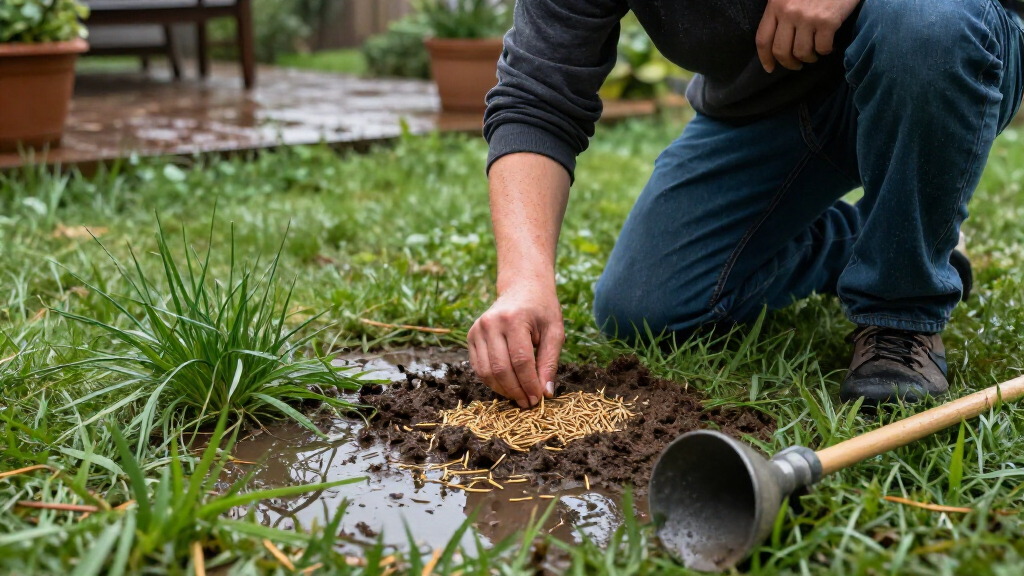
Grass seed can still grow after heavy rain if water drains away and the soil remains moist rather than waterlogged. Lawn experts cited by Ideal Home recommend redistributing displaced seed, lightly aerating pooled areas and covering seed with a thin layer of soil or compost. Germination commonly takes seven to 21 days, according to one expert, so the extent of damage may take time to assess.
Grass seed can still germinate after heavy rain if water drains away and the soil stays moist rather than saturated, according to lawn experts quoted by Ideal Home. The report recommends checking for pooled water and displaced seed, then redistributing seed, lightly aerating waterlogged areas or adding a thin covering of soil or compost to limit further movement.
Standing water is the main risk, not rain alone. Guy Jenkins, consumer manager at Johnson’s Lawn Seed, told Ideal Home that moisture is needed for germination, but soil that is completely saturated or waterlogged can interfere with it. Lawn care expert Jonathan Davis of Lawnsmith said seed sitting in standing water can rot or lack oxygen.
Heavy rain can also wash seed away or gather it into clumps. That may leave some parts of a lawn bare and others crowded with thicker tufts. Davis said that if rain has soaked into the ground or drained away, leaving it moist but not waterlogged, seed should germinate as normal.
For seed that has shifted, Jenkins advises waiting until the ground is workable before using a rake to spread it across bare patches. He said germination typically begins within seven to 21 days. If the lawn is still visibly patchy after that period, he recommends overseeding affected spots.
How Rain Affects New Lawns
The difference between damp soil and waterlogged ground can shape whether a new lawn grows evenly. Seed loss and uneven distribution may not be obvious until water recedes, and immediately disturbing saturated soil could make the problem worse. Waiting until the ground is workable gives gardeners a better chance to correct bare areas without unnecessarily disturbing seed that remains in place.
The advice also gives homeowners a way to judge whether to wait or intervene. Moist, draining soil is a reason to allow germination time; standing water, visible seed movement or bare patches are signs to monitor and address. The report does not promise that every seed will recover after a storm.
Products Worth Considering

Sonos Era 100 SL Compact Microphone-Free Speaker, White

Dyson V8 Cyclone Cordless Vacuum

Shark Navigator Robot Vacuum with 30-Day Self-Emptying Base, White (AV2110S)
As an affiliate, we earn on qualifying purchases.
Three Steps After Heavy Rain
Ideal Home’s report frames the advice around lawns sown ahead of stormy autumn weather. It identifies three possible responses, depending on what a gardener sees after the rain. The suggestions come from Jenkins and Davis; the report provides no measured trial data comparing their effectiveness.
First, redistribute seed that has washed into piles, but only once the surface is workable. Second, aerate lightly where water has pooled. Davis said aeration creates channels that can help water drain rather than collect or run off; he advised keeping the work light at that time of year to avoid disturbing seed or stressing existing grass.
Third, add a thin cover of topsoil or compost, which Davis said can help hold seed in place and improve drainage. The report also mentions a light natural covering as a way to reduce seed movement and bird access. Any covering should be light; the source does not specify a precise depth or provide product-independent application instructions.
Damage Depends on Drainage
The report does not say how much seed was lost in any particular lawn or how long standing water must remain before it causes damage. Results will depend on local drainage, how far seed moved and whether the soil is still saturated. It also does not give a forecast for specific areas or identify a single recovery method that will work in every garden.
Gardeners may need to wait for the ground to dry enough to work before assessing the distribution of seed. The suggested seven-to-21-day germination window is Jenkins’s general guidance, not a guarantee that every seed type or lawn will follow the same schedule.
Watch for Growth and Bare Patches
Once water has drained and the surface is workable, check whether seed has collected in clumps or left bare areas. Redistribute displaced seed and consider light aeration in pooled spots, taking care not to disturb seed that is already in place. A thin soil or compost covering may help keep remaining seed from washing away again.
Allow time for germination, then reassess the lawn within the seven-to-21-day period cited by Jenkins. If patches remain noticeable after that, overseed those areas. The report gives no additional follow-up date or local weather guidance, so gardeners should base any further work on the condition of the soil and the lawn.
Key Questions
Will grass seed grow after heavy rain?
It can. The experts quoted by Ideal Home say seed may germinate if the rain drains away and the ground stays moist rather than waterlogged. Standing water can harm seed.
What should I do if rain has moved the seed?
Wait until the ground is workable, then use a rake to spread seed from crowded areas into bare patches. Jenkins says to consider overseeding if the lawn remains noticeably patchy after the usual seven-to-21-day germination period.
Should I aerate a waterlogged lawn?
Davis recommends light aeration to help water drain through the soil, concentrating on pooled areas. He cautions against heavy work that could disturb seed or stress existing grass.
Can I cover grass seed after heavy rain?
A thin layer of topsoil or compost may help hold seed in place, according to Davis. The report does not specify an exact covering depth, so avoid assuming that a thick layer is needed.
Source: idealhome.co.uk