
TL;DR

Get cleaning gear delivered free — and shop member deals
- Fast, free delivery on millions of items
- Access to Prime Big Deal Days deals on October 6–7
- Prime Video, Amazon Music and more included
Toro describes its 60V, 900 CFM handheld battery blower as an all-season tool, citing its airflow-focused performance, ergonomic design and materials intended for cold-weather use. Those benefits are based on the company’s design rationale as relayed by Pro Tool Reviews; the supplied report does not include independent test results, pricing or a full set of product specifications.
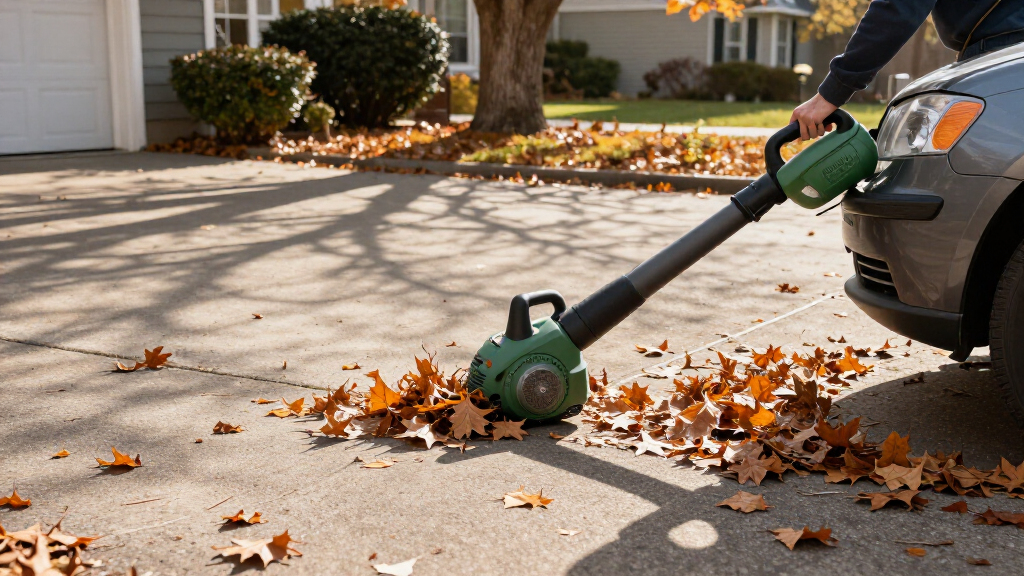
Toro says its 60V, 900 CFM handheld battery blower is designed for yard work across all four seasons, with a focus on broad airflow, handling and cold-weather durability. In a report published by Pro Tool Reviews, Toro Product Marketing Manager Ben Waldera described the design choices behind the company’s highest-performing handheld battery-powered blower.
Toro’s stated approach is to favor air volume, measured in CFM, for common cleanup tasks rather than maximizing air speed alone. Waldera told Pro Tool Reviews that the blower is tuned to deliver enough force at full throttle for many jobs without requiring users to hold the Turbo button continuously, which the company says can help preserve battery runtime. The report does not provide measured runtime figures or independent comparisons.
The article explains that CFM measures airflow, while miles per hour (MPH) measures air velocity. It describes Newton force as a useful overall measure of the force exiting the nozzle. For moving leaves across a lawn, the report says broader airflow can help users direct debris over a wider area; a more concentrated, faster stream can be useful for dislodging debris in tight spaces. Toro’s design choice, as described by Waldera, favors CFM for general productivity, while the blower’s air velocity is lower than some competing models.
Waldera also outlined the blower’s physical design. Toro placed the battery close to the user’s wrist to reduce the sense of weight when rotating the tool, and added a front handle for two-handed control when the blower’s force or working position calls for it. For winter use, Toro says it selected materials also used in its snowblowers and added static-dissipative resin. The company advises users to charge and store batteries indoors during winter; the supplied report does not specify operating temperature limits.
A Blower Built for Seasonal Cleanup
The all-season positioning matters to homeowners and grounds crews who want one handheld tool for more than autumn leaves. The report identifies spring cleanup, summer debris, fall leaf gathering and winter conditions as use cases Toro considered. A single battery blower could reduce the need to switch tools for routine yard tasks, although the article does not establish that it can replace every specialized tool or handle every job.
The emphasis on airflow and ergonomics reflects a practical trade-off in blower design. Maximum air speed may help with compacted debris, while higher air volume can be useful for moving larger areas of leaves. Toro’s case for this model rests on balancing those demands and limiting reliance on Turbo mode. Buyers comparing blowers would still need product measurements and hands-on testing to judge how that balance works for their own yards.
How Toro Defines All-Season Use
The report frames the blower around work that can arise throughout the year. In spring, Toro points to leaves and debris exposed after snowmelt, oak leaves lodged in grass, and gutters that may have collected material over winter. The company also offers a gutter cleaner kit, which the report says can help users clean gutters without climbing onto the roof.
For fall leaf gathering, the article says higher airflow can help corral debris across a broader area. It contrasts that task with clearing caked leaves under shrubs or debris caught in crevices, where a forceful, more concentrated blast may be useful. The source excerpt discusses winter materials and battery care but does not provide detailed summer applications or a complete season-by-season performance assessment.
Pro Tool Reviews says its account draws on an interview with Waldera and was published in partnership with Toro. That relationship is relevant when weighing the company’s explanations of its own product. The supplied material offers Toro’s design rationale and use examples, but no independent test data, customer findings or detailed side-by-side results.
“Just remember to charge and store your batteries inside during the winter so they can perform at their best when it’s time to take them out in the cold.”
— Pro Tool Reviews, summarizing Toro’s winter guidance
Performance Details Still Missing
The source material does not state the blower’s price, battery capacity, measured runtime, weight, exact air-speed rating, noise level or operating temperature range. It also does not include independent performance tests or enough comparative data to verify how its airflow and force measure against competing models.
The report’s discussion covers only part of its promised seasonal scope: spring, fall and winter receive specific examples, while summer use is not detailed in the supplied excerpt. It is also unclear which battery configuration was used for Toro’s performance claims and whether results vary by battery size or operating mode.
Check Specifications Before Buying
Readers considering the blower can compare Toro’s published specifications for the exact model and battery configuration, then look for independent tests that report runtime, air speed and blowing force under stated conditions. The report points to Toro’s gutter cleaner kit as an accessory for one spring cleanup task, but does not list its compatibility or price.
No additional product announcement, test date or upcoming milestone appears in the supplied material. Further reporting or product documentation would be needed to confirm how the blower performs across seasons and what limits apply in cold weather.
Key Questions
What is Toro’s 900 CFM blower?
It is a 60V handheld battery-powered leaf blower that Toro describes as its highest-performing handheld battery model. The report identifies its airflow rating as 900 CFM.
Why does Toro emphasize CFM?
CFM measures the volume of air moving through the blower. Toro says higher airflow can help users control debris across a wider area, such as when gathering leaves on a lawn. Air speed can matter more for dislodging debris in confined spots.
Can it be used in winter?
Toro says it selected materials intended to withstand cold-weather use and added static-dissipative resin. The report advises charging and storing batteries indoors, but does not give an operating temperature range or independent cold-weather test results.
Does the report confirm its runtime or price?
No. The supplied report includes Toro’s explanation that its full-throttle performance is intended to reduce the need for continuous Turbo use, but it provides no measured runtime or price.
Source: rss
Fall Picks
fall essentials
As an affiliate, we earn on qualifying purchases.