
TL;DR

Get cleaning gear delivered free with Prime
- Fast, free delivery on millions of items
- Prime Video, Amazon Music and more included
- Member-only deals all year
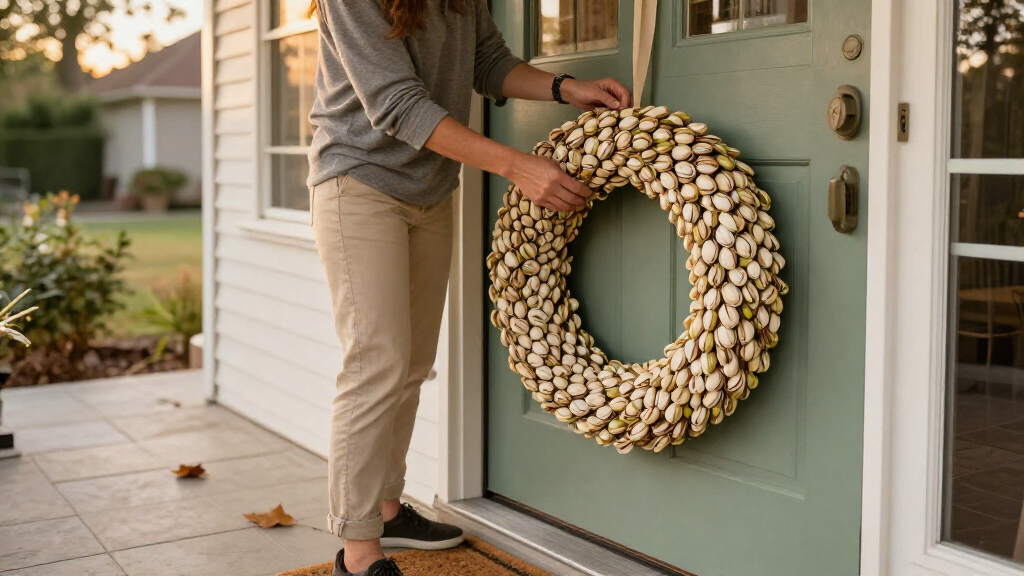
Hunker describes a do-it-yourself wreath made from cleaned pistachio shells, layered and glued into flower shapes, then attached to a wreath base. The project uses household or craft materials and can be adapted with paint and ribbon, but it requires time and careful assembly.
Hunker has outlined a front-door wreath project that turns saved pistachio shells into painted, layered flower shapes attached to a homemade or reused wreath base. The idea offers a way to make a customizable decoration from a material often discarded, though the instructions call for several supplies and time for cleaning, drying, painting and gluing.
The project uses pistachio shells, cardboard or a pool noodle for the wreath form, adhesive, a craft knife, twine or ribbon, and spray paint. Hunker also suggests reusing a stored wreath base. For a cardboard form, the report recommends cutting a circle from a shoe or shipping box, then cutting out the center to create a ring. It gives 24 inches in diameter as a suggested size for a standard 36-inch-wide door. A pool noodle can instead be bent into a circle and secured with duct tape, then covered with twine or ribbon.
Before assembly, the shells are rinsed in hot water to remove residue and left to dry on a baking sheet. They can then be painted in one color or sorted into groups for a multicolor design. Hunker says to coat both sides of each shell and let the paint dry before gluing.
To form each flower, the instructions use a small cardboard circle as a backing. Three or four shells are glued upright near its center; additional shells are layered outward, with glue along the lower edge of each shell. Once the flowers are assembled, they are glued onto the wreath base. A ribbon tied at the top provides a hanging loop. The report suggests positioning the wreath about 14 inches below the top of the door, while color and ribbon can be changed to suit a season or occasion.
A Reusable Alternative to Fresh Blooms
The project presents a reuse-focused decorating option for people who want a floral look without buying fresh flowers or a standard ready-made wreath. It makes use of shells that might otherwise be thrown away and allows makers to choose the base, flower colors and hanging ribbon. The source describes it as budget-friendly, particularly if the shells and some materials are already on hand; it does not provide a cost estimate or compare the finished project with store-bought wreaths.
Hunker says the shell flowers should last longer than fresh blooms exposed to sun and rain. That is the report’s characterization, not a tested durability claim: it gives no information about how the paint, glue or base perform outdoors over time. The practical appeal is therefore the ability to personalize the design and reuse materials, while the finished wreath’s weather resistance remains dependent on the products and conditions involved.
Products Worth Considering

Philips Hue White and Color Ambiance Smart Light Starter Kit, 2 A19 Bulbs with Hub

TCL 65-Inch T7 Series 4K QLED Smart Google TV, 144Hz (65T7)

TCL 65-Inch QM6K QLED Mini-LED 4K HDR Smart Google TV, 144Hz
As an affiliate, we earn on qualifying purchases.
From Discarded Shells to Flowers
The instructions respond to a familiar decorating choice described by Hunker: fresh-flower wreaths can cost more than some shoppers want to spend, while inexpensive alternatives may feel generic. The proposed substitute is not a manufactured floral product but a hands-on craft built from shells, adhesive and a wreath form.
The method relies on overlapping shells to create the appearance of petals. Painting the shells and arranging them in different colors can change the look without changing the basic construction. Hunker advises setting aside plenty of time for the small-scale work, including preparing individual shells and building each flower. The report provides instructions and material suggestions, but no finished-project price, completion-time estimate or independent assessment of how closely the flowers resemble real blooms.
Outdoor Wear and Project Costs
The source does not state how long the wreath takes to make, how many shells are needed, or what the project costs. Those details will vary with wreath size, flower count, materials already available and the amount of coverage chosen. It also does not specify paint or adhesive brands, or whether particular products are rated for outdoor use.
Although Hunker says the shell flowers can hold up season after season, it supplies no testing or conditions for that claim. Exposure to rain, sun and temperature changes may affect the finish or adhesive, but the source does not report how the wreath performs in those conditions. Readers should treat the stated durability as a description in the original report rather than a guaranteed lifespan.
Choose Materials and Build the Wreath
The next steps for anyone following the project are to choose a base, gather and clean enough shells, and decide on a color scheme before assembly. Shells need to be fully dry before painting, and paint should dry before the pieces are glued into flowers. The source recommends trying the design with cardboard or a pool noodle, or refreshing an existing wreath form.
Hunker does not announce a follow-up test or additional guidance. The final look and longevity will depend on the maker’s layout and materials; those results are not documented in the source. The report’s suggested sequence is to attach completed flowers to the base, let the adhesive set, then add a ribbon or twine loop for hanging.
Key Questions
What materials are needed for the pistachio shell wreath?
The listed supplies include pistachio shells, cardboard or a pool noodle for the base, adhesive, a craft knife, twine or ribbon, and spray paint. A reused wreath form is another option.
How are the shells shaped into flowers?
Glue three or four shells upright near the center of a small cardboard circle, then add more shells in overlapping layers toward the outside. Attach the completed flowers to the wreath base.
Does the report give a price or completion time?
No. Hunker describes the idea as budget-friendly but gives no cost estimate or time estimate. The total will depend on the supplies on hand and the size and detail of the wreath.
Will the wreath last outdoors season after season?
Hunker says the shell flowers can hold up season after season, but the source provides no testing details or lifespan. It does not identify specific outdoor-rated paint or adhesive, so long-term weather performance is unclear.
Source: hunker.com