When tackling flood cleanup, act quickly to remove standing water and begin drying right away. Use air movers and dehumidifiers to maintain a relative humidity below 50% and monitor moisture levels throughout the process. Remove damaged materials like drywall and insulation to prevent mold growth. Thoroughly clean and disinfect surfaces to eliminate contaminants. By following these steps, you can substantially reduce the chance of mold developing later. Keep going to uncover even more essential tips.
Key Takeaways
- Remove standing water immediately to minimize damage and reduce mold risk.
- Discard damaged materials like drywall and insulation to prevent moisture retention.
- Use high-volume air movers and dehumidifiers to accelerate the drying process.
- Monitor moisture levels with meters to ensure safe drying conditions.
- Conduct thorough cleaning and disinfection of surfaces to eliminate contaminants.

Flood Cleanup Basics
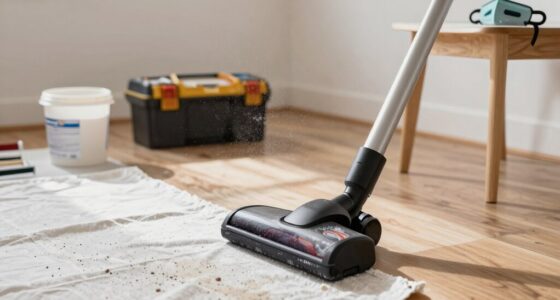
When a flood strikes, how quickly you act can make all the difference in preventing further damage to your home. Start by removing standing water as soon as you safely can. Use pumps or wet/dry vacuums for this. If you wait too long, moisture can seep into building materials, increasing the risk of mold growth within 24 to 48 hours. Before you begin, ensure that authorities have declared the area safe and manage utilities to prevent any hazards. Shovel out any mud or silt first; this makes the extraction process more effective.
Once the water is cleared, focus on removing wet materials. Discard drywall and other interior finishes that sit below or near the flood line. Leave wall cavities open to allow for proper drying and inspection. Wet insulation needs replacement, too, as it retains moisture and fosters mold. Also, get rid of carpeting and carpet pads that stayed wet for too long. Don’t forget to detach soaked baseboards and trim. Inspect any porous belongings like mattresses or stuffed toys; if they can’t be thoroughly cleaned and dried within 48 hours, they need to go. It’s important to understand that moisture levels in building materials should be monitored throughout the drying process.
After removing the damaged materials, it’s time to clean and disinfect surfaces. Start by scrubbing away mud and organic debris before applying disinfectants. Use a non-phosphate detergent wash followed by a bleach solution on hard surfaces. Make sure to apply disinfectants from top to bottom and allow them enough time to work. Wear appropriate personal protective equipment, like gloves and masks, to shield yourself from contaminants. Consistent and thorough disinfection is crucial to preventing mold growth.
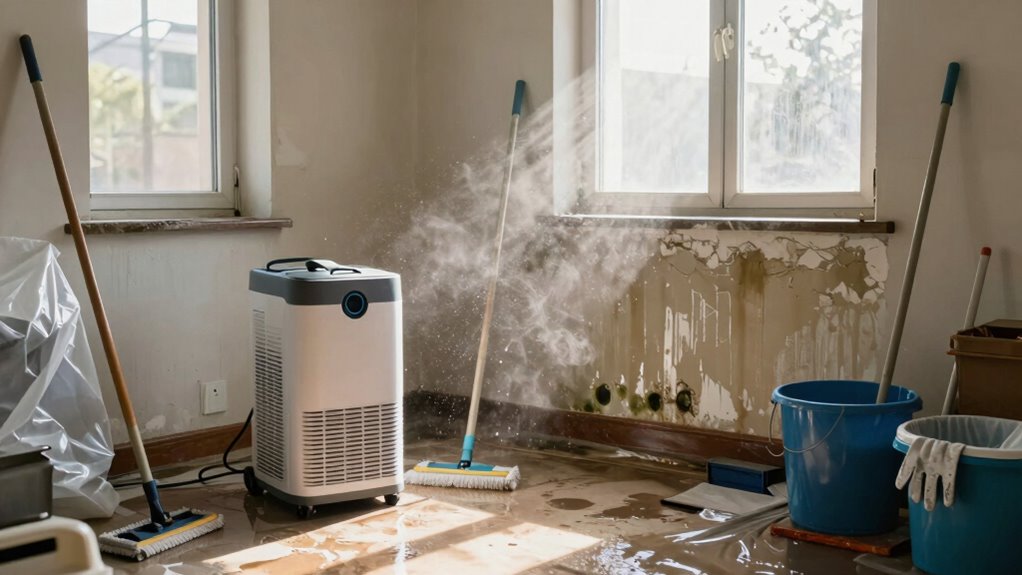
Now, you’ll want to dry everything out rapidly. Use high-volume air movers and dehumidifiers to speed up the process. Keep them running until moisture levels in building materials drop to safe levels. Monitor this with moisture meters. Create airflow paths by opening windows and placing fans to direct moist air to exhaust points. Aim to maintain relative humidity below 50% during the drying phase to inhibit mold growth.
Finally, inspect structural elements like studs and framing for any signs of warping or microbial growth. Replace or treat any compromised materials as necessary. Document all your cleanup efforts with photographs and keep records of expenses for insurance purposes. By following these steps, you considerably reduce the risk of mold issues later on and lay the groundwork for a safe, effective recovery.
Frequently Asked Questions
What Safety Precautions Should I Take During Flood Cleanup?
During flood cleanup, you should prioritize safety by shutting off utilities to prevent electrical hazards. Wear protective gear like gloves, boots, and masks to shield yourself from contaminants. Avoid wading through floodwater, as it may contain harmful substances. Use proper extraction equipment for water removal, and document damage for insurance purposes. If you detect mold, consider calling professionals for safe removal. Always keep a first aid kit nearby for emergencies.
How Can I Tell if Materials Are Salvageable?
“Where there’s smoke, there’s fire,” and where there’s water, there’s potential damage. To determine if materials are salvageable, check for saturation. Porous items like carpet and drywall often can’t be fully dried or cleaned, so they should be discarded. Inspect surfaces for mold or rot; if you see visible damage, it’s best to replace them. Always document your findings for insurance purposes, ensuring you’re prepared for any claims.
When Should I Call a Professional for Help?
You should call a professional when the water damage is extensive, particularly if it’s over a significant area or involves structural components. If you notice persistent moisture, visible mold growth, or if contaminated water (like sewage) has affected your space, it’s best to get expert help. Professionals have the right equipment and expertise to guarantee thorough drying, cleaning, and remediation, minimizing long-term health risks and structural damage to your property.
What Should I Do With Valuable Items Affected by Water?
Did you know that 40% of small businesses never reopen after a disaster? If your valuable items are affected by water, act quickly. Remove them from the wet area and assess damage. Clean and dry salvageable items immediately, and discard anything porous that’s soaked, like carpets or upholstery. Document everything with photos for insurance claims. If items are markedly damaged, consider consulting a professional restoration service to determine the best course of action.
How Long Does It Typically Take for Materials to Dry?
It typically takes 24 to 72 hours for materials to dry, depending on factors like humidity, temperature, and airflow. You can accelerate the process by using fans and dehumidifiers. However, some materials, like drywall and insulation, might take longer to dry completely. It’s essential to monitor moisture levels regularly to guarantee everything reaches a safe dryness level before you start repairs or reinstallations. Keep an eye on hidden spaces, too!
Conclusion
In summary, tackling flood cleanup quickly is essential. Did you know that mold can start growing within just 24 to 48 hours after water exposure? By following these drying steps, you’re not only protecting your home but also your health. Keep the air circulating and use dehumidifiers to help absorb moisture. Remember, the sooner you act, the better your chances are of preventing mold from taking hold. Don’t wait—start your cleanup today!