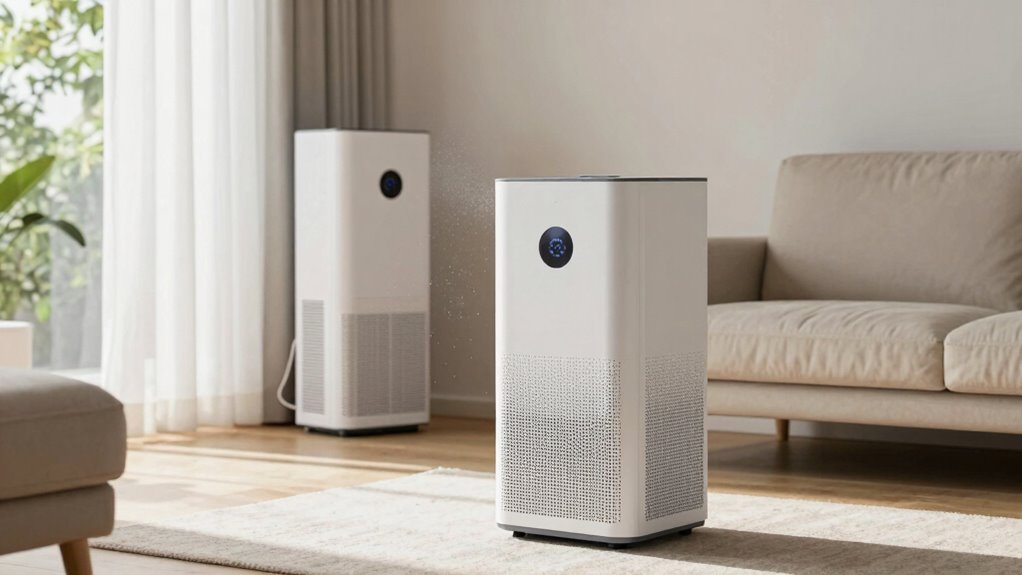

If you’re considering air cleaning options, portable units excel in small spaces like bedrooms, but you might need multiple for whole-home coverage. Whole-home systems integrate with your HVAC to provide consistent air quality throughout your house and generally require less maintenance. While portable units have lower upfront costs, whole-home systems can be more cost-effective long-term by reducing energy and filter expenses. Want to know more about which option suits your needs best?

Get cleaning gear delivered free with Prime
- Fast, free delivery on millions of items
- Prime Video, Amazon Music and more included
- Member-only deals all year
Key Takeaways
- Portable air cleaners are ideal for specific rooms but require multiple units for whole-home coverage, increasing costs.
- Whole-home systems integrate with HVAC to provide consistent air quality throughout the house without needing multiple devices.
- Portable units excel in targeted filtration but may be noisy and require frequent maintenance, while whole-home systems operate silently.
- Whole-home systems generally have a higher upfront cost but are more cost-effective long-term due to fewer filters and maintenance needs.
- Portable units offer immediate filtration benefits, but whole-home systems improve overall air quality and efficiency across the entire home.
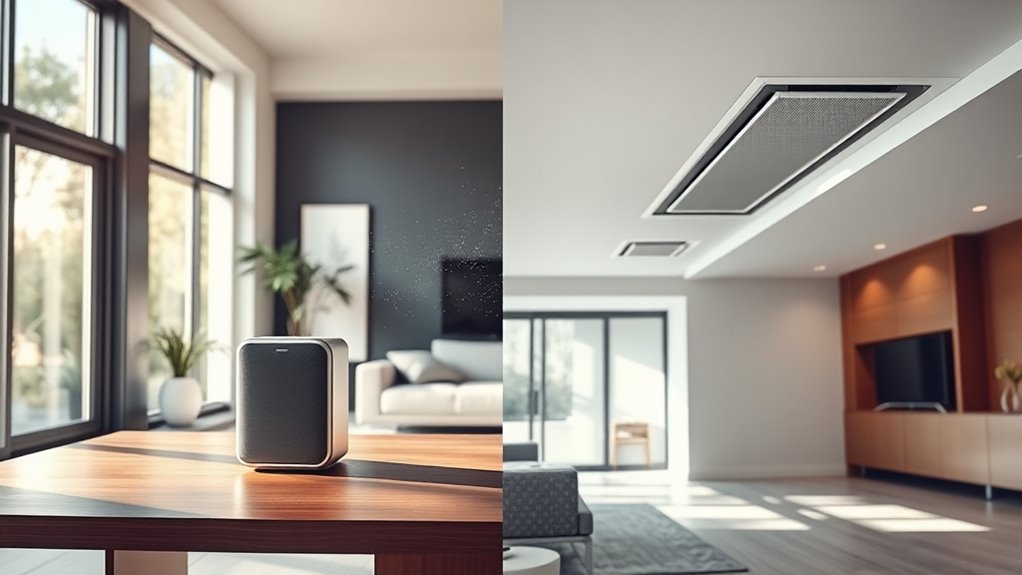
When it comes to improving your home’s air quality, choosing between portable and whole-home air cleaning systems can be a formidable task. You’ll want to weigh the advantages and limitations of each option carefully. Portable units excel in targeted spaces, such as bedrooms or offices, offering quick filtration for confined areas. However, if you’re looking for whole-home coverage, you’d need several portable units to achieve similar results to a whole-home system, which could become costly and cumbersome with maintenance. Additionally, trusted resources can help you find the best options available in your area.
Whole-home systems integrate with your HVAC, filtering air throughout your entire house whenever the system runs. This means all rooms benefit from consistent air quality without the need for multiple devices. The performance of these systems depends on the design of your ductwork, but when properly installed, they provide centralized filtration and can effectively reduce pollutants with high-efficiency filters. If your home is larger or has multiple occupants, a whole-home system generally outperforms portable units in delivering uniform air quality. Whole-house systems also help prevent dust and debris buildup in HVAC systems, improving overall efficiency.
Whole-home systems ensure consistent air quality throughout your home, utilizing high-efficiency filters for effective pollutant reduction.
In terms of efficiency, whole-home systems use larger filters, such as MERV16, which can achieve a 47% ozone reduction. While portable units may remove over 99% of particles in their designated space, they can’t match the comprehensive coverage of whole-home systems. Additionally, whole-home systems operate silently within your HVAC, while portable units may generate distracting noise, particularly at higher fan speeds.
Cost is another vital factor. While portable air purifiers typically have lower upfront costs, you’ll need to consider the long-term expenses. Multiple portable units can lead to higher electricity bills and frequent filter replacements. A whole-home system has a higher initial investment due to installation and required modifications, but it usually proves to be more cost-effective over time with fewer filters and units needed.
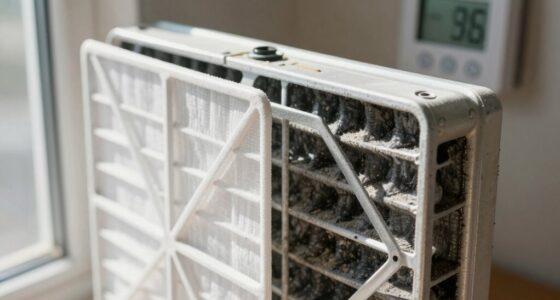
On the maintenance front, whole-home systems require less frequent filter changes since they’re integrated into your HVAC. Portable units, on the other hand, need regular cleaning and filter replacements, which can add to your workload. You also won’t have to worry about rearranging devices with a whole-home system; once it’s installed, it works unobtrusively in the background.
Ultimately, your choice depends on your specific needs. If you’re renting or only need temporary air purification, portable units are ideal. However, for long-term, whole-house air quality management, investing in a whole-home system will likely serve you better.
Frequently Asked Questions
How Do I Choose Between a Portable and Whole-House System?
To choose between a portable and whole-house air cleaning system, consider your specific needs. If you want to improve air quality in a single room or space, a portable unit may be sufficient and cost-effective. However, if you need consistent filtration throughout your entire home, a whole-house system is the better choice, providing extensive coverage and efficiency. Evaluate your home’s size, budget, and desired air quality level to make the best decision.
Can I Use Both Systems Simultaneously for Better Air Quality?
Yes, you can use both systems simultaneously for better air quality. Combining a whole-house system with portable units lets you target specific areas while maintaining overall home filtration. This approach helps you enjoy consistent air quality throughout your home and immediate relief in rooms where you spend the most time. Just make certain your HVAC system can handle the extra load, and keep an eye on maintenance for both systems to maximize their effectiveness.
Is a Portable Unit Effective for Allergy Sufferers?
Yes, a portable unit can be effective for allergy sufferers. It filters allergens in a specific area, like your bedroom or office, providing immediate relief. However, you might need multiple units for larger spaces to achieve consistent air quality throughout your home. Make sure to choose a model with a HEPA filter for maximum effectiveness. Regular maintenance, like changing filters, is essential to keep the air clean and reduce allergy symptoms.
What Maintenance Is Required for Portable Units?
For portable units, you’ll need to regularly clean and replace filters to maintain peak performance. Check the filter every month and replace it every 3 to 6 months, depending on usage. Also, wipe down the exterior and ensure the unit’s intake vents are free from dust and obstructions. This maintenance helps improve air quality and prolongs the unit’s lifespan, so staying on top of it is definitely worth your time.
How Long Do Filters Last in Both Systems?
Filters in portable units typically last about 3 to 6 months, while whole-house systems can stretch up to a year or more, depending on usage and air quality. Imagine the bliss of only changing filters once a year! You’ll need to verify portable filters more often, especially in high-pollution areas. Keeping track of filter life ensures your air quality remains at its peak, regardless of which system you choose.
Conclusion
In the battle between portable and whole-home air cleaning, each has its strengths and weaknesses. Portable units are like trusty sidekicks, ready to tackle specific rooms, while whole-home systems act as the vigilant guardians of your entire living space. Depending on your needs, one might suit you better than the other. Ultimately, understanding these options helps you breathe easier, knowing you’re making the best choice for a healthier home environment. Choose wisely, and let fresh air reign!
Fall Picks
fall essentials
As an affiliate, we earn on qualifying purchases.