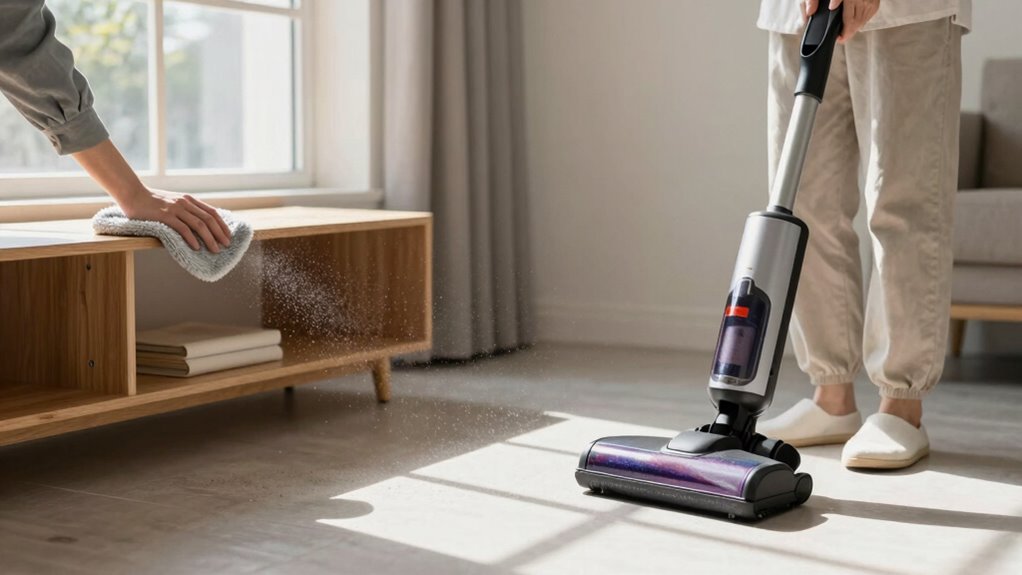
When it comes to dusting vs. vacuuming, you should dust first. This way, you remove loose particles from surfaces, preventing them from settling on the floor. Dusting before vacuuming reduces airborne dust and minimizes your cleaning workload. Afterward, vacuuming captures any debris that’s settled, helping maintain indoor air quality. It’s essential to guarantee your vacuum has a HEPA filter to avoid redistributing allergens. Discover more tips for effective cleaning and air quality improvement.

Get cleaning gear delivered free with Prime
- Fast, free delivery on millions of items
- Prime Video, Amazon Music and more included
- Member-only deals all year
Key Takeaways
- Dusting before vacuuming removes loose particles, preventing them from settling on the floor and reducing airborne dust during cleaning.
- Vacuuming after dusting captures dust that has settled on floors, enhancing cleaning efficiency and maintaining indoor air quality.
- Using HEPA filters in vacuums traps 99.97% of airborne particles, preventing dust reintroduction into indoor air.
- Vacuuming first can stir up dust and allergens, worsening indoor air quality, especially without high-efficiency filters.
- Regular dusting and vacuuming, with proper ventilation and air purifiers, significantly improve indoor air environment and reduce allergens.
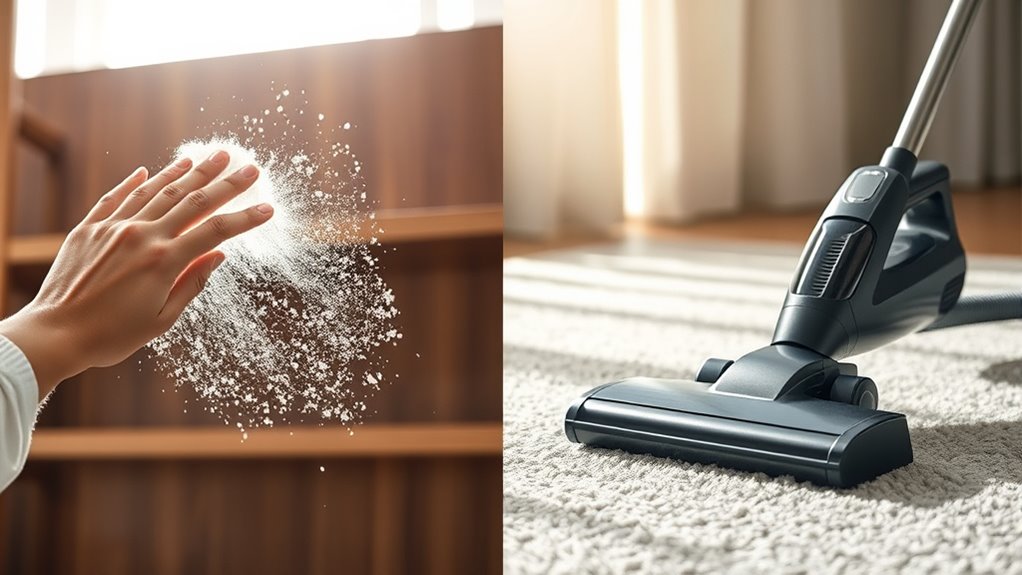
When it comes to keeping your home clean, understanding the difference between dusting and vacuuming can make a vital impact on your indoor air quality. By dusting first, you remove loose particles from surfaces like furniture and shelves before they settle onto the floor. This not only reduces the amount of dust that falls but also minimizes the workload when it comes time to vacuum. Dusting with a damp or electrostatic cloth traps particles instead of dispersing them, which helps prevent airborne dust from swirling back into the air you breathe.
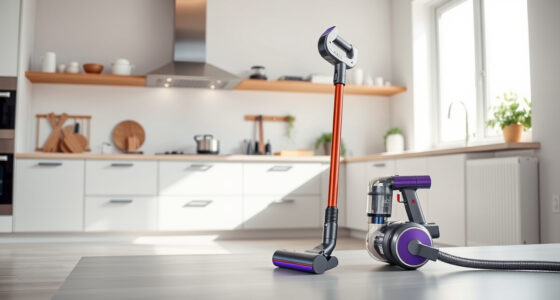
Once you’ve dusted, it’s essential to vacuum immediately afterward. This step captures the dust that has settled on the floor, improving your overall efficiency. By using a vacuum with a high-efficiency particulate air (HEPA) filter, you can capture at least 99.97% of airborne particles, ensuring that the dust and allergens you’ve just removed don’t get reintroduced into your home. Regularly maintaining your vacuum—such as cleaning filters and emptying the container—ensures it functions effectively, preventing it from becoming a source of indoor pollution. Inadequate filtration can lead to contaminants being released into indoor air, which is why using a vacuum with proper filtration is critical.
You might think that vacuuming first could save some time, especially if there’s visible dust or pet hair on the floor. However, doing so can stir up settled dust and allergens, which may then resettle on your furniture and surfaces. If you don’t have a vacuum with a high-efficiency filter, you risk redistributing fine particles back into your living space, thereby worsening your indoor air quality. In wet areas, vacuuming can also aerosolize mold spores, which can lead to health risks if not managed properly.
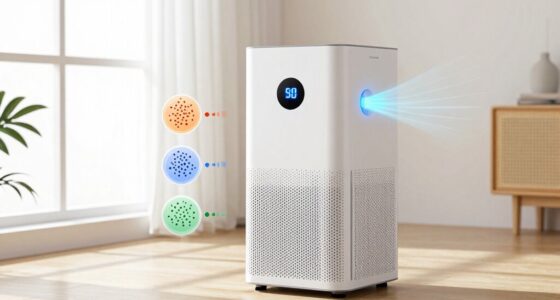
Maintaining a cleaning routine is essential for preserving your indoor air quality. It’s advisable to dust weekly and vacuum at least once a week, or more frequently in high-traffic areas. If you have pets, daily vacuuming can greatly reduce allergens and dust. Don’t forget to pair your cleaning efforts with proper ventilation, using exhaust fans, and considering air purifiers with HEPA filters to tackle those fine airborne particles that vacuuming and dusting alone can’t eliminate.
Frequently Asked Questions
Can Dusting Prevent Allergies More Effectively Than Vacuuming?
Yes, dusting can prevent allergies more effectively than vacuuming. By removing loose dust from surfaces, you minimize the amount that settles onto floors, where vacuuming can stir it back up. When you dust first, you capture allergens before they become airborne. To enhance the effectiveness, use damp cloths to trap particles. Regular dusting, combined with vacuuming, creates a cleaner environment and considerably reduces allergens, ultimately improving your indoor air quality.
What Tools Are Best for Dusting Surfaces?
Did you know that indoor air can be up to five times more polluted than outdoor air? For effective dusting, use microfiber cloths or electrostatic dusters. They trap dust rather than just moving it around. A damp cloth is great for surfaces like wood, while a vacuum with a dusting attachment can reach tricky spots. Don’t forget to dust before vacuuming to maximize your cleaning efforts and improve your home’s air quality.
How Often Should I Clean Air Filters?
You should clean or replace air filters every 1-3 months, depending on usage and your environment. If you have pets or allergies, aim for monthly maintenance. Regularly checking your filters helps guarantee they capture airborne particles effectively. Neglecting this task can lead to reduced air quality and increased allergens in your home. Don’t forget to contemplate using HEPA filters for peak performance! Keeping them clean extends the lifespan of your HVAC system too.
Is It Necessary to Dust Before Every Vacuuming?
Did you know indoor air can be up to five times more polluted than outdoor air? Yes, it’s necessary to dust before every vacuuming. Dusting first removes loose particles from surfaces, preventing them from settling back onto your floors. If you vacuum first, you’ll just stir up allergens and redistribute them. By dusting first, you improve your vacuuming efficiency, leading to cleaner air and a healthier home environment.
What Are the Best Practices for Cleaning Damp Areas?
To clean damp areas effectively, start by addressing moisture issues—fix leaks and improve ventilation. Use a damp cloth to wipe surfaces, which helps capture dust and prevents it from becoming airborne. Avoid using a vacuum in these spaces, as it can stir up mold spores. After cleaning, use a dehumidifier to maintain low humidity levels, and consider using a HEPA air purifier to eliminate airborne particles and improve air quality.
Conclusion
In the battle of dusting versus vacuuming, dusting should always come first. By removing dust from surfaces before you vacuum, you prevent particles from settling back onto your freshly cleaned floors. For instance, imagine you’ve just dusted your living room shelves and then vacuumed the carpet; your air quality will be markedly better. So, next time you clean, remember: dust first, then vacuum, and enjoy a fresher, healthier home environment!
Halloween Picks
halloween
As an affiliate, we earn on qualifying purchases.