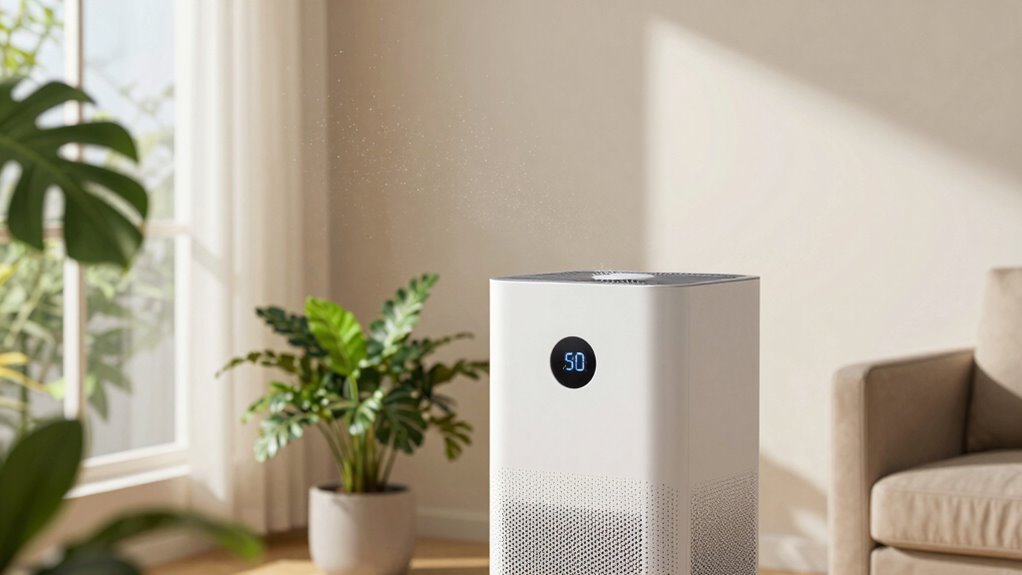

Air changes per hour (ACH) measure how often indoor air gets replaced, vital for air purifiers. For effective air quality, aim for at least 5 ACH in your space, as recommended by the CDC. Knowing the ACH helps you gauge your purifier’s efficiency and its impact on indoor air. You’ll find that achieving ideal ACH isn’t just about having a purifier; it’s about understanding how all elements work together for cleaner air in your environment.
Key Takeaways
- ACH quantifies how often indoor air is replaced, essential for understanding air purifier effectiveness in improving air quality.
- The formula for calculating ACH involves room volume and airflow rate, providing a clear measure of air changes.
- Recommended ACH levels vary, with CDC suggesting at least 5 ACH for reducing airborne viral particles in occupied spaces.
- Real-world factors like room layout and filter condition can affect actual ACH, making regular maintenance crucial for optimal performance.
- Understanding ACH helps consumers evaluate air purifiers and their ability to maintain healthy indoor air quality.
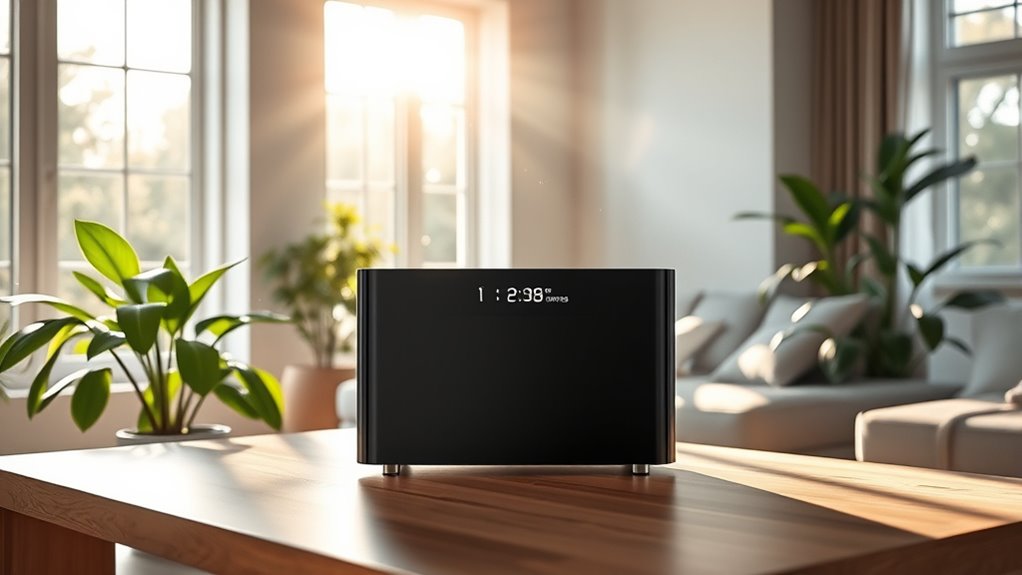
When it comes to maintaining healthy indoor air quality, understanding Air Changes per Hour (ACH) is essential. ACH quantifies how many times the entire volume of air in a defined space is replaced or filtered in one hour. For ventilation systems, this refers to actual replacement with fresh outdoor air, while for air purifiers, it’s typically expressed as equivalent ACH (eACH), since purifiers recirculate and clean indoor air instead of supplying new air. This is particularly important for those who are passionate about maintaining their motorcycles in a clean environment, as air quality can affect both the rider’s health and the longevity of the machinery.
To get a grasp on ACH, you can use the formula: ACH = 60 × Q / V, where Q stands for airflow in cubic feet per minute (CFM) and V represents room volume in cubic feet. This simple equation allows you to calculate how effective your purification system is. If you know the Clean Air Delivery Rate (CADR) of your purifier, you can convert it to ACH. Just make sure you’re using the right units, as CADR can be expressed in CFM or other measures.
When determining the ACH you should aim for, consider the context. The CDC recommends aspiring for 5 or more ACH in occupied spaces to reduce airborne viral particles. For classrooms, ASHRAE suggests around 6 ACH, while many commercial buildings provide about 3 ACH through their HVAC systems. Residential settings typically target 4–5 ACH for effective air cleaning. Understanding these benchmarks helps you set realistic goals for your space. Additionally, achieving 5 ACH is supported by the CDC to ensure adequate ventilation in occupied areas.
To calculate your purifier’s ACH, start by determining the room’s volume—length times width times height gives you the cubic feet. Next, find the purifier’s rated CFM or CADR. Multiply the CFM by 60 to convert it to cubic feet per hour. Finally, plug these numbers into the ACH formula. If you’re using multiple purifiers or combining them with HVAC, sum their individual contributions for a total ACH estimate.
Keep in mind that achieving ideal ACH numbers assumes perfect air mixing, which rarely happens in real-world settings. Factors like room layout and furniture can affect how well air circulates. Additionally, as filters get loaded and require maintenance, the CADR can decrease, impacting overall ACH.

Shark Cyclone PET Handheld Vacuum, Navy Blue/Grey, CH701
- Powerful Suction: HyperVelocity suction for deep cleaning
- Lightweight Design: Only 1.6 lbs for easy handling
- Cordless Convenience: No cords, easy to maneuver
As an affiliate, we earn on qualifying purchases.
Frequently Asked Questions
How Do I Choose the Right Air Purifier for My Space?
To choose the right air purifier for your space, first, measure your room’s size and calculate its volume. Then, look for a purifier with a Clean Air Delivery Rate (CADR) that matches your target air changes per hour (ACH). Consider factors like filter type, noise levels, and maintenance requirements. Finally, read reviews and verify manufacturer claims to make certain you select a unit that effectively meets your air quality needs.
Can Air Purifiers Eliminate All Types of Pollutants?
Think of air purifiers as your home’s defense team, battling against pollutants. However, they can’t eliminate all types of pollutants. While they excel at removing dust, pollen, and pet dander, they struggle with gases like volatile organic compounds (VOCs) unless equipped with specialized filters. So, while you’ll breathe easier, they won’t be your one-stop solution for every air quality issue. Regular maintenance and the right model can enhance their effectiveness.
How Often Should I Change Air Purifier Filters?
You should change air purifier filters every 6 to 12 months, depending on usage and the type of filter. If you use your purifier heavily or if you have pets, you might need to change them more frequently. Regularly check the filter indicator light, if your purifier has one, or inspect the filter for dirt and clogging. Keeping an eye on this helps maintain peak performance and air quality in your space.
Are There Any Health Risks With Using Air Purifiers?
Using air purifiers isn’t without its shadows. While they clean the air, poorly maintained filters can breed mold or bacteria, turning your purifier from a shield into a hazard. You might also experience ozone emissions from certain models, which can irritate your lungs. Regular maintenance and choosing the right purifier can help you breathe easier, but it’s essential to stay vigilant. Your health deserves more than just a gust of fresh air; it needs safety.
How Noisy Are Air Purifiers During Operation?
Air purifiers can vary in noise levels during operation, but most are designed to run quietly. You’ll find models that operate at around 20-30 decibels, comparable to a whisper, while others may reach 50 decibels, similar to a quiet conversation. If you’re sensitive to noise, look for units labeled as “silent” or “whisper-quiet.” It’s best to check user reviews to see how others perceive the noise level in real-world settings.

dormzie Handheld Vacuum Cordless, Car Vacuum with 19000Pa Powerful Suction,1.3 lbs Lightweight, Type-C Charge, Multiple Accessories for Car Home Office Pet
- Lightweight and Cordless: Weighs only 1.3 lbs for easy handling
- Powerful Suction: 19000Pa suction with high-speed brushless motor
- Multiple Modes: Two suction modes for different cleaning needs
As an affiliate, we earn on qualifying purchases.
Conclusion
In the grand dance of life, air changes per hour are the rhythm that keeps your home alive. Imagine a gentle breeze sweeping through, carrying away the whispers of dust and allergens, making way for fresh, pure breaths. With each change, you’re not just filtering air; you’re nurturing your sanctuary, protecting your loved ones like a guardian angel. So, embrace the magic of air purifiers, and let your space breathe freely, fostering health and happiness for all who dwell within.

Shark WANDVAC Cordless Hand Vac, Black, WV201BK
- Brand Leadership: Shark is the top US hand vacuum brand
- Powerful Suction: High-speed brushless motor for strong suction
- Lightweight Design: Weighs only 1.4 lbs for easy handling
As an affiliate, we earn on qualifying purchases.

Shark Pet Cordless Stick Vacuum, Grey, IX141
- HyperVelocity Suction: Powerful accelerated suction for deep cleaning
- Long Runtime: Up to 40 minutes of cordless cleaning
- Versatile Floor Cleaning: Effective on both floors and carpets
As an affiliate, we earn on qualifying purchases.