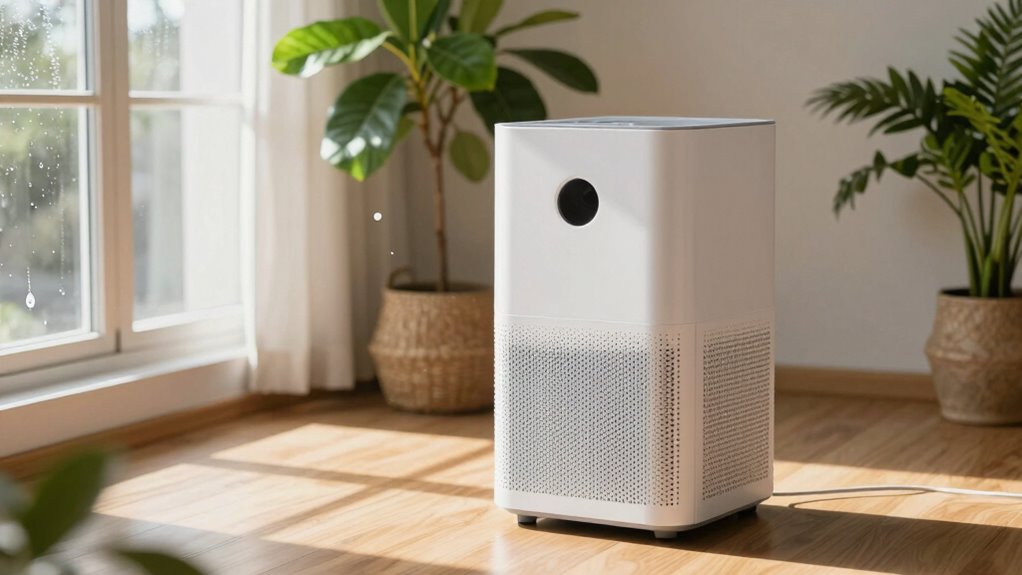

Dehumidifiers can substantially reduce allergens in your home by keeping humidity levels between 35%-50%. This range hinders dust mites and mold growth, which thrive in higher humidity. Running your dehumidifier for 4-8 hours daily, especially in bedrooms, can cut dust mite populations by up to 98%. However, be cautious; overly low humidity can also be uncomfortable. Staying informed about humidity levels and air quality will help you make the best choices for your environment.
Key Takeaways
- Maintaining humidity levels between 35%-50% inhibits dust mites and mold growth, reducing allergen concentrations significantly.
- Consistent use of dehumidifiers can lower dust mite populations by up to 98%, improving indoor air quality.
- Use a hygrometer to monitor humidity and ensure it remains under 50% for optimal allergen control.
- Pairing dehumidifiers with HEPA filters enhances air quality by capturing additional airborne allergens like pollen and pet hair.
- Be mindful of overly low humidity, as it may cause discomfort, while understanding that dehumidifiers are part of a broader allergy management plan.
When you’re struggling with allergies, keeping your home environment comfortable and free from allergens is vital. One effective way to achieve this is by using dehumidifiers. These devices help maintain humidity levels between 35%-50%, which is essential for inhibiting the growth of dust mites and mold—two common culprits behind allergy symptoms. Dust mites thrive in humidity above 50%. By keeping the humidity lower, you can considerably reduce allergen levels, which can be ten times lower in homes using dehumidifiers compared to those without.
Dehumidifiers work by lowering moisture levels, which discourages dust mite and mold growth. Studies show that with consistent use, the growth of dust mite populations can be reduced by up to 98%. Furthermore, maintaining lower humidity not only helps with dust mites but also prevents mold, which is notorious for exacerbating asthma and allergy symptoms. High humidity creates an inviting environment for mold, leading to musty odors and damp surfaces. By stabilizing humidity under 50%, dehumidifiers help keep your home free from these allergens. Reducing dust mite populations is particularly significant for individuals with asthma, as these pests are a main trigger for asthma attacks.
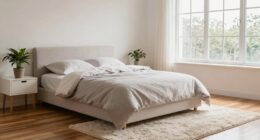
For ideal results, consider running your dehumidifier for about 4-8 hours daily. This routine ensures that the relative humidity drops from a higher level to a more controlled range, effectively minimizing dust mite presence. You might want to focus your dehumidifying efforts in bedrooms, as this is where you spend significant time and where allergens can accumulate. It’s also a good idea to monitor humidity levels with a hygrometer to ensure you’re maintaining that 40%-50% range for both comfort and allergen reduction.
While dehumidifiers are effective, pairing them with HEPA filters can further enhance air quality. These filters capture pollen, pet hair, and other irritants, which can also trigger allergy symptoms. Just keep in mind that while HEPA filters and dehumidifiers work well together, they don’t always dramatically reduce symptoms on their own.
Frequently Asked Questions
How Often Should I Run My Dehumidifier?
You should run your dehumidifier regularly, ideally for 4 to 8 hours a day, especially if your home’s humidity levels exceed 50%. This helps keep dust mites and mold at bay. Monitor the humidity with a hygrometer and aim to maintain levels between 40-50%. Running it during high humidity days or in damp areas, like basements, can markedly improve air quality and reduce allergens. Don’t forget to check and clean the filters regularly!
Can Dehumidifiers Worsen Allergies in Some Cases?
Yes, dehumidifiers can worsen allergies in some cases. If you don’t maintain essential humidity levels, they might dry out the air too much, causing irritation in your respiratory system. Additionally, if the dehumidifier isn’t cleaned regularly, it can become a source of allergens itself. It’s vital to monitor humidity and guarantee your dehumidifier operates effectively without over-drying, which could lead to discomfort and exacerbate allergy symptoms.
Are There Any Maintenance Tips for Dehumidifiers?
To keep your dehumidifier running efficiently, regularly clean the water reservoir to prevent mold and bacteria buildup. Check and replace filters as needed, usually every few months, to guarantee peak air quality. Also, monitor the humidity levels using a hygrometer to maintain the ideal range of 35-50%. Finally, make certain the unit has proper airflow by keeping it unobstructed and placing it in a location that allows for effective moisture removal.
What Size Dehumidifier Do I Need for My Home?
Imagine a cozy basement where you love to unwind, but it’s always damp. For most rooms, a 30-pint dehumidifier should suffice, while larger spaces, like a finished basement, might need a 50-pint model. To determine the right size, calculate your room’s square footage and consider humidity levels. If it feels muggy, opt for a larger unit. Keep it running consistently, and you’ll enjoy a more comfortable, healthier environment.
How Long Does It Take to See Results From a Dehumidifier?
You can typically see results from a dehumidifier within a few hours to a couple of days, depending on the humidity level in your space. If you’re running it consistently, you’ll notice a difference in air quality and comfort relatively quickly. Just make sure to monitor the humidity levels with a hygrometer, aiming for that sweet spot between 35-50%. This’ll help you manage allergens more effectively and improve your overall environment.
Conclusion
In summary, using a dehumidifier can be a game-changer for reducing allergens like mold and dust mites, which thrive in high humidity. Did you know that keeping humidity below 50% can cut dust mite populations by up to 80%? However, be cautious; too much dryness can irritate your respiratory system. Finding that sweet spot is key. So, monitor your humidity levels and enjoy a healthier, more comfortable home environment!