
To clean without leaving residue, you need to choose effective surfactants and use proper rinsing techniques. Make sure your rinse water reaches below the critical micelle concentration to dilute surfactants effectively. Multiple high-volume rinses and warm water can enhance removal. Pay attention to your surface type, as porous or hydrophobic surfaces may trap residues. With the right approach, you can guarantee surfaces are spotless and hygienic, and there’s more to discover about specific techniques and tips.

Get cleaning gear delivered free with Prime
- Fast, free delivery on millions of items
- Prime Video, Amazon Music and more included
- Member-only deals all year
Key Takeaways
- Use surfactants that are designed for easy rinsing to minimize residue left behind after cleaning.
- Rinse surfaces multiple times with high-volume water to dilute and remove surfactant residues effectively.
- Warm water can enhance surfactant solubility, making rinsing more efficient and thorough.
- Tailor your cleaning approach based on surface type, as porous and hydrophobic surfaces may trap residues.
- Regularly monitor water quality to ensure optimal cleaning performance and effective rinsing of surfactants.

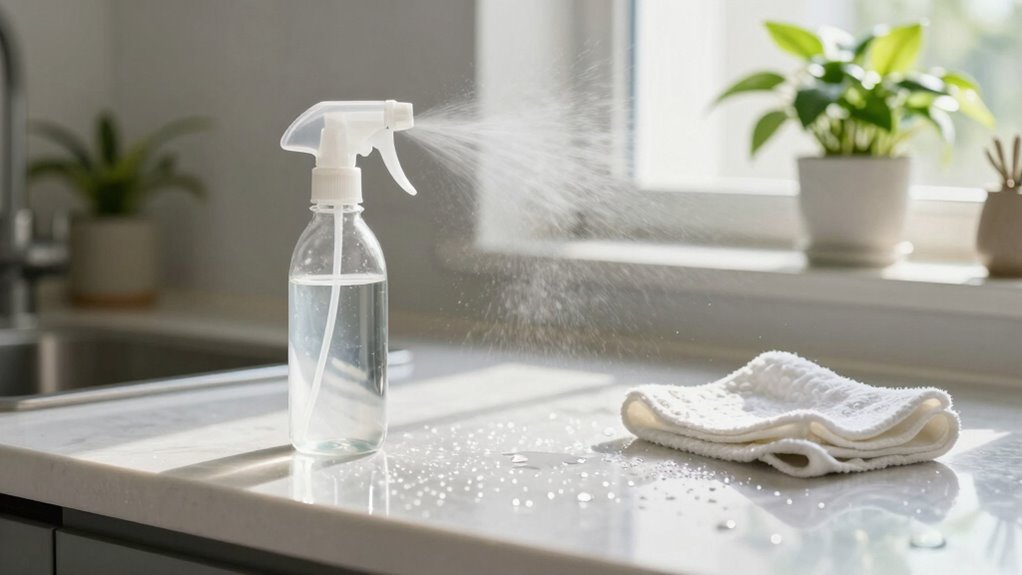
When you’re aiming for a truly clean surface, understanding how to clean without leaving residue is vital. It’s essential to utilize the right cleaning methods and products effectively. Wet cleaning methods, like using water or liquid solvents, help remove dirt, grime, and germs. Think about techniques such as ultrasonic cleaning, wiping with microfiber cloths, or mopping with a multipurpose cleaner. These methods can sanitize surfaces effectively, leaving them spotless and germ-free.
However, even the best cleaning solutions can leave behind residues if not used properly. To avoid this, make certain that your cleaning solution contains effective surfactants. Surfactants work by lowering water’s surface tension, allowing it to penetrate and emulsify soils better. When you apply a surfactant, it forms micelles that encapsulate dirt and grime. The challenge arises during rinsing, as surfactants often remain on surfaces longer than other solution components, becoming the “last to rinse.” This means you need to rinse thoroughly to prevent residue.
Even the best cleaning solutions can leave residues; effective surfactants and thorough rinsing are essential to prevent this.
Rinsing is where many users stumble. You want to dilute the surfactant concentration below its critical micelle concentration (CMC) for effective removal. It’s not just about rinsing; it’s about the volume, temperature, and flow of the rinse water. Using multiple high-volume rinses or a single high-velocity rinse can markedly improve your results. Warm water can also enhance solubility and facilitate better removal of residues. Take control of your rinsing to make sure no lingering surfactants remain. Additionally, understanding the importance of cleaning first, then disinfecting can help ensure optimal hygiene.
Lastly, consider the properties of your surfaces. Porous or hydrophobic substrates can trap surfactants, making them harder to rinse off. If you’re working on these types of surfaces, you might need to tailor your cleaning approach by selecting surfactants known for better rinseability. Nonionic and anionic blends are generally more effective on common hard surfaces.
Lastly, validate your cleaning protocols. Use methods to measure any residual surfactant and make certain you’re within acceptable limits. Techniques like swabbing or rinsing can help assess effectiveness. By keeping an eye on your water quality too, you can avoid issues with harder minerals that may affect surfactant performance.
Frequently Asked Questions
What Are the Environmental Impacts of Surfactants in Cleaning Products?
Surfactants in cleaning products can have significant environmental impacts. When you wash these products down the drain, they can enter waterways, affecting aquatic life by disrupting natural processes and harming organisms. Some surfactants may not break down easily, leading to long-term pollution. Additionally, they can contribute to water toxicity, especially in high concentrations. By choosing eco-friendly alternatives, you can help reduce these harmful effects and promote a healthier environment.
Can Natural Surfactants Be as Effective as Synthetic Ones?
Ever wondered if natural surfactants can compete with synthetic ones? Yes, they can be just as effective! Natural surfactants, like those derived from plants, often lower surface tension similarly to synthetic options. They can emulsify, disperse, and solubilize soils effectively. However, their performance may vary based on concentration and specific applications. When choosing between them, consider your cleaning needs and sustainability goals, ensuring you get the best results without compromising the environment.
How Do Surfactants Affect Skin Safety in Cleaning Products?
Surfactants can impact skin safety in cleaning products by altering the skin’s natural barrier. They help in spreading and penetrating, but some can irritate or cause allergic reactions, especially if they’re anionic or cationic. When choosing products, you should look for nonionic surfactants, as they’re often milder. Always test a small area first and consider formulations designed for sensitive skin to minimize potential irritation while ensuring effective cleaning.
Are There Specific Surfactants Recommended for Sensitive Surfaces?
Yes, when cleaning sensitive surfaces, you should choose nonionic surfactants. They’re gentle and less likely to cause irritation or damage compared to anionic or cationic surfactants. Look for options with a high hydrophile-lipophile balance (HLB) to guarantee effective cleaning without harsh effects. Always test a small area first to confirm compatibility and avoid residue. Adjust your cleaning protocol based on the surface type for the best results.
How Can I Determine the Ideal Surfactant for My Cleaning Task?
Selecting the perfect surfactant for your cleaning task is like finding the right tool for a delicate job. Begin by evaluating the type of soil you’re dealing with—grease, dirt, or something else. Then, consider the surface material; some surfactants work better on specific substrates. Don’t forget to examine water hardness and desired residue levels. Finally, review product specifications and test a small area to verify effectiveness without compromising the surface.
Conclusion
As you finish cleaning, you might notice how sunlight streams through the window, revealing a crystal-clear surface that sparkles with freshness. With each swipe, you’ve not only banished dirt but also avoided any sticky residue. It’s almost as if the surfaces are thanking you, reflecting the effort you put in. Remember, using the right surfactants and rinsing techniques can transform your cleaning routine, leaving your home not just clean, but truly revitalized. Enjoy your spotless space!
Fall Picks
fall essentials
As an affiliate, we earn on qualifying purchases.