Steam cleaning upholstery can be a great way to sanitize and refresh your furniture, but it’s essential to know when it’s safe. Fabrics like cotton blends, microfiber, and those with care codes W or WS handle steam well. Avoid S or X-coded fabrics, delicate materials, and older upholstery that might weaken. Always check labels and perform spot tests first. Knowing these details can help you avoid a disaster. There’s more to take into account, so keep going to learn additional tips.
Key Takeaways
- Steam cleaning is safe for fabrics with care codes W or WS, and natural fibers that tolerate moisture without damage.
- Avoid steam cleaning S-coded, X-coded, and delicate fabrics like silk or rayon, as they can suffer irreversible damage.
- Always pre-test a hidden area of the fabric for colorfastness and texture changes before steam cleaning.
- Ensure thorough pre-vacuuming to remove debris and use low steam settings to prevent fabric damage.
- Seek professional help for heavily soiled items, delicate textiles, or upholstery with structural issues to avoid disasters.
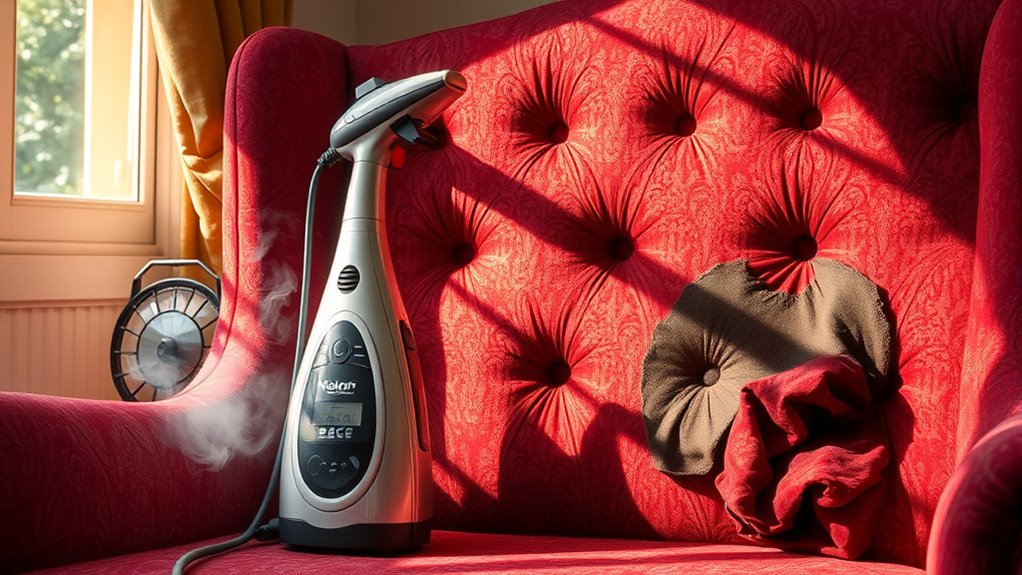
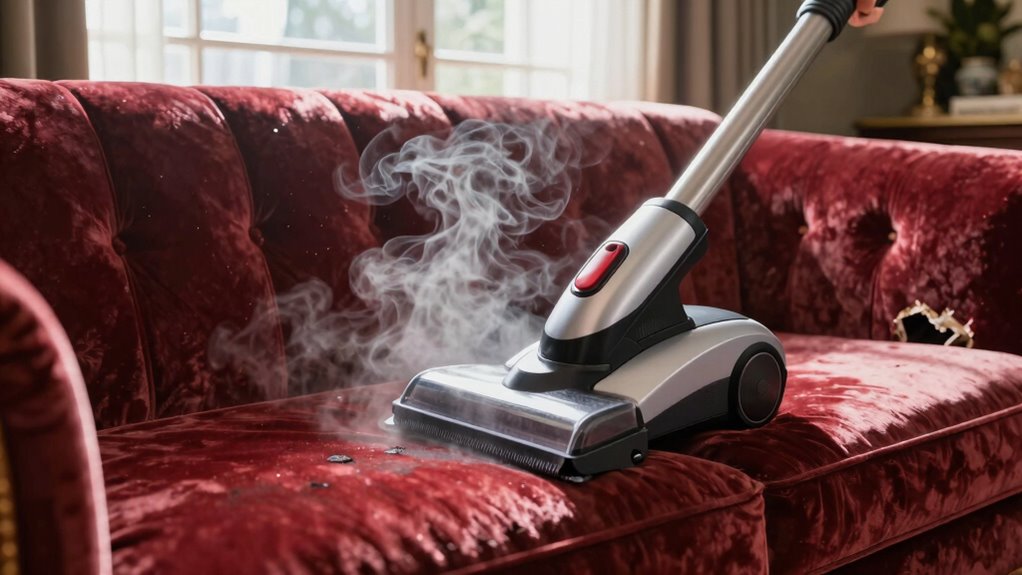
When it comes to maintaining the cleanliness and longevity of your upholstery, steam cleaning can be an effective technique—especially if you choose the right fabrics. High-temperature steam sanitizes without chemicals, making it a safer option for households with children and pets. It can penetrate fibers to loosen dirt, stains, and trapped allergens, killing up to 99.9% of bacteria and germs. However, not all fabrics are created equal, so knowing what’s safe for steam cleaning is vital. Proper ventilation in your cleaning area can further enhance the effectiveness of the steam process.
Steam cleaning effectively maintains upholstery cleanliness, using high-temperature steam to sanitize without chemicals, making it safe for homes with kids and pets.
Look for fabric care codes W or WS on manufacturer tags, indicating suitability for water-based cleaning. Natural fibers like cotton and polyester blends usually tolerate steam well, provided the label permits it; testing a hidden area first is always a good idea. Microfiber and many synthetic performance fabrics handle steam well, without risking shrinkage or color loss. On the flip side, be cautious with velvet and plush fabrics, as they can respond well to steam for nap restoration but require a gentle technique to avoid damage. Steam cleaning is preferred for households with children and pets because it is chemical-free, sanitizes naturally, and leaves minimal residue.
Keep in mind that fabrics labeled S (solvent-only) or X (vacuum-only) can be disastrous when steam cleaned. Steam can cause staining, shrinkage, or even fabric distortion. Delicate materials like silks, rayon, and acetate may bleed or lose their structure under heat, while older upholstery with weakened stitching can suffer serious damage. Antique textiles and specialty fabrics are particularly at risk, as steam can cause irreversible damage.
To steam safely, always read the care label before starting. Pre-vacuuming helps remove loose debris that could set in when exposed to moisture. Make sure to perform a hidden spot test to check for color change or texture shifts. Using distilled water and the correct upholstery attachment at low steam settings can prevent saturation. After cleaning, ensure rapid drying with fans and good ventilation to avoid mold growth.
In some situations, it’s best to call in a professional. If your upholstery has S or X-coded fabrics, or if you’re dealing with heavy soiling and set-in stains, pro services with hot-water extraction can save the day. When done correctly, steam cleaning not only extends the lifespan of your upholstery but also improves indoor air quality and keeps allergens at bay. Just be mindful of the materials you’re working with, and you’ll enjoy a cleaner, fresher living space.
Frequently Asked Questions
Can I Steam Clean My Car Upholstery Safely?
You can steam clean your car upholstery safely, but you need to check the fabric care codes first. Fabrics labeled W or WS are generally safe for steam cleaning. Avoid using steam on S or X coded materials, as well as delicate fabrics like silk. Before steaming, pre-vacuum thoroughly and always test a hidden area first. Use low steam settings and make certain everything dries completely to prevent mold or damage.
How Often Should I Steam Clean My Furniture?
Think of your furniture like a garden; it needs regular care. You should steam clean your furniture every 6 to 12 months, depending on usage and environment. If you have pets or kids, consider doing it more often to tackle stains and odors. Always check the fabric care label before steaming to avoid damage. This routine helps keep your furniture looking fresh and extends its lifespan, just like tending to a thriving garden.
Is Steam Cleaning Effective for Pet Stains?
Yes, steam cleaning can be effective for pet stains, but it depends on the fabric. Make sure to check your upholstery’s care label first. Steam can help lift stains and odors, but it’s essential to use the right technique to avoid damaging the fabric. Always pre-vacuum, test a small area, and use low steam settings. If the stain is stubborn, consider following up with a professional cleaning service for the best results.
What Should I Do if Steam Causes Damage?
If steam causes damage, stop using it immediately to prevent further issues. Assess the extent of the damage and take photos for documentation. Depending on the fabric, you might need to contact a professional cleaner, especially if it’s an antique or delicate material. For minor issues, gently blot the area with a clean cloth and let it dry completely. Keep an eye out for any signs of mold or additional damage as it dries.
Can I Use Essential Oils in My Steam Cleaner?
You shouldn’t use essential oils in your steam cleaner. While they might seem appealing for their scent, essential oils can damage the machine and leave residues that clog the system. Instead, opt for distilled water to keep your cleaner in top shape. If you want a pleasant aroma, consider using essential oils in a diffuser separately or adding them to your cleaning routine after steam cleaning, ensuring your upholstery remains safe and clean.
Conclusion
In the world of upholstery care, steam cleaning can be a friend or foe. When done right, it refreshes and revives, lifting dirt and allergens with ease. But rush the process or neglect fabric specifics, and you risk disaster—damaged fibers or stubborn stains. So, before you steam, weigh the benefits against the potential pitfalls. With the right knowledge and caution, you can enjoy a clean and vibrant space, avoiding the heartache of an upholstery mishap.