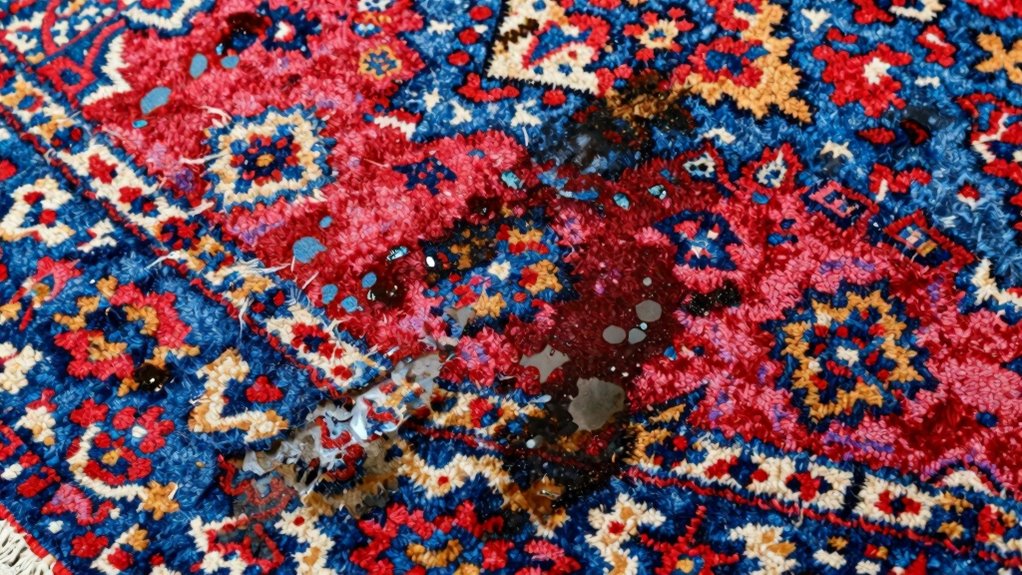

Over-wetting your area rugs can cause serious backing damage. Excess moisture can weaken adhesives, leading to delamination. If the backing deteriorates, it might result in wrinkles, discoloration, or even mold growth. Heavy foot traffic on a wet rug only worsens these issues, risking further damage to the fibers. To save your rug from costly repairs, you need to understand prevention and maintenance strategies. Stick around to discover more on how to protect your investment.
Key Takeaways
- Over-wetting during cleaning can dissolve latex bonding agents, leading to backing separation and deterioration.
- Trapped moisture creates an ideal environment for mold and mildew growth, posing health risks.
- Prolonged moisture exposure (24-48 hours) accelerates microbial growth, compromising rug integrity.
- Heavy foot traffic on wet rugs exacerbates backing damage, causing wrinkles and buckling.
- Regular maintenance and professional cleaning can prevent over-wetting and prolong rug lifespan.

When rugs are exposed to excessive moisture, they can suffer significant backing damage that may not be immediately visible. This damage often begins with delamination, where the primary and secondary backings separate due to weakened latex bonding agents. If you don’t act quickly, prolonged wetness can lead to structural integrity issues, causing warping, buckling, or even a complete loss of shape. Additionally, improper cleaning can exacerbate the risk of backing damage by dissolving adhesives that hold the backing together. Regular maintenance with robotic cleaning solutions can help mitigate the risks associated with over-wetting.
The real risk comes from the moisture that gets trapped between the rug backing and the floor, creating an ideal environment for mold and mildew to thrive. Within just 24 to 48 hours, microbial growth can set in, leading to persistent odors and potential health risks. If your rug has been exposed to gray or contaminated water, the situation becomes even trickier, as these conditions can lead to black-water contamination, requiring professional remediation.
You might notice visible signs of damage, like a brittle or powdery backing, wrinkles, or even fraying edges. These symptoms indicate that the backing is losing its structural support, which can lead to further deterioration. Heavy foot traffic on a wet rug exacerbates the problem, causing further separation and wear. Even the cleaning methods you use can have detrimental effects; if harsh chemicals aren’t fully extracted, they can dissolve adhesives and lead to backing deterioration over time.
Visible signs of rug damage, like brittle backing and fraying edges, indicate potential structural issues that require immediate attention.
To prevent these issues, consider using rug pads that block moisture from reaching the backing. Rotating your rugs regularly helps distribute wear evenly. Also, be mindful of direct sunlight, which can dry out and damage backing materials. When it comes to cleaning, opt for professional services that emphasize proper extraction methods to avoid over-wetting.
If your rug already shows signs of backing damage, you need to address it promptly. Delaminated backing often requires professional reattachment, while dissolved latex may necessitate full backing replacement. If mold has taken root, complete drying and treatment are essential before any repairs can begin.
Ignoring these problems not only shortens your rug’s lifespan but can also lead to further damage to the face fibers, creating holes and threadbare patches. The longer you wait, the more extensive and costly the repairs will become. Taking swift action and employing preventive measures will help maintain the integrity of your area rug, keeping it beautiful and functional for years to come.
Frequently Asked Questions
How Can I Prevent Rug Backing Damage From Spills?
To prevent rug backing damage from spills, act quickly. Blot the spill immediately with a clean cloth, avoiding rubbing. Use air movers and dehumidifiers to dry the area thoroughly within 24-48 hours. Lift and prop wet rug sections to promote airflow underneath. Limit foot traffic on damp areas to reduce stress on the fibers and backing. Always use minimal, rug-safe cleaners and conduct spot tests before applying any cleaning solution.
What Types of Rugs Are Most Susceptible to Water Damage?
Wool and cotton rugs are the most susceptible to water damage due to their organic fibers and natural adhesives. They absorb moisture quickly, leading to potential mold growth and structural weakening. Additionally, low-quality rugs with poor backing materials can degrade faster when wet. If you have rugs in high-moisture areas, consider synthetic options or make certain you use protective measures to minimize exposure to spills and moisture. Regular maintenance can help extend their lifespan.
Can I Repair Delaminated Rug Backing Myself?
You might be tempted to repair delaminated rug backing yourself, but it’s often tricky. Imagine peeling away layers like an onion, revealing hidden damage. You can try using a fabric adhesive for small areas, but if the delamination is extensive, it’s better to call in professionals. They’ve got the tools and expertise to restore your rug correctly, ensuring it withstands the test of time without risking further damage or deterioration.
How Long Does It Take for Mold to Grow on Wet Rugs?
Mold can start growing on wet rugs within just 24 to 48 hours if they aren’t dried properly. This happens because moisture trapped between your rug and the floor creates a perfect environment for mold. To prevent this, you need to act quickly by drying the rug and ensuring good ventilation. If you notice any signs of mold, it’s essential to address it immediately to avoid further damage and health issues.
What Are the Signs of Hidden Mold in Rugs?
When it rains, it pours, and hidden mold in your rugs can be a real headache. You might notice persistent, musty odors, which signal trouble beneath the surface. Check for discoloration or damp spots that don’t seem to dry out. If you see visible mold, it’s a clear sign of a problem. Keep an eye out for increased allergies or respiratory issues; these can be your body’s way of signaling hidden microbial growth.
Conclusion
In conclusion, keeping your area rugs dry is as vital as maintaining a healthy garden. Over-wetting can lead to serious backing damage, causing your beloved rugs to lose their shape and integrity. By ensuring proper cleaning methods and avoiding excessive moisture, you can preserve their beauty and longevity. Remember, a little care goes a long way; protect your investment and enjoy your rugs for years to come, just like a flourishing garden thrives with attention.