If you’re noticing odors after carpet cleaning, it could be due to leftover cleaning residues, bacteria, or slow drying times. Residual chemicals can create sour smells if not rinsed properly. Bacteria thrive in damp carpets, producing musty odors, while slow drying prolongs this dampness, encouraging more microbial growth. Checking for hidden sources like contaminated padding or subfloor issues might also help. Keep exploring to discover effective solutions for achieving a fresh scent in your carpets!
Key Takeaways
- Residual cleaning chemicals can lead to sour odors if not thoroughly rinsed, attracting dirt and bacteria.
- Damp carpets create a breeding ground for bacteria and mold, causing musty smells.
- Slow drying times from over-wetting or poor ventilation prolong odors due to lingering moisture.
- Hidden sources, like contaminated padding or subfloors, can retain odors despite surface cleaning.
- Using high-quality tools and techniques ensures proper rinsing and quick drying to eliminate odor sources.
When you clean your carpets, you might expect a fresh scent to fill the room, but sometimes you’re left with unpleasant odors instead. This can be frustrating, especially after putting in all that effort. One common culprit behind these smells is residual cleaning chemicals. If you don’t rinse thoroughly, leftover detergent can produce a sour or chemical odor, making your carpet smell worse than before. Overusing cleaning solutions only amplifies this issue, increasing the concentration of residues that attract dirt and bacteria. Maximizing your truck bed’s potential can help you transport cleaning equipment more effectively.
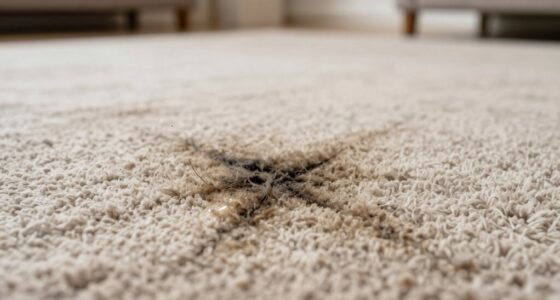
Another significant factor contributing to unpleasant odors is the growth of bacteria and microbes. Organic materials like food remnants, pet dander, and even urine serve as a buffet for bacteria. When carpets remain wet or damp, these tiny invaders thrive, emitting volatile compounds that create foul smells. If you’ve ever noticed a musty odor, it’s likely due to mold or mildew forming in damp carpet or padding. Even a small amount of moisture can reactivate dormant bacteria, causing odors to resurface. Persistent dampness is a major contributor to mold growth, which can exacerbate odor issues.
Bacteria thrive in damp carpets, feeding on organic materials and causing musty odors to resurface.
Slow drying times also play a critical role in the development of unpleasant smells. If you over-wet your carpets during cleaning or don’t extract enough water, you prolong the drying process. The longer your carpets stay damp, the more likely they are to develop odors. High humidity or poor ventilation can exacerbate this problem, trapping moisture in thick padding and dense carpet piles. Cold concrete subfloors can slow evaporation, leaving your carpets feeling wet even after they appear dry.
Odors can also lurk beneath the surface. Contaminated padding, especially from pet accidents, can hold onto bacteria and urine salts that continue to emit odors. Even if your carpet looks clean, the underlying padding and subfloor may harbor moisture and bacteria. Subfloor mold can create persistent musty smells that surface cleaning won’t eliminate. If you’ve recently experienced water intrusion or leaks, you may unknowingly be feeding these odor sources.
To tackle these issues, consider using high-quality cleaning tools and techniques. Thorough rinsing helps neutralize residues while antimicrobial solutions can address odor-causing bacteria. Professional drying methods prevent over-wetting and ensure your carpets dry quickly. By understanding the sources of odors after carpet cleaning, you can take the right steps to achieve that fresh scent you desire.
Frequently Asked Questions
How Can I Tell if My Carpet Is Truly Clean?
To tell if your carpet’s truly clean, check for lingering odors or stains. If it smells fresh and looks vibrant without any visible dirt, you’re likely in good shape. Run your hand over the fibers; they should feel soft and not sticky. Also, inspect the padding and subfloor for any dampness or residue. If everything feels and smells right, you’ve probably done a great job cleaning your carpet!
What Types of Cleaning Solutions Are Safe for Carpets?
Think of your carpet as a delicate garden, needing the right nutrients to flourish. For safe cleaning solutions, opt for mild, biodegradable products that won’t harm fibers or the environment. Enzyme-based cleaners effectively break down stains without harsh chemicals. Always test a small area first, and avoid anything with excessive fragrances or bleach. With the right solutions, your carpet stays vibrant and fresh, just like a well-tended garden.
How Often Should I Professionally Clean My Carpets?
You should professionally clean your carpets every 6 to 12 months, depending on foot traffic and usage. If you have pets or children, consider cleaning more frequently to keep odors and stains at bay. Regular professional cleanings not only enhance the appearance of your carpets but also extend their lifespan. Don’t forget to vacuum regularly between cleanings to minimize dirt buildup and maintain a fresh environment in your home.
Can I Use Home Remedies to Eliminate Carpet Odors?
You can definitely use home remedies to tackle carpet odors! Think of it as your own little potion-making. Baking soda works wonders; sprinkle it on, let it sit, and vacuum it up to absorb smells. White vinegar can neutralize odors when mixed with water and sprayed lightly. Just remember, while these remedies help, they might not eliminate deep-rooted issues. For the best results, consider combining them with professional cleaning methods when needed.
Will Steam Cleaning Help With Lingering Smells?
Yes, steam cleaning can help eliminate lingering smells in your carpet. The heat and moisture penetrate deep into the fibers, loosening dirt and residues that cause odors. However, it’s vital to guarantee proper drying afterward to prevent mold or bacteria from returning. You might also want to contemplate using antimicrobial solutions alongside steam cleaning for better results. Regular maintenance will keep your carpet fresh and minimize any unpleasant odors over time.
Conclusion
In conclusion, if you notice odors after carpet cleaning, it’s often due to residue or bacteria, especially if your carpets take too long to dry. Did you know that improperly dried carpets can harbor up to 10,000 bacteria per square inch? To avoid this, make certain your carpets are thoroughly dried and cleaned with the right products. Act quickly to tackle any lingering smells, and you’ll enjoy a fresher, healthier home environment.