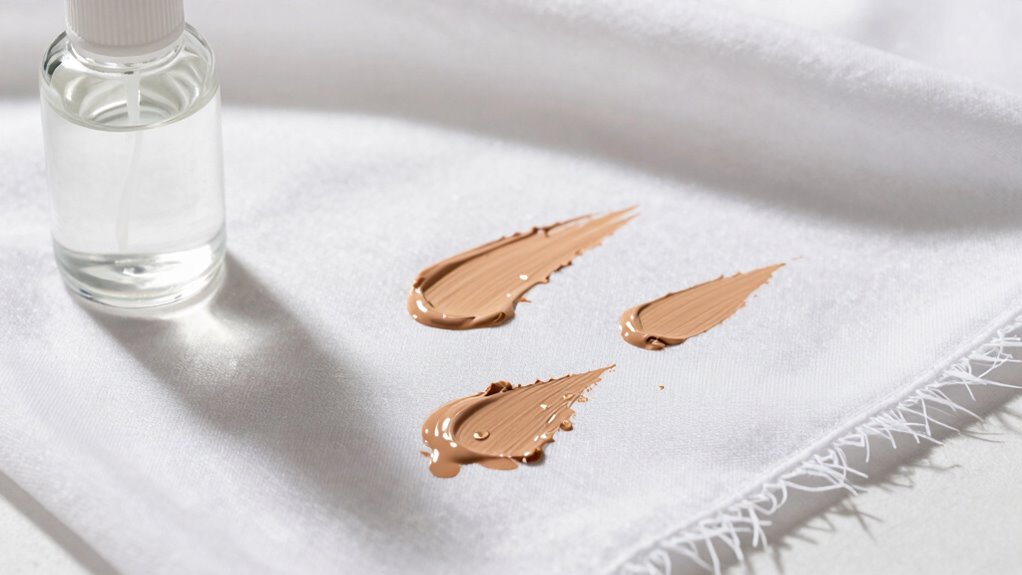

Using rubbing alcohol for makeup and foundation stains can backfire. It may push pigments deeper into the fabric, worsening the stain. Plus, scrubbing can spread the mess, leaving concentrated colors behind. While alcohol acts as a solvent, it can damage delicate fabrics and cause discoloration with repeated use. To avoid these issues, you should consider gentler cleaning methods. Discovering safer alternatives could help you keep your fabrics looking their best.

Get cleaning gear delivered free — and shop member deals
- Fast, free delivery on millions of items
- Access to Prime Big Deal Days deals on October 6–7
- Prime Video, Amazon Music and more included
Key Takeaways
- Rubbing alcohol can push concentrated pigments deeper into fabric fibers if applied improperly, worsening the stain.
- Scrubbing or rubbing the stain may spread it further, making removal more difficult.
- Alcohol’s quick evaporation can leave behind concentrated pigments that are hard to remove.
- Excessive use of rubbing alcohol risks fabric damage or discoloration, especially on delicate materials.
- Proper blotting and alternative stain removal methods are safer and more effective than relying solely on rubbing alcohol.
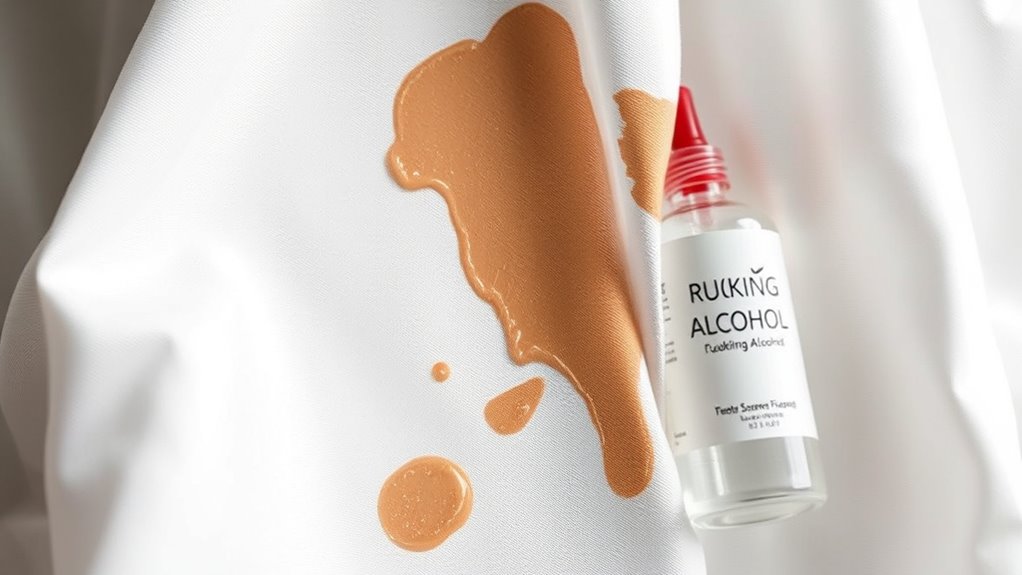
When you accidentally spill makeup on your favorite shirt, it can feel like a fashion disaster. Your first instinct might be to reach for rubbing alcohol, thinking it’ll dissolve that pesky stain. While isopropyl alcohol can work wonders on certain makeup types, it can backfire if you’re not careful. The oils, waxes, and pigments in foundations and lipsticks can adhere tightly to fabric fibers, making stains tough to lift without the right approach.
Rubbing alcohol acts as a solvent, effectively dissolving oils and waxes found in makeup. This can be especially useful for greasy products like lipstick or mascara. However, it’s important to note that alcohol may not work as well on water-based formulations or heavily pigmented powders. If you’re not cautious, you might push the pigment deeper into the fabric instead of lifting it away. That’s the last thing you want when dealing with a fresh stain. Additionally, using high contrast ratios in your cleaning methods can help enhance the visibility of the stain, making it easier to identify and tackle.
Rubbing alcohol can dissolve greasy makeup stains, but caution is necessary to avoid pushing pigments deeper into fabric.
If you decide to use rubbing alcohol, you should tread lightly. Quick evaporation means that while it won’t soak the fabric for long, it can lead to concentrated pigments remaining behind. If you apply it directly to the stain and don’t blot properly, you could end up with a larger, smeared stain. Scrubbing or rubbing might seem like a good idea, but it often spreads the stain further, making your situation worse.
Instead of relying solely on alcohol, consider safer alternatives. Enzyme-containing laundry detergents or dish soap mixed with warm water can effectively break down makeup stains without risking damage to your fabric. You could also try oil-free eye makeup removers for quick fixes. Always remember to test any solution on an inconspicuous area first to avoid any unwanted surprises.
To minimize the risk of setting stains, act quickly. Blot the excess makeup with a clean cloth, never rub. If you must use alcohol, dab a small amount and follow up with a gentle cleaning solution. Launder your shirt as per the care label instructions, and avoid heat-drying until you’re sure the stain is gone. Taking these steps can keep your favorite shirt looking its best and save you from future fashion disasters.
Top picks for "makeup foundation stain"
As an affiliate, we earn on qualifying purchases.
Frequently Asked Questions
Can Rubbing Alcohol Remove All Types of Makeup Stains?
Rubbing alcohol can’t remove all types of makeup stains effectively. While it works wonders on oil-based products like lipstick, it struggles with water-based formulas and heavily pigmented powders. If you apply it improperly, you might end up spreading the stain instead of lifting it. Always test on a hidden area first, and remember, using gentler alternatives like enzyme detergents or dish soap can often yield better results without damaging your fabrics.
Is Rubbing Alcohol Safe for All Fabric Types?
Think of rubbing alcohol as a double-edged sword. It isn’t safe for all fabric types. While it can tackle some stains effectively, it can also damage delicate materials like silk or acetate, weakening fibers and fading colors. Always test it on an inconspicuous area first. If you’re unsure, opt for gentler alternatives or specific fabric cleaners to avoid any regrettable mishaps. Your fabrics deserve better care than a risky gamble!
How Should I Store Rubbing Alcohol for Best Results?
To store rubbing alcohol for best results, keep it in a cool, dark place away from direct sunlight and heat sources. Make certain the bottle is tightly sealed to prevent evaporation and contamination. Ideally, use an opaque container to minimize light exposure. Check expiration dates regularly and replace any expired products. Avoid storing it in humid areas like bathrooms, as moisture can compromise its effectiveness. Always label the container clearly for safety.
What Are the Alternatives to Rubbing Alcohol for Stain Removal?
You might think rubbing alcohol is your only option for stain removal, but there are safer alternatives. Try enzyme-based laundry detergents, dish soap, or shaving cream; they effectively break down stains without risking fabric damage. Makeup-specific stain removers are also a great choice, balancing effectiveness and safety. Always start by gently blotting excess product and test any solution on a hidden area to verify it won’t harm your fabric.
How Quickly Should I Treat a Makeup Stain for Best Results?
You should treat a makeup stain as quickly as possible for the best results. The sooner you act, the less chance the stain has to set. Gently blot the stain with a clean cloth to remove excess makeup, then use a suitable treatment. Aim to treat the stain within minutes, but if that’s not possible, don’t wait too long. Remember, quick action minimizes the risk of spreading or embedding the stain deeper into the fabric.
Conclusion
So, next time you’re faced with a stubborn makeup stain, remember: while rubbing alcohol might seem like a quick fix, it can sometimes make things worse. Coincidentally, just as you rush to grab that bottle, your favorite shirt could be silently reminding you of a previous mishap. Instead, consider gentler alternatives that won’t risk damaging your fabrics. After all, you want to remove stains, not create new headaches. Keep your clothes safe and choose wisely!
Halloween Picks
halloween
As an affiliate, we earn on qualifying purchases.