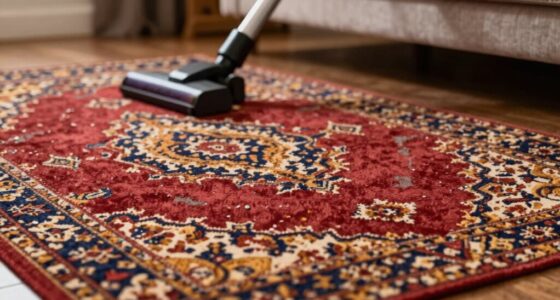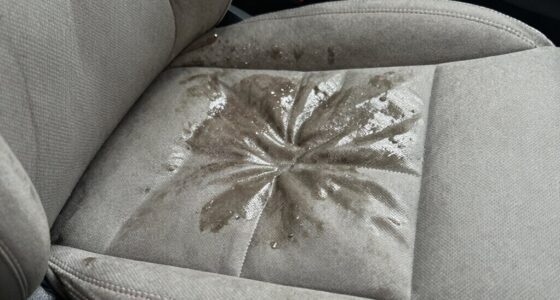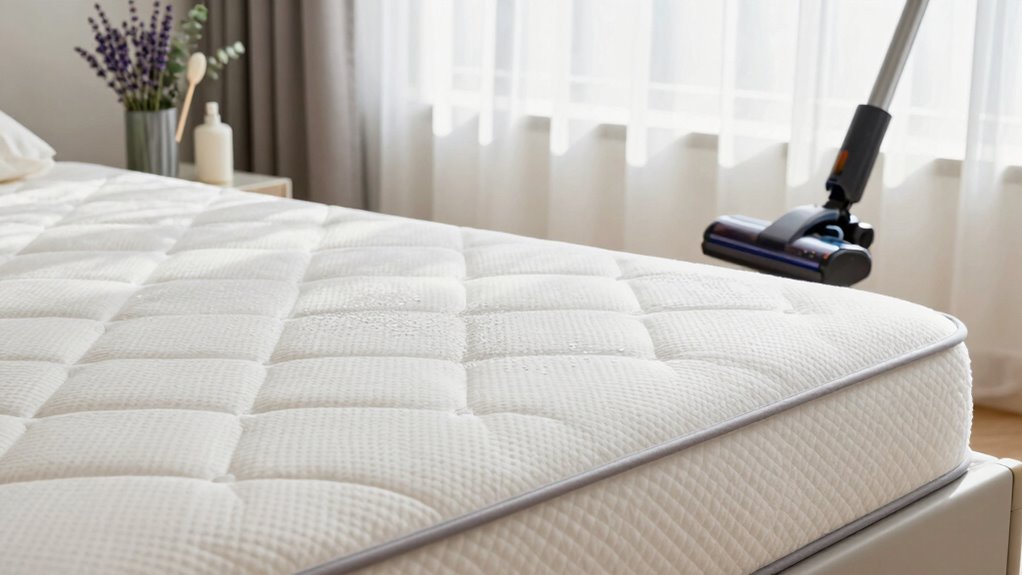

To effectively clean your mattress while preventing mildew, use a low-moisture method. Start by stripping the bedding and vacuuming thoroughly. Pre-spray a bio powder solution for stains, apply hydrogen peroxide on tougher spots, and extract residue with a vacuum attachment. After cleaning, air dry your mattress in a well-ventilated area, and sprinkle baking soda to absorb odors. This method guarantees your sleeping surface stays healthy and fresh. Discover more tips to keep your mattress in top shape!
Key Takeaways
- The low-moisture cleaning technique uses minimal water to prevent mattress damage and mildew growth.
- Start by vacuuming the mattress thoroughly to eliminate dust and debris before applying cleaning solutions.
- Use enzyme-based solutions and hydrogen peroxide to effectively tackle organic stains while avoiding excess moisture.
- Ensure the mattress is air-dried completely in a well-ventilated area to prevent microbial growth and mildew.
- Regular maintenance and quick drying are essential for prolonging mattress life and ensuring a healthy sleep environment.
Cleaning your mattress is vital for maintaining a healthy sleep environment. One effective method is low-moisture cleaning, which uses minimal water and focuses on removing surface dirt while preventing moisture retention that can lead to mold and mildew growth. This technique is particularly beneficial for memory foam and latex mattresses, as it avoids damage caused by excess heat and moisture. Regular cleaning guarantees a healthier sleeping environment, enhancing your overall well-being.
Cleaning your mattress is essential for a healthy sleep space, and low-moisture cleaning effectively removes dirt while preventing mold growth.
To start your low-moisture cleaning process, strip the bedding and vacuum your mattress thoroughly. This step removes dust, skin flakes, and crumbs that can accumulate over time. After that, pre-spray the surface with a solution made from 15g of bio powder in 1 liter of warm water. This enzyme-based cleaner works effectively on organic stains like sweat and urine. For tougher stains, mist 3% hydrogen peroxide over the affected area and let it dwell for 20 to 30 minutes.
Now, it’s time to tackle the dirt. Use an upholstery attachment on your vacuum cleaner for initial extraction, ensuring you lift away as much residue as possible. If you encounter specific stains, apply a vinegar-water mix or a few drops of mild dish soap directly onto a cloth, and blot from the outside in. For set-in stains, you can use a combination of hydrogen peroxide, baking soda, and dish soap. Just be careful not to oversaturate the fabric.
Once you’ve cleaned, guarantee proper drying to prevent mildew. Air dry your mattress in a well-ventilated area. Use fans or a dehumidifier to speed up the drying process. It’s vital to allow the mattress to dry completely before putting bedding back on. Leaving it damp can trap moisture, promoting microbial growth. If you’re in a humid environment, consider using a dehumidifier and opening windows to enhance airflow.
To maintain freshness, sprinkle baking soda over the treated areas and let it sit for several hours. This will absorb any residual moisture and neutralize odors. Vacuum it up afterward. Remember, quick drying is key; aim to keep the mattress surface dry within a few hours. Prolonged dampness can create a breeding ground for mildew, so avoid using the mattress until it’s fully dry.
Frequently Asked Questions
How Often Should I Clean My Mattress Using Low-Moisture Methods?
You should clean your mattress using low-moisture methods every six months to maintain freshness and hygiene. If you notice spills, stains, or odors, address those immediately to prevent buildup. Regular vacuuming and spot cleaning can also help. In humid environments or if you have allergies, consider more frequent cleanings. By sticking to this schedule, you’ll keep your mattress in great condition and minimize the risk of mildew and other issues.
Can I Use Low-Moisture Cleaning on All Mattress Types?
Yes, you can use low-moisture cleaning on most mattress types. It’s effective for memory foam, latex, and traditional innerspring mattresses, ensuring they don’t retain excess moisture that can lead to mold. Just check the care label for any specific instructions. By applying this method, you maintain your mattress’s integrity while achieving a thorough clean without oversaturation. Remember, always test any cleaning solution on a small area first!
What if My Mattress Has a Waterproof Cover?
If your mattress has a waterproof cover, you can still use low-moisture cleaning methods effectively. Just guarantee that you focus on cleaning the surface of the cover without oversaturating it. Use a damp cloth with your cleaning solution and gently blot any stains. Remember to air dry the cover thoroughly afterward to avoid trapped moisture. This way, you’ll maintain the integrity of the waterproof layer while keeping your mattress fresh.
Are There Any Specific Tools Needed for Low-Moisture Cleaning?
When it comes to low-moisture cleaning, you’ll need a few essential tools to hit the ground running. Grab a vacuum with an upholstery attachment, microfiber towels, and a spray bottle for your cleaning solutions. A soft bristle brush comes in handy for scrubbing, while baking soda’s a great ally for odor absorption. You might also want a fan or dehumidifier to speed up the drying process. With these tools, you’re all set to tackle the job!
How Can I Maintain My Mattress Between Cleanings?
To maintain your mattress between cleanings, regularly vacuum it to remove dust and allergens. Rotate or flip it every few months to guarantee even wear. Use a mattress protector to shield against spills and stains. Spot clean any stains immediately with a mild solution, and let it air out by removing bedding and allowing airflow. Sprinkle baking soda occasionally to absorb odors, then vacuum it up to keep your mattress fresh.
Conclusion
In summary, if you think tossing your mattress out the window is a valid cleaning method, think again! Embrace the low-moisture miracle and save your back—and your bed. After all, who needs mildew creeping in when you can have a fresh, clean sanctuary? So grab that vacuum and wave goodbye to the dust bunnies that’ve made your mattress their home. Your dreams deserve a clean slate, not a moldy mattress—unless you’re into that sort of thing, of course!