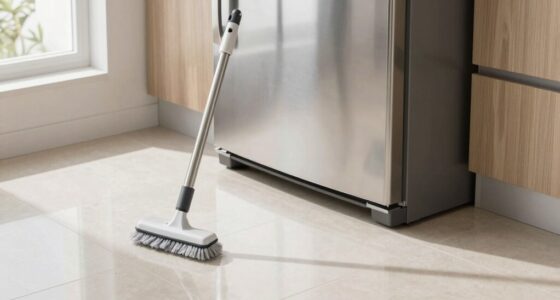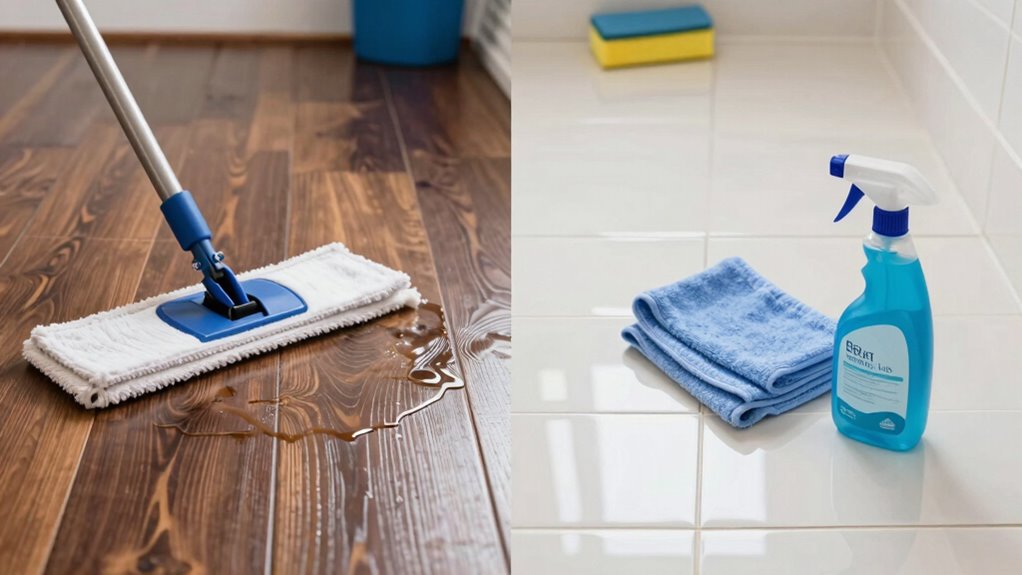

When disinfecting your floors, it’s key to tailor your approach for tile and wood. For tile, use pH-neutral commercial cleaners or diluted vinegar, focusing on grout lines. A microfiber mop helps guarantee even coverage without streaks. On wood, opt for a damp mop with a vinegar solution, wringing it out well to avoid excess moisture. Always dry the floor promptly. Want to know more about maintaining your floors just right? There’s plenty more to uncover!

Get cleaning gear delivered free with Prime
- Fast, free delivery on millions of items
- Prime Video, Amazon Music and more included
- Member-only deals all year
Key Takeaways
- For wood floors, use a damp mop with a vinegar solution, avoiding excess moisture to prevent warping.
- Tile floors benefit from pH-neutral commercial disinfectants, ensuring no damage to the finish.
- Focus on grout lines when disinfecting tile, as they are prone to bacteria buildup.
- Avoid harsh chemicals like bleach and ammonia that can ruin finishes and distort colors.
- Regular maintenance includes vacuuming, mopping with the grain for wood, and resealing grout every 6–12 months.
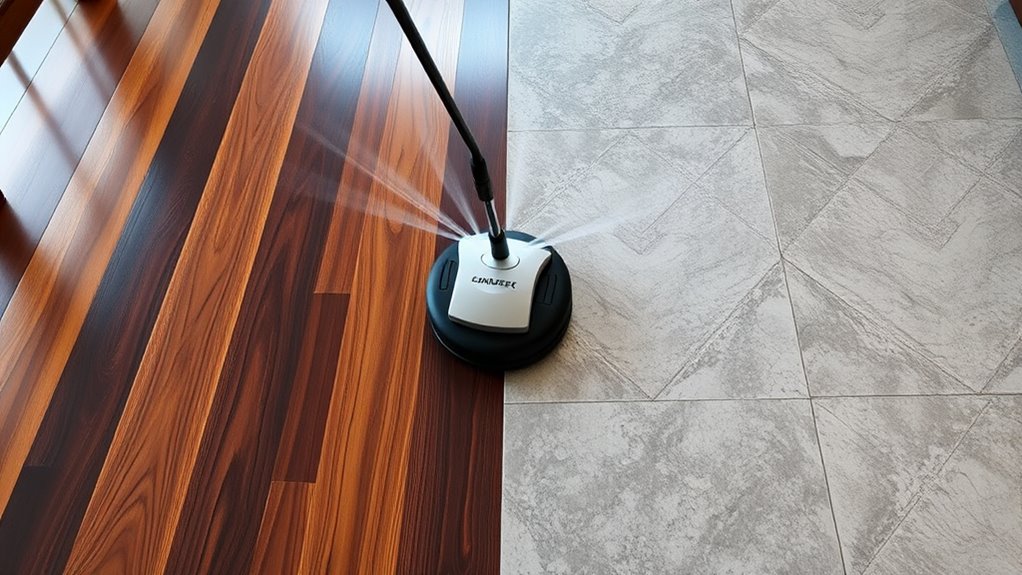
When it comes to disinfecting your floors, knowing the right methods and products can make all the difference in preserving their appearance and integrity. If you have wood or tile floors, understanding the specific cleaning needs is essential to avoid damage. For wood floors, moisture is a big concern. You’ll want to use a damp mop rather than soaking it. A solution of half a cup of white vinegar mixed with a gallon of water works well. Just wring out your mop well, and wipe gently in a circular motion, rinsing frequently. After you’re done, dry the floor immediately with a clean, absorbent cloth to prevent warping. Proper preparation of the floor surface is crucial as it facilitates easier and more effective disinfectant application. Additionally, ensuring ventilation considerations during the cleaning process can help maintain air quality and prevent excess moisture buildup.
Tile floors are generally more forgiving. You can use commercial disinfectants designed for ceramic tile that effectively kill viruses and bacteria. A pH-neutral cleaner is a safe choice, helping you avoid any damage to the finish. If you prefer a natural option, diluted vinegar can also serve as an antibacterial solution. Remember to focus on the grout lines, as they’re porous and can trap bacteria. Using a microfiber mop will help you apply the solution without leaving streaks behind.
It’s essential to steer clear of harsh chemicals like bleach and ammonia. Bleach can distort floor color and damage both wood and tile finishes. Similarly, ammonia can discolor tile finishes, while strong chemicals may cause warping or mildew buildup. When it comes to cleaning procedures, always start by vacuuming or sweeping to remove loose dirt. For wood, mop with the grain to avoid scratches and discard the dirty solution often.
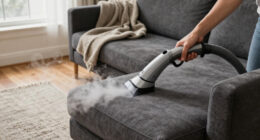
Steam cleaning might seem like an efficient option, but it can introduce excess moisture, especially on wood. If you decide to use a steam mop, keep the settings adjustable and use it only on wood-look tile or in a controlled manner on wood. Focus on the heat, using it for about 20 seconds per spot to sanitize effectively.
For routine maintenance, disinfect high-traffic areas daily on tile, while limiting moisture exposure on wood. Deep-clean and reseal grout regularly, about every six to twelve months, to maintain its integrity. Always monitor humidity in your home; prolonged humidity over 60% can lead to wood warping and microbial growth in grout. By following these methods, you can effectively disinfect your floors without causing damage, keeping them beautiful and safe.
Frequently Asked Questions
Can I Use Vinegar to Disinfect My Wood Floors?
You shouldn’t use vinegar to disinfect your wood floors. While it’s a popular natural cleaner, vinegar’s acidity can damage the finish over time, leading to dullness or warping. Instead, opt for pH-neutral cleaners specifically designed for wood. They’re effective in disinfecting without risking your floor’s integrity. Always follow the manufacturer’s recommendations for cleaning products and methods to guarantee your floors stay beautiful and protected.
What Should I Do if My Grout Stains?
If your grout stains, start by mixing a paste of baking soda and water, then apply it directly to the stained areas. Let it sit for about 10-15 minutes before scrubbing gently with a soft-bristle brush. Rinse with warm water and wipe clean. For tougher stains, consider using a grout-safe cleaner or a diluted hydrogen peroxide solution. Always test any cleaner on a small area first to make sure it won’t damage the grout.
Is Steam Cleaning Safe for Laminate Floors?
No, steam cleaning isn’t safe for laminate floors. The heat and moisture from steam can cause warping or delamination, ruining your flooring. Instead, use a damp microfiber mop with a pH-neutral cleaner designed for laminate. This method effectively removes dirt without risking damage. Always make sure to follow the manufacturer’s recommendations for cleaning to keep your laminate floor looking great and functioning well for years to come.
How Often Should I Reseal My Grout?
You should reseal your grout every 6 to 12 months, especially in wet areas like kitchens and bathrooms. This regular maintenance helps prevent microbial growth and staining. Keep an eye on its appearance; if it looks discolored or damp after cleaning, it’s time for resealing. Always follow the manufacturer’s recommendations for the sealing product you use to guarantee the best results and maintain your grout’s integrity over time.
Can I Use Bleach on My Ceramic Tiles?
You can use bleach on your ceramic tiles, but proceed with caution. Picture your gleaming tiles and the potential for disaster. While bleach effectively disinfects, it can discolor grout and damage some tile sealers. Rinse thoroughly after application to avoid any residue buildup. Always test on a small, inconspicuous area first. If you’re unsure, consider alternative disinfectants that won’t jeopardize your beautiful tiles. Your careful approach will ensure they stay pristine!
Conclusion
In summary, successfully disinfecting your floors without causing damage is possible with the right approach. While tile can withstand harsher chemicals, wood requires gentler solutions to preserve its finish. The theory that all disinfectants are safe for every surface proves false; understanding the material’s needs is essential. By choosing appropriate products and methods, you can maintain a clean, safe home without sacrificing your flooring’s integrity. So, always tailor your cleaning strategy to the surface you’re tackling.
Fall Picks
fall essentials
As an affiliate, we earn on qualifying purchases.