
To wash microfiber cloths without cross-contamination, use a color-coding system. Assign colors for different cleaning tasks and fold each cloth into four sections for efficient use. Always launder microfiber separately from other fabrics, using warm or hot water, and avoid softeners and bleach. Opt for a short laundry cycle and air dry your cloths to maintain their effectiveness. Following these practices keeps your environment hygienic, and there’s more to discover about maximizing cleanliness and safety.
Key Takeaways
- Wash microfiber cloths separately from other laundry to prevent lint attraction and contamination.
- Use warm or hot water for heavily soiled cloths to enhance cleaning effectiveness.
- Choose an institutional detergent specifically designed for microfiber; avoid using softeners and bleach.
- Implement short laundry cycles to maintain the integrity and effectiveness of microfiber materials.
- Air dry microfiber cloths to extend their lifespan and minimize bacterial growth during drying.

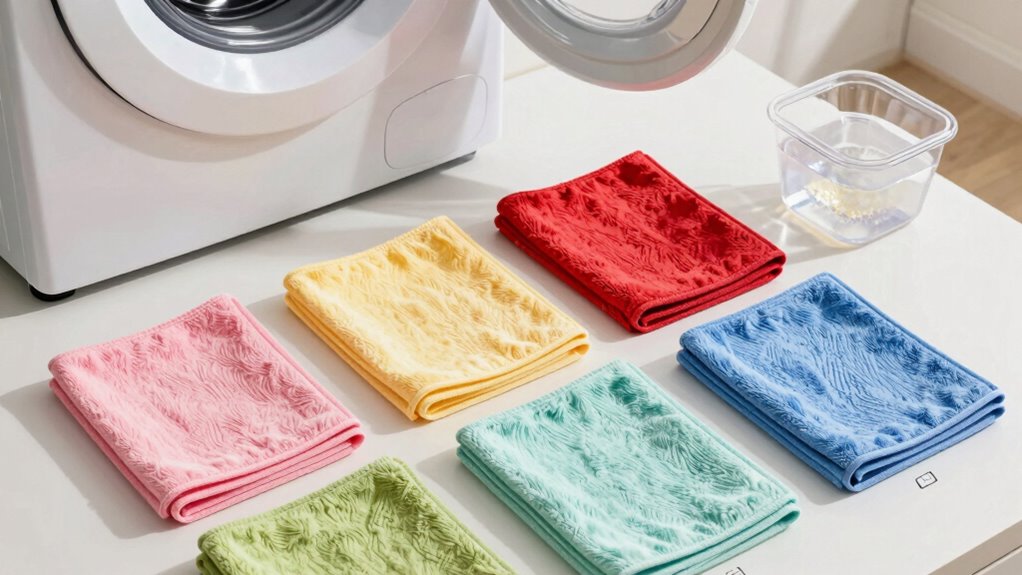
When you’re looking to maintain a clean and hygienic environment, the Microfiber Laundry System is an essential tool in your cleaning arsenal. By utilizing a color-coding system, you can effectively designate specific microfiber cloths for various cleaning tasks. For instance, red cloths are ideal for high-risk areas like restrooms and toilets, while blue cloths serve general low-risk surfaces such as floors and electronics. Yellow cloths are perfect for specialty projects, and green cloths should be reserved for food service areas. This method not only prevents cross-contamination but also simplifies training with visual aids.
The Microfiber Laundry System’s color-coding ensures efficient cleaning and prevents cross-contamination in various environments.
When folding your microfiber cloths, you’ll want to create an efficient cleaning process. Fold each cloth in half, then half again, resulting in four sections per side. This technique allows you to use one section at a time and switch to the next when it becomes soiled. Avoid using the entire cloth at once or crumpling it together, as this can lead to inefficiencies and cross-contamination. By employing quadrant folding, you can maximize your cleaning efforts while minimizing the spread of bacteria. Additionally, microfiber materials are safe for delicate surfaces, ensuring that your cleaning tasks do not damage any items.
Laundering your microfiber cloths is vital for maintaining their effectiveness. Always wash microfiber separately from other laundry to avoid lint attraction, which can reduce their cleaning power. Use warm or hot water for heavily soiled cloths and choose an institutional detergent specifically designed for microfiber, steering clear of softeners and bleach. Short laundry cycles are advisable due to the fast drying nature of microfiber, and air drying is a great alternative to ensure longevity.
The effectiveness of microfiber against bacteria is impressive. Studies show that microfiber mops can reduce floor bacteria by up to 99%, compared to only 30% for cotton-loop mops. Microfiber cloths also excel at removing bacteria more effectively than their cotton counterparts. The quick drying time of microfiber helps inhibit bacterial growth, making it a superior choice for cleaning tasks.
To further prevent cross-contamination, consider using charging bucket systems that allow for fresh mop head changes and no-touch mop holders that minimize direct contact with soiled items. By implementing these practices, you can greatly reduce the risk of spreading contaminants, especially in high-touch areas.

Amazon Basics Microfiber Cleaning Cloths, Ultra Absorbent, Lint Free, Streak Free, Non-Abrasive, Reusable and Washable, 16" x 12", Blue/White/Yellow, Pack of 24
- Size: 16 x 12 inches
- Pack Size: 24 cloths
- Material: Microfiber
As an affiliate, we earn on qualifying purchases.
Frequently Asked Questions
Can I Use Fabric Softeners When Washing Microfiber Cloths?
No, you shouldn’t use fabric softeners when washing microfiber cloths. They can clog the fibers, reducing their effectiveness at cleaning and trapping dirt. Instead, wash them with warm or hot water and a suitable detergent. Keep your microfiber in top shape by avoiding any products that leave residues, like softeners. By following these guidelines, you’ll guarantee your cloths remain efficient and maintain their ability to capture bacteria and dirt effectively.
How Often Should Microfiber Cloths Be Replaced?
You should replace microfiber cloths every few months, but it’s vital to monitor their condition. Studies show that worn microfiber can harbor up to 99% of bacteria, making effective cleaning challenging. If you notice fraying, discoloration, or a reduction in cleaning efficiency, it’s time for a replacement. Regularly inspect your cloths to guarantee they maintain their cleaning power and hygiene, keeping your environment safe and bacteria-free.
Is Air Drying Microfiber Cloths Effective?
Yes, air drying microfiber cloths is effective. When you hang them up to dry, it helps prevent bacterial growth, which is essential for maintaining hygiene. Just make sure they’re spread out to allow for proper airflow. Avoid using heat sources, as they can damage the fibers. By air drying, you extend the life of your cloths while keeping them clean and ready for your next cleaning task. Regularly check for any signs of wear too!
Can I Mix Different Colors of Microfiber Cloths in Laundry?
No, you shouldn’t mix different colors of microfiber cloths in laundry. Keeping them separate prevents cross-contamination and maintains their effectiveness. Each color’s designated purpose helps you avoid transferring bacteria and dirt between surfaces. Washing them together can lead to lint transfer and reduce their cleaning efficiency. Stick to washing like colors to extend their lifespan and make sure you’re cleaning effectively in each designated area. Always prioritize hygiene in your cleaning routine!
What Is the Lifespan of a Microfiber Cloth?
Think of a microfiber cloth as a trusty steed in your cleaning arsenal, ready to serve you well for about 300 to 500 washes. With proper care, its lifespan can stretch like an elastic band, offering you efficient cleaning for years. Just remember to wash it separately, avoid fabric softeners, and treat it gently. By doing this, you’ll keep your cloths performing at their best, ensuring your cleaning efforts never fall flat.
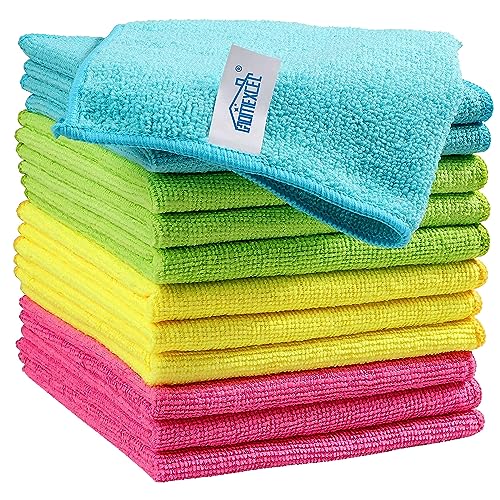
HOMEXCEL 12PK Microfiber Cleaning Cloth, Cleaning Rag for Home, 11.5x11.5in
- Streak-Free Cleaning: Effective on various surfaces with minimal effort
- Lint-Free & Scratch-Safe: Protects delicate finishes from scratches
- Highly Absorbent: Quickly soaks up liquids and grime
As an affiliate, we earn on qualifying purchases.
Conclusion
In the world of washing, mastering the microfiber laundry system means you’ll minimize mess and maximize cleanliness. By segregating your cloths and scrubbing smartly, you’ll safeguard surfaces and sustain sanitation. With these simple steps, you’ll create a cycle of clarity, ensuring your microfiber stays effective and efficient. So, embrace this easy approach and enjoy a fresh future for your fabrics. Remember, a little diligence goes a long way in preventing pesky particles from sticking around!

USANOOKS Microfiber Cleaning Cloth Grey - 12 Pcs (12.5"x12.5") - High Performance - 1200 Washes, Ultra Absorbent Microfiber Towel Weave Grime & Liquid for Streak-Free Mirror Shine - Car Washing Cloth
- High Absorbency Microfiber: Locks in 8-10x its weight in liquids
- Durable 2.5mm Thick Design: Resists lint, scratches, and shedding
- Swirl-Free Mirror Shine: Rapid dry layers prevent damage
As an affiliate, we earn on qualifying purchases.

BISSELL ProHeat 2X Revolution Pet Pro Plus Carpet Cleaner, 3588F
- Deep Cleaning for Pet Messes: Removes tough pet stains and odors
- Effective Spot & Stain Removal: CleanShot Pretreater with OXY for stains
- Odor Prevention Technology: StainProtect technology prevents future stains
As an affiliate, we earn on qualifying purchases.