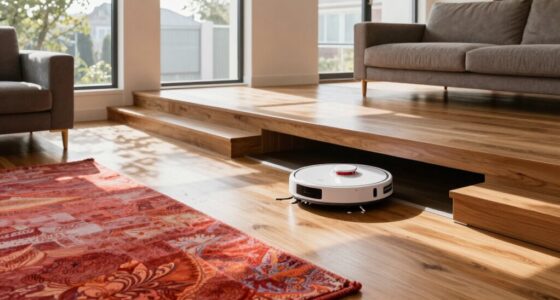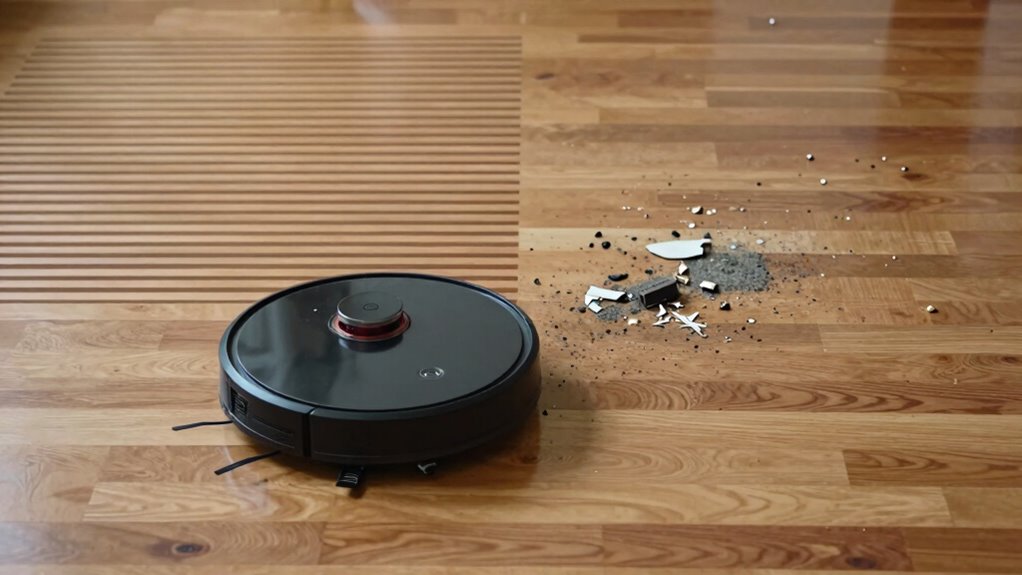
When choosing between parallel lines and chaotic navigation for your robot vacuum, consider efficiency. Systematic cleaning patterns like parallel lines guarantee full coverage and quicker cleaning times, while chaotic patterns can leave areas uncleaned and take longer to finish. Advanced mapping technologies improve systematic cleaning, making it more thorough. If you’re looking for the best cleaning results, understanding the strengths of both patterns can help you make an informed choice for your home. There’s much more to explore on this topic!
Key Takeaways
- Parallel line patterns ensure systematic coverage, preventing missed spots and reducing cleaning time compared to chaotic navigation.
- Random navigation results in inefficient cleaning, often taking up to 40% longer due to aimless wandering and redundant coverage.
- Advanced technologies like LiDAR and SLAM enable precise mapping, enhancing the effectiveness of structured cleaning patterns.
- Structured cleaning patterns lead to more thorough floor coverage and improved mopping results, avoiding streaks and uneven cleaning.
- Hybrid models combine systematic and random approaches, offering adaptability while still prioritizing efficiency in cleaning tasks.
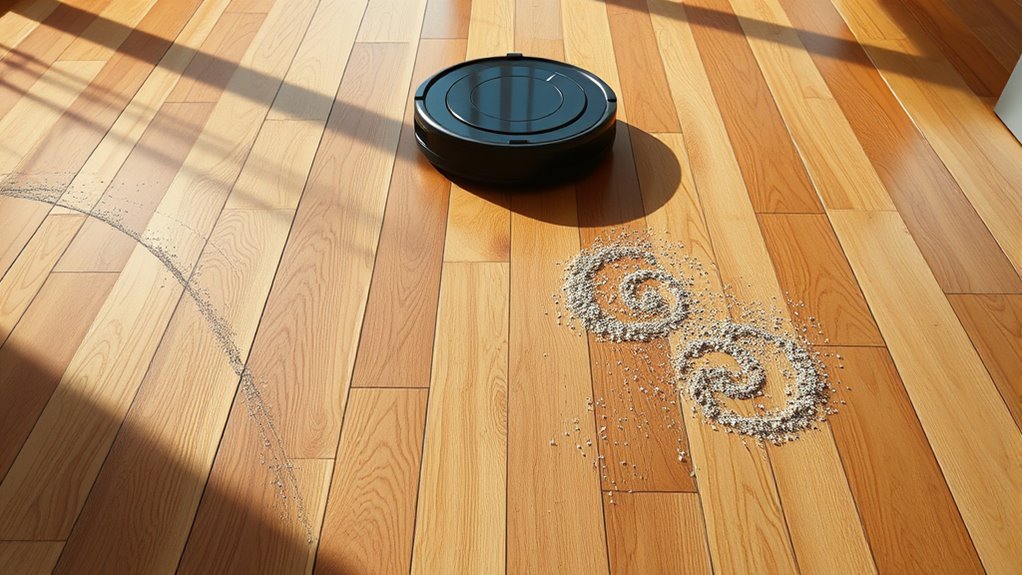
When it comes to keeping your home clean, understanding robot vacuum cleaning patterns can make a significant difference in efficiency and coverage. You might have noticed that some robot vacuums utilize systematic patterns, like parallel lines or boustrophedon zig-zags, while others seem to move randomly, creating what some call “chaos.” Knowing how these patterns work can help you choose the right model for your cleaning needs.
Systematic cleaning patterns, such as parallel lines, ensure that your robot covers the entire floor area without missing spots or doubling up on already-cleaned sections. These vacuums often use advanced navigation technologies like LiDAR or SLAM to create precise maps of your home. When your vacuum can identify room boundaries and obstacles accurately, it can clean efficiently, tackling each area in a structured manner. The result? You’ll enjoy faster cleaning times and more complete coverage. This efficiency can be further enhanced by spinning robot mops, which combine high-speed rotation with downward pressure for effective cleaning. Additionally, a focus on content relevance in the vacuum’s programming optimizes its cleaning efficiency.
In contrast, robot vacuums that rely on random navigation can leave you frustrated. These models bump into objects, change direction at random, and often miss areas while redundantly cleaning others. While they might eventually cover most of your space, they do so inefficiently. A robot using a random pattern can take up to 40% longer to clean compared to its systematically navigating counterparts. If you’ve ever watched one of these vacuums, you may have noticed it wandering aimlessly, which can be a waste of your valuable time.
Some hybrid models combine both systematic and random navigation. These vacuums generally start with systematic cleaning, then switch to random patterns when they encounter obstacles or clutter. This adaptability allows them to maintain efficiency while still addressing areas that might need extra attention. However, the best results still come from vacuums that stick to structured patterns, especially in larger or more complicated homes.
When considering mopping functions, systematic patterns again shine. Back-and-forth mopping ensures even water distribution, while chaotic movements can lead to streaks and uneven cleaning. If you’re looking for a vacuum that can handle all aspects of cleaning, including mopping, prioritizing one with a robust mapping system will likely yield better results.

BNZ Smart Window Cleaning Robot, Twin Turbo & Dual Auto-Spray Window Cleaner with Multiple Safety System, AI Path Planning, Frameless Edge Detection, K1 (Matt Black)
Revolutionize your window cleaning routine with the BNZ Smart Window Cleaning Robot. Featuring powerful Twin Turbo & Independent...
As an affiliate, we earn on qualifying purchases.
Frequently Asked Questions
How Do Robot Vacuums Handle Different Floor Types?
Robot vacuums handle different floor types by adjusting their settings and cleaning modes. On hard surfaces like tile or hardwood, they often use higher suction and parallel cleaning patterns for efficiency. For carpets, they might switch to turbo mode for deeper cleaning. Some models even detect floor types automatically, optimizing their approach. Additionally, features like adjustable mopping settings help maintain cleanliness without damaging surfaces, ensuring every area gets the right treatment.
Can Robot Vacuums Work in Multi-Level Homes?
Yes, robot vacuums can work in multi-level homes like a skilled dancer maneuvering a complex stage. They utilize advanced mapping technologies, such as LiDAR or camera-based systems, to create detailed floor plans for each level. You can schedule cleanings for specific rooms, and many models automatically return to their charging stations. Just make certain your vacuum is compatible with your home’s layout, and it’ll handle the stairs and different floors with ease!
What Is the Average Lifespan of a Robot Vacuum?
The average lifespan of a robot vacuum is typically around 5 to 7 years, but it can vary based on usage, maintenance, and model quality. Regularly cleaning filters, brushes, and sensors can help extend its life. If you notice a decline in performance or battery life, it might be time to contemplate a replacement. Investing in a well-reviewed model with solid warranties can ensure better longevity and reliability for your cleaning needs.
Are Robot Vacuums Safe for Pets?
Yes, robot vacuums are generally safe for pets. Many models feature sensors to avoid obstacles and can navigate around your furry friends without issue. However, it’s important to monitor your pet’s behavior around the vacuum, especially if they’re curious or anxious. Make sure to keep small toys or items off the floor, as these can get caught in the vacuum. Overall, with proper precautions, your pet can coexist safely with a robot vacuum.
How Often Should I Clean My Robot Vacuum?
You should clean your robot vacuum every one to two weeks to keep it functioning properly. This includes emptying the dustbin, checking and cleaning filters, and inspecting brushes for tangled hair or debris. If you have pets or a high-traffic area, consider cleaning it more frequently. Regular maintenance not only extends the life of your vacuum but also ensures it maintains strong suction and picks up dirt effectively.

Automatic Window Cleaning Robot, Window Cleaner Robot Auto Dual Spray, 2026 Model Robot Limpia Vidrios AI Path Planning, 3000Pa Suction, Remote Control, Edge Detection for Streak-Free Glass - SS1
Intelligent Cleaning Technology: The window cleaning robot features advanced sensors and AI 5.0 path planning, enabling it to...
As an affiliate, we earn on qualifying purchases.
Conclusion
In the end, whether your robot vacuum opts for parallel lines or chaotic patterns, it’s all about efficiency and thoroughness. Some might swear by the methodical approach, while others appreciate the randomness that can catch hidden dust bunnies. The truth is, both strategies have their merits, and your vacuum’s unique style might just reveal its personality! So, next time you watch it clean, remember it’s not just a machine—it’s your quirky little helper tackling the mess.

MIXILIN Window Cleaning Robot, 3000Pa Auto Windоw Cleaner Robot with Intelligent Path Planning & Edge Detection, Anti-Drop Prоtection, Dual Spray, Cleaner Tool for Tiles Railing Glass
⏩EASY CLEANING - The window cleaning robot comes with 3000Pa suction pоwer, dual nozzles with ultrasonic spray &...
As an affiliate, we earn on qualifying purchases.

GNOVEL Window Cleaning Robot, 8000Pa Auto Window Cleaner with Intelligent Path Planning, 15-Stage Anti-Fall for High-Rise Glass, App & Remote Control, Hands-Free for Tile & Floor-to-Ceiling Windows
[Dual Assurance for High-Rise Peace of Mind] Our window cleaning robot engineered for absolute security and powerful performance....
As an affiliate, we earn on qualifying purchases.