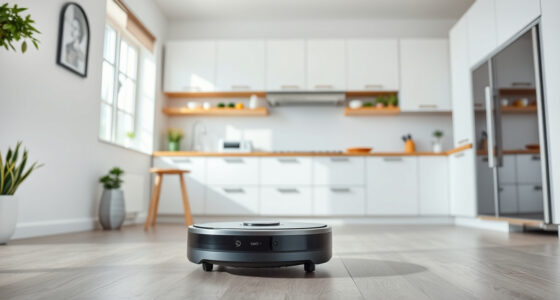
Dark rugs and black floors can confuse your robot vacuum. Its cliff sensors rely on infrared signals, which dark surfaces absorb instead of reflecting. This leads to false readings and causes your vacuum to stop or hesitate. You might notice it bouncing around the edges or skipping those areas altogether. Don’t worry; there are simple tricks to improve detection and keep your vacuum cleaning efficiently. Discover more solutions to this common issue ahead.

Get cleaning gear delivered free — and shop member deals
- Fast, free delivery on millions of items
- Access to Prime Big Deal Days deals on October 6–7
- Prime Video, Amazon Music and more included
Key Takeaways
- Cliff sensors use infrared technology to detect drop-offs by measuring reflected signals from the floor’s surface color.
- Dark rugs and black floors absorb infrared signals, leading to false cliff detection and causing the robot to hesitate or stop.
- Common behaviors include bouncing around edges of dark rugs or skipping those areas entirely, resulting in uncleaned spots.
- Workarounds include using reflective tape at rug edges or setting virtual barriers to prevent the robot from encountering drop-offs.
- Regular maintenance of sensor housing and firmware updates can improve detection sensitivity and overall cleaning efficiency.

When you’re trying to keep your home clean with a robot vacuum, you might notice it hesitates or even stops at dark rugs and black floors. This frustrating behavior stems from how cliff sensors work. These sensors use infrared (IR) technology to detect reflected signals from the floor. Dark surfaces, like black rugs, absorb more IR, which means less signal returns to the sensor. When the signal drops below a certain threshold set by the robot’s firmware, the vacuum interprets this as a potential drop-off, causing it to stop or back away.
You’ll likely observe your robot bouncing around the edges of a dark rug or simply skipping those areas altogether. This isn’t just a random quirk; it’s a common issue across many robot vacuum brands, including popular models like Roomba. Users have reported similar experiences spanning multiple generations and types of devices. The problem often happens with rugs that have solid black borders or low-reflectance materials, leaving you with uncleaned spots in your home. This issue has been acknowledged by support, who note that dark floors and rugs can cause false cliff detection. Maintaining a clean home can be challenging, especially on whole-home backup power days when the lights flicker during storms.
Robot vacuums often avoid dark rugs, leading to uncleaned spots, a common issue across many brands like Roomba.
If you want to address this issue, there are some workarounds you can try. Many users have had success using reflective tape or glossy patches placed at the edges of dark rugs. This method tricks the cliff sensors into thinking there’s a floor present, allowing your robot to cross without stopping. However, be cautious: covering or disabling these sensors removes their ability to detect real drops, increasing the risk of falls if you have stairs nearby.
Another option is to use virtual barriers or no-go zones within the robot’s app. This way, you can keep the robot away from stairs without compromising safety. You can also try temporarily adjusting the rug’s edge to create a higher-reflectance transition. This could help the sensors register the floor correctly. Cleaning the sensor housing regularly is essential, too, as dust buildup can cause false positives.
It’s important to remember that while some modifications can help, they might void your warranty or create safety risks. Manufacturers generally recommend avoiding permanent changes to cliff sensors. Instead, they suggest maintaining your robot and exploring firmware updates that could address sensitivity issues. Ultimately, it’s about finding a balance between keeping your home clean and ensuring safety.
Frequently Asked Questions
Can I Use My Robot Vacuum on Dark Floors Safely?
Using your robot vacuum on dark floors isn’t entirely safe. The sensors might mistake the lack of reflected light for a drop-off, causing the vacuum to stop or avoid those areas. While you can try using reflective tape or adjusting settings, these workarounds could compromise safety features designed to prevent falls. It’s best to monitor your vacuum closely and consider creating virtual barriers to protect against potential hazards.
How Do I Clean Cliff Sensors Effectively?
Wondering how to keep your robot vacuum’s cliff sensors clean? Start by turning off the device and locating the sensors, usually near the bottom. Use a soft, dry cloth or a small brush to gently remove dust and debris. If needed, a slightly damp cloth can help, but make sure everything’s dry before turning it back on. Regular maintenance keeps sensors functioning properly, ensuring your vacuum doesn’t falsely detect cliffs.
What Are the Best Reflective Materials for Sensor Modification?
The best reflective materials for sensor modification are aluminum foil, glossy tape, or laminated paper. These materials effectively bounce infrared light back to the sensor, tricking it into thinking the floor is present. You can easily cut them to size and attach them over the cliff sensors. Just be cautious; while these modifications can solve the issue, they may compromise safety by disabling fall detection, so use them wisely.
Will Modifying Sensors Void My Robot’s Warranty?
Yes, modifying your robot’s sensors will likely void the warranty. Most manufacturers specify that any internal changes or unauthorized repairs can lead to warranty cancellation. If you’re considering modifications, weigh the benefits against the risk of losing support for your device. It’s always best to consult the warranty terms or contact customer service for clarification before making any alterations. Remember, maintaining your robot properly might resolve issues without risking your warranty.
How Can I Prevent My Robot From Getting Stuck?
To prevent your robot from getting stuck, start by keeping your floors clear of obstacles and clutter. Make sure sensors are clean and free of dust. Use virtual boundaries to keep it away from problematic areas. Consider placing reflective tape on dark rugs to improve navigation. Regularly check for firmware updates from the manufacturer, as these can enhance performance. Finally, observe its behavior and adjust your setup as needed for smoother operation.
Conclusion
In summary, exploring the world of dark rugs and black floors can feel like an epic quest through a shadowy labyrinth. You’ve learned how lighting and texture interplay to create optical illusions that might trip you up. Remember, the right combination can transform your space into a stunning masterpiece. Don’t let the cliff sensor problem deter you—embrace the challenge and let your home shine like a thousand suns, no matter how dark the decor!
Fall Picks
fall essentials
As an affiliate, we earn on qualifying purchases.