To create robot-safe zones for pet bowls, toys, and feeding areas, start by setting clear boundaries to keep the robot out of sensitive spots. Use smart apps to establish virtual boundaries and modify them as needed. Position pet items away from traffic routes and secure cords to avoid hazards. Regularly inspect the area to guarantee safety for both pets and robots. Keep exploring this topic for more tips on maximizing safety and efficiency.
Key Takeaways
- Establish no-go zones around pet bowls and toys to prevent robot interference and accidents.
- Utilize AI navigation technology to help robots recognize and avoid obstacles like pet items.
- Position pet feeders and toys on stable surfaces, away from robot pathways, to minimize hazards.
- Regularly update and inspect pet item placements to ensure continued robot-safe navigation.
- Schedule robot cleaning during times when pets are indoors for a stress-free environment.
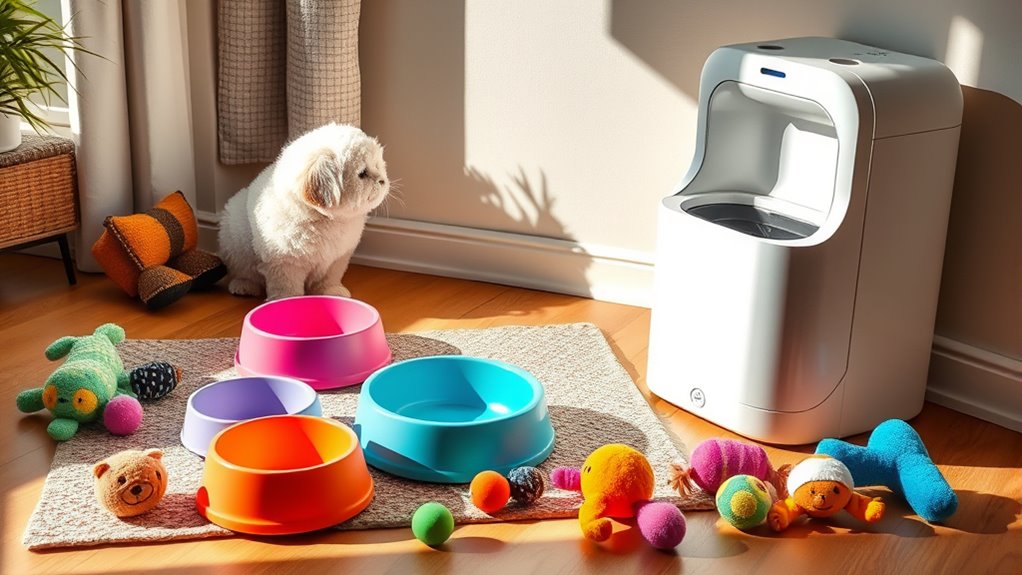
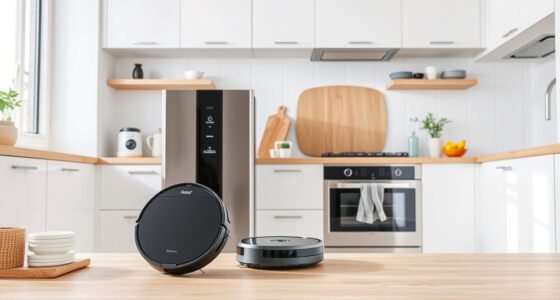
When you bring a robot vacuum or mower into your home, it’s vital to contemplate how these devices interact with your pet’s bowls, toys, and feeding areas. These interactions can lead to potential hazards like tipped bowls, scattered toys, or even startling your pets. To mitigate these risks, establish clear no-go zones around feeding and play areas. Setting up virtual boundaries using your robot’s app ensures your vacuum or mower avoids these sensitive spots, allowing your pets to enjoy their space without disruption.
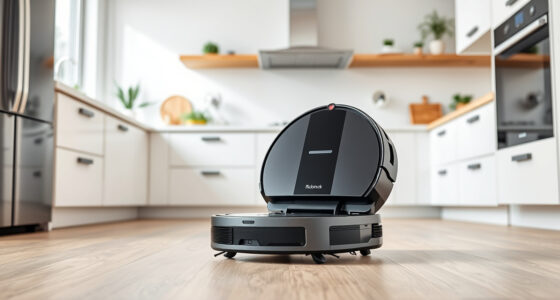
Obstacle detection technology is essential in keeping your pets safe. Many modern robots come equipped with AI navigation systems that recognize over 200 objects, including pet toys and bowls. This means your robot can slow down or change direction when it detects obstacles, reducing the chance of accidents. However, you should still supervise your pets during the initial runs to make sure they adapt well to the robots. Scheduling robot operations when your pets are indoors can also help maintain a calm environment.
Obstacle detection technology is crucial for pet safety, allowing robots to navigate around toys and bowls while minimizing accidents.
Noise and speed are other factors to think about. Operating your robot in quiet mode or at a low speed can prevent startling your pets while they eat or play. The last thing you want is for your furry friend to associate their feeding area with stress or anxiety. Emergency stop functions are vital for immediate halting of the robot if your pet unexpectedly ventures too close.
Placement of pet bowls and toys also matters. Position automatic feeders on stable surfaces away from robot traffic zones. This minimizes the risk of the robot knocking over bowls or transferring contaminants from outside areas. Keeping power cords secured and out of the way will help avoid tripping hazards for both pets and robots.
Regular maintenance of your robots is necessary to make sure they operate smoothly around pet areas. Clean the undersides regularly to remove pet hair or food debris that could interfere with their functioning. Inspect mowers for loose blades and ensure there are no missed patches around pet toys and bowls after operation.

ROPVACNIC Robot Vacuum and Mop Combo 5200Pa Suction Robotic Cleaner
- 2-in-1 Vacuum and Mop: Advanced electronic mopping technology
- Personalized Water Adjustment: Four-stage water control system
- Smart Control Options: Multiple cleaning modes and app control
As an affiliate, we earn on qualifying purchases.
Frequently Asked Questions
How Can I Train My Pet to Coexist With a Robot?
To train your pet to coexist with a robot, start by introducing the robot slowly. Allow your pet to observe it while it’s off, then gradually turn it on at low speed. Reward calm behavior with treats. Keep initial interactions short and supervised. Use positive reinforcement to encourage your pet to stay calm around the robot. Over time, increase exposure, ensuring your pet feels safe and secure during the robot’s operation.
What Are the Best Robot Brands for Pet Owners?
When looking for the best robot brands for pet owners, consider iRobot for its effective pet detection and low noise levels. Neato offers strong suction and smart mapping features that help avoid pet areas. Ecovacs is great for its all-in-one cleaning capabilities, while Roborock provides excellent maneuverability around pet toys. In conclusion, you might want to check out Dyson for its powerful vacuum technology. These brands prioritize safety and functionality to keep your pets comfortable.
How Often Should I Maintain My Robot Vacuum Around Pets?
Imagine your robot vacuum as a tireless knight, bravely battling pet hair and crumbs. You should maintain it at least once a month, but if your furry friend sheds a lot or tends to scatter kibble, weekly checks are ideal. Regularly clean the brush rolls, empty the dustbin, and inspect filters to keep it running smoothly. This way, your robotic ally stays in top shape to tackle the mess your pet leaves behind!
Can I Use Multiple Robots in the Same Space Safely?
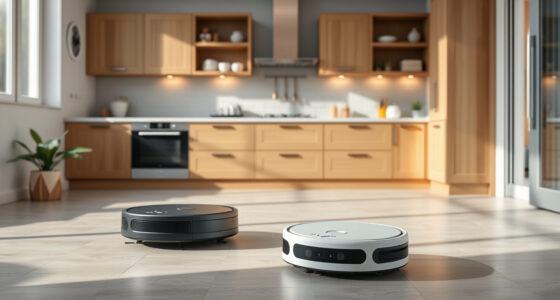
Yes, you can use multiple robots in the same space safely, but you need to take precautions. Set clear boundaries for each robot using geofencing or physical barriers to prevent collisions. Schedule their operation times to avoid overlaps, especially when pets are present. Regularly maintain the robots to guarantee they function properly, and keep an eye on them during their runs to quickly address any unexpected encounters with pets or obstacles.
Are There Specific Robots Designed for Homes With Multiple Pets?
Some robots are practically pet whisperers, designed specifically for homes bustling with furry friends. Look for robot vacuums and lawn mowers with advanced pet detection systems; they can navigate around multiple pets like a pro. Plus, interactive pet robots can engage your pets without causing chaos. Just make certain you choose models with low noise and safety features to keep your pets calm and your home running smoothly amidst the furry frenzy!
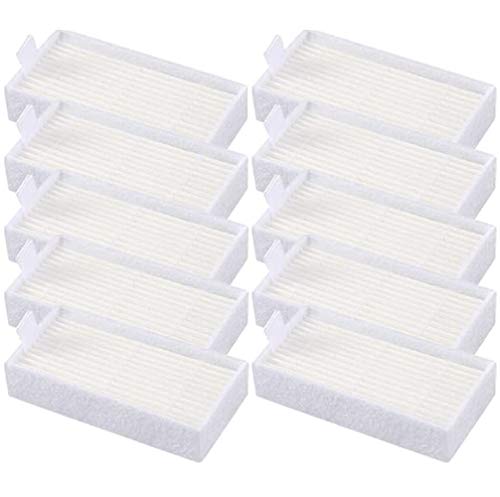
10pcs HEPA Filters Replacement for ILIFE V3s V3s pro V5 V5s V5s Pro V5s Pro 2 V5s Plus Noisz S5 Robotic Vacuum Cleaner ILIFE V3s pro Filters ILIFE Robot Vacuum Filter
- Compatible with various ILIFE models: Fits V3, V3s, V5, V5s, Pro versions
- High-quality filter material: Efficient and durable HEPA filters
- 100% compatible with original filters: Ensures perfect fit and performance
As an affiliate, we earn on qualifying purchases.
Conclusion
In creating robot-safe zones for your pets, it’s crucial to think about their bowls, toys, and feeding areas. Did you know that nearly 60% of pet owners report their pets feel more at ease in designated spaces? By setting up these zones, you not only protect your gadgets but also enhance your furry friend’s comfort. So, take a moment to organize these areas—your robot and your pet will thank you for it!

Filter Replacement for iRobot Roomba e, i and j Series i7 i7+/plus i3 i3+ E5 E6 E7 i4 i6 i6+ i8 i8+ Robot Vacuum Cleaners parts, 9 Pack High Efficiency 4639161 Filters
- Compatible Models: Fits iRobot Roomba E, I, J series
- High Efficiency Filtration: Filters 99.9% of dust and particles
- Effective Particle Capture: Catches particles as small as 0.3 microns
As an affiliate, we earn on qualifying purchases.

Black+Decker, Dustbuster AdvancedClean Handheld Vacuum Cordless, Compact Home and Car Vacuum with Crevice Tool, Rotating Nozzle and Charging Station
- Brand Leader: #1 hand vac brand
- Cordless & Portable: Rechargeable, lightweight, easy to carry
- Multi-Surface Cleaning: Removes hair, dirt, debris, pet hair
As an affiliate, we earn on qualifying purchases.