
Hard water can really mess with your robot mop’s performance. The minerals in it create chalky residues, leading to clogs in the water tank and nozzles. This means uneven cleaning and less suction power, which can leave your floors looking less than their best. To keep your mop running smoothly, consider using distilled water and regularly flushing the system. Want to enhance your mop’s performance and longevity? There’s more to learn about maintenance and cleaning tips.

Get cleaning gear delivered free — and shop member deals
- Fast, free delivery on millions of items
- Access to Prime Big Deal Days deals on October 6–7
- Prime Video, Amazon Music and more included
Key Takeaways
- Hard water contains minerals like calcium and magnesium, causing streaks and residues on floors when used in robot mops.
- Mineral deposits can clog nozzles and reduce water flow, impairing cleaning efficiency and overall performance.
- Regular maintenance, such as flushing tanks and descaling, is essential to prevent mineral buildup and ensure optimal mop operation.
- Using distilled or filtered water can significantly reduce mineral deposits and extend the life of your robot mop.
- Laundering mop pads and inspecting filters helps maintain suction strength and prevents streaks caused by residues.
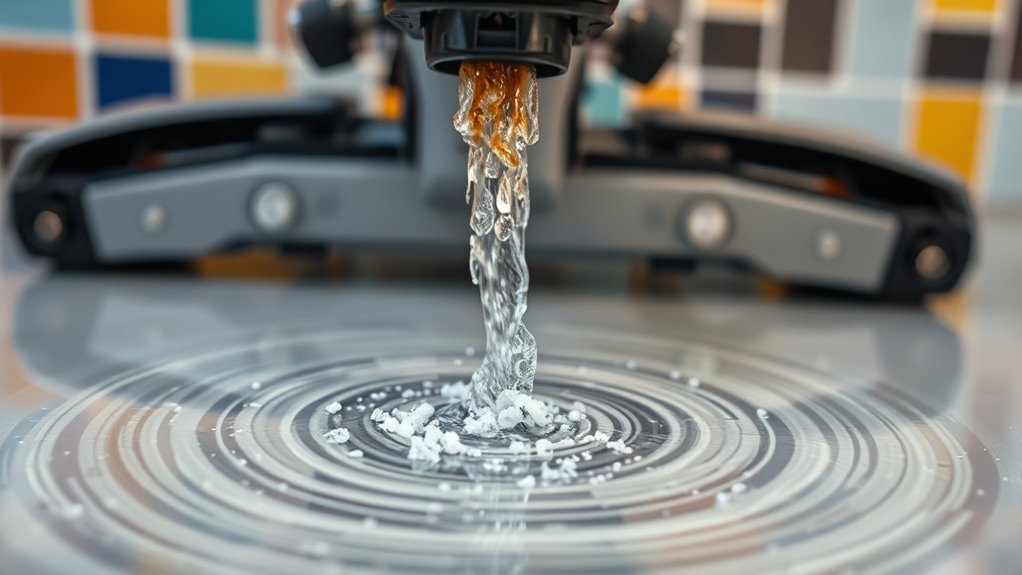
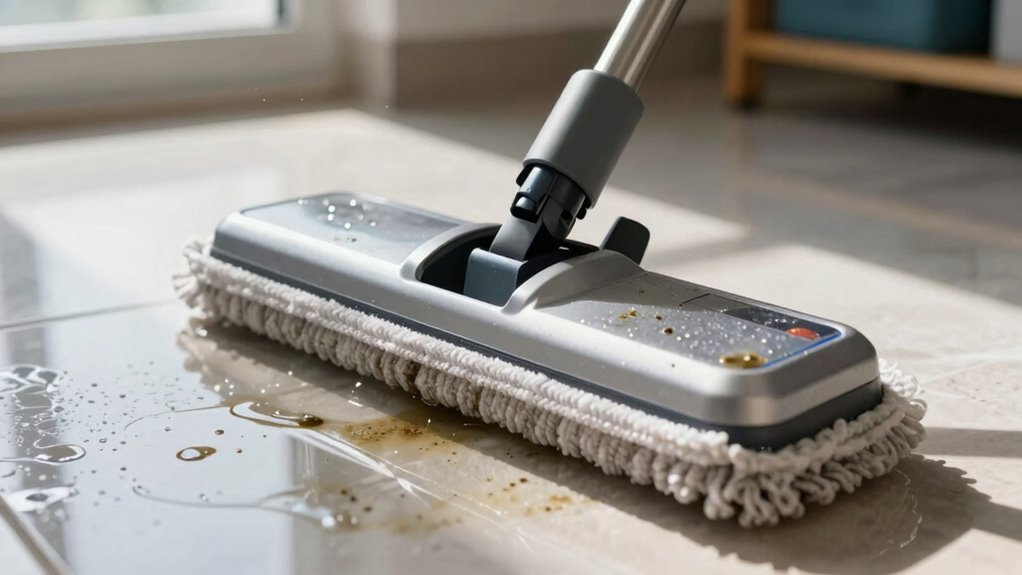
Have you ever wondered how the quality of water affects your robot mop’s performance? If you’re using hard water, you’re likely facing some common issues. Hard water contains high levels of calcium and magnesium, which can lead to chalky streaks and residues on your floors after mopping. This buildup isn’t just cosmetic; it accumulates in your robot’s tanks, lines, and nozzles, potentially causing clogs and affecting overall function.
When hard water flows through your robot mop, minerals can create crusty deposits in areas like the water tank and nozzle, leading to reduced flow rates and uneven spray patterns. If you’ve noticed your mop isn’t cleaning evenly, that’s often a sign of partial clogging in the nozzles. Over time, this can also trigger alerts, like “no water,” because pumps can’t prime properly when the lines are obstructed. Plus, the presence of these deposits can increase wear on components like pumps and solenoid valves. Additionally, the performance of your mop relies heavily on suction strength to effectively remove dirt and water from your floors. Air quality in your home can also influence the overall cleanliness of your living space, making it essential to maintain a healthy environment.
To mitigate these issues, you might want to switch to distilled or filtered water. This simple change can markedly reduce mineral deposits, improving your mop’s efficiency. Furthermore, using pH-neutral cleaners can help avoid additional residue and clogs. It’s best to steer clear of harsh chemicals, such as bleach or vinegar, which can corrode your robot’s components and lead to further problems.
Maintaining your robot mop also involves some regular practices. You should flush the water tank and lines weekly with clean water and consider descaling monthly if you live in a hard-water area. During these maintenance sessions, take the time to inspect your mop pads for any white residue, as this can hinder their absorbency and leave streaks on your floors. Laundering the pads after heavy use is a good habit to adopt.
Keeping your robot mop in prime working condition is essential. Make sure to check the inlet strainers and filters regularly, replacing them as per the manufacturer’s recommendations. This helps prevent buildup that could otherwise affect the performance of your robot. By being mindful of the water quality you use and implementing these maintenance tips, you can enhance your robot mop’s longevity and efficiency, ensuring it does a great job at keeping your floors spotless.
Frequently Asked Questions
How Often Should I Clean My Robot Mop’s Water Tank?
You should clean your robot mop’s water tank every week to keep it functioning well. Regular maintenance prevents mineral buildup and guarantees peak performance. If you notice any streaks on your floors or reduced cleaning efficiency, it’s a good idea to clean the tank more frequently. Always rinse it after use to avoid residue and potential clogs. This simple step can extend the life of your robot and maintain its cleaning power.
Can Hard Water Damage My Robot Mop Over Time?
Yes, hard water can damage your robot mop over time. Did you know that nearly 85% of U.S. households have hard water? The minerals accumulate in your mop’s tanks and nozzles, causing clogs and reducing efficiency. This buildup can lead to corrosion and malfunction if not managed. Regular maintenance and using distilled or filtered water can help you avoid these issues, keeping your robot mop running smoothly for longer.
What Are the Signs of Clogged Nozzles in Robot Mops?
You’ll notice signs of clogged nozzles in your robot mop when water flow decreases or stops altogether. If you see streaks on the floor after mopping, that’s a red flag too. You might also hear unusual noises from the water pump or experience inconsistent spraying patterns. Checking for visible buildup or residue around the nozzles can help confirm the issue. Regular maintenance can prevent these problems from escalating further.
Is Distilled Water Safe for All Robot Mop Models?
Distilled water’s like a clear stream, free from the minerals that clutter your robot mop’s path. Yes, it’s safe for all models, helping you keep those nozzles flowing smoothly. Using distilled water means you’re preventing buildup and ensuring your mop performs at its best. Just like a well-tended garden flourishes, your robot will thrive, tackling dirt without the pesky streaks or clogs. So, go ahead and fill that tank with distilled water!
How Can I Improve My Robot Mop’s Cleaning Efficiency?
To enhance your robot mop’s cleaning efficiency, start by using distilled or filtered water to prevent mineral buildup. Adjust the water flow settings based on your floor type—low for tiles and medium for wood. Regularly clean the mop pads and replace them weekly to avoid spreading grime. Run “clean my robot” cycles with fresh water to clear any clogs. Finally, make certain your mop is properly calibrated for maximum cleaning performance.
Conclusion
In summary, keeping your robot mop in tip-top shape is essential for peak performance. Remember, using hard water can lead to mineral buildup and clogged nozzles, which makes it harder for your mop to do its job. By opting for distilled water and regularly cleaning those nozzles, you’ll keep things running smoothly. So, don’t let a little hard water rain on your parade—take these steps and enjoy a spotless home!
Fall Picks
fall essentials
As an affiliate, we earn on qualifying purchases.