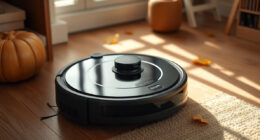
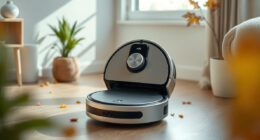
Choosing between a robot vacuum and a robot vacuum-mop comes down to whether you want dependable dry pickup or a device that can also wipe hard floors. Both can reduce routine floor cleaning, but their results depend on the model, floor type, layout, and how well the home is prepared for a run. A vacuum-only model is usually the simpler, less expensive fit for homes with rugs, carpet, or mostly everyday dust and crumbs. A vacuum-mop can be more useful in homes with broad areas of hard flooring and frequent light marks, though its mop function is not a substitute for scrubbing dried or sticky messes.

Get cleaning gear delivered free with Prime
- Fast, free delivery on millions of items
- Prime Video, Amazon Music and more included
- Member-only deals all year

Roborock Qrevo S Pro Robot Vacuum and Mop
- ✔ Suction: 18,500 Pa
- ✔ Dust bag: 2.7 L
- ✔ Battery life: Up to 180 minutes

Roborock Q7 M5+ Robot Vacuum and Mop with Self-Emptying Dock
- ✔ Maximum suction: 10,000 Pa
- ✔ Dust bag: 2.7 L
- ✔ Battery life: Up to 150 minutes

Tikom G8000 Max Robot Vacuum and Mop Combo
- ✔ Suction: 5,000 Pa
- ✔ Dustbin: 450 ml
- ✔ Water tank: 300 ml
The central tradeoff is added capability against added cost and maintenance. Compare the models’ actual vacuum performance, carpet handling, mapping, obstacle avoidance, bin and water-tank capacity, and ongoing care before paying extra for a mop attachment. Choose a robot vacuum if dry cleaning is the main job; choose a vacuum-mop if routine damp wiping would save you meaningful effort.
At a Glance
| Criteria | Robot vacuum | Robot vacuum-mop | Winner |
|---|---|---|---|
| Dry pickup | Focused on collecting dust, hair, crumbs, and other dry debris; performance varies by model and brush design. | Can vacuum dry debris, but the mop feature does not by itself indicate stronger vacuum performance. | Depends |
| Carpet and rug handling | Often the more straightforward choice for carpet and mixed flooring, though suction, brush design, and carpet settings matter. | Can clean rugs if designed for them, but users must check how the mop lifts or avoids carpet during a run. | A |
| Hard-floor upkeep | Does not mop; handles loose debris but leaves marks and dried spills for manual cleaning. | Adds damp wiping for light, routine marks on suitable hard floors; not a replacement for scrubbing or stain removal. | B |
| Navigation and obstacle avoidance | Depends on the model. Mapping, room selection, and obstacle detection are not guaranteed by vacuum-only design. | Depends on the model. Mapping and carpet detection can help coordinate vacuuming and mopping, but features vary. | Depends |
| Maintenance | Empty the dustbin and clean brushes and filters; fewer parts to wash than a mop-equipped unit. | Requires vacuum upkeep plus washing or replacing pads and managing the water tank; dock features can reduce some chores. | A |
| Price and value | Typically costs less than a comparable vacuum-mop, so you avoid paying for a function you may rarely use. | Usually costs more; the extra spend makes sense when regular damp wiping is useful and the model handles floors well. | Depends |
Roborock Qrevo S Pro Robot Vacuum and Mop
The Qrevo S Pro earns the top spot because it reduces the most recurring maintenance in this group. Its multifunction dock empties the dustbin, washes mop pads with hot water, and dries them with warm air, so we are not left rinsing and air-drying pads after every mopping run. That advantage matters most in homes that mop frequently or have a mix of hard floors and carpet, where the robot’s adaptive cleaning and 10 mm mop lift can help keep a damp pad off lower carpet.It also has the highest stated suction here at 18,500 Pa, plus LiDAR navigation, obstacle avoidance, and multi-floor mapping. Those tools make it the more capable whole-home choice compared with the Q7 M5+, whose mapped cleaning and self-emptying are useful but whose dock does not wash or dry mops. The Qrevo’s extra automation brings more equipment and maintenance into the home, however; its dock and wash system need space and occasional attention, and the listing restricts Wi-Fi to 2.4 GHz.We would choose it for a larger or busier home where keeping mop pads ready is part of the buying decision. The product details list both 55 dB and 60 dB for noise, so we would not treat either figure as definitive. Buyers who mainly vacuum, want fewer dock functions, or have limited space may find the Q7 M5+ a more proportionate option.
Pros:
- Dock empties dust and washes and warm-air dries mop pads.
- 18,500 Pa stated suction and carpet-aware cleaning modes.
- Lifts mops 10 mm to help avoid dampening carpet.
- LiDAR navigation, obstacle avoidance, and multi-floor mapping.
Cons:
- The multifunction dock takes more space and adds components to maintain.
- Wi-Fi support is limited to 2.4 GHz.
- The listed noise specification conflicts between 55 dB and 60 dB.
Best for: Households with mixed flooring that want mapped cleaning and automated dust, mop-washing, and mop-drying care.
Not ideal for: Buyers with little dock space, homes that rarely mop, or anyone who needs a robot that connects only through a 5 GHz network.
Bottom line: For the most hands-off cleaning routine in this comparison, the Qrevo S Pro combines the broadest dock care with the strongest stated suction and carpet adaptation.
“For the most hands-off cleaning routine in this comparison, the Qrevo S Pro combines the broadest dock care with the strongest stated suction and carpet adaptation.”
Roborock Q7 M5+ Robot Vacuum and Mop with Self-Emptying Dock
The Q7 M5+ is the balanced pick for buyers who want mapped routes and a self-emptying dock without moving up to a dock that also washes mop pads. Its PreciSense LiDAR navigation supports room mapping, scheduling, spot cleaning, and no-go zones, giving us meaningful control over where and when the robot cleans. The dock’s 2.7 L bag is advertised for up to seven to nine weeks between emptying, which can cut down on daily dustbin handling, though the bag still needs eventual replacement or disposal.Against the Qrevo S Pro, this model gives up the hot-water mop wash, warm-air drying, and listed carpet mop lift. That makes it less convenient for regular mopping, but also a more straightforward fit if we mostly vacuum and use the mop for light upkeep. Its 10,000 Pa suction is lower than the Qrevo’s stated 18,500 Pa, while the three water-flow settings offer a simple way to tailor mopping for different hard-floor needs.The anti-tangle brush design is intended to reduce hair wrap, which can make it relevant to pet households, but the robot still requires periodic attention and the product details do not list the Qrevo’s obstacle avoidance or multi-floor mapping. It is best for buyers who value planned, mapped cleaning and less frequent dust disposal, but do not need a fully automated mop routine. Like the other Roborock, it supports 2.4 GHz Wi-Fi only, so network compatibility deserves a quick check.
Pros:
- LiDAR mapping supports route planning and room-based control.
- Self-emptying dock uses a 2.7 L bag.
- App offers schedules, spot cleaning, no-go zones, and progress monitoring.
- Three water-flow settings and an anti-tangle brush design.
Cons:
- The dock does not wash or dry mop pads.
- Suction is lower than the Qrevo S Pro’s stated figure.
- Wi-Fi support is limited to 2.4 GHz.
Best for: Buyers who want LiDAR room mapping, app-based cleaning zones, and self-emptying while keeping mopping relatively simple.
Not ideal for: Households that mop often and want the dock to clean pads, or buyers who need listed obstacle avoidance and multi-floor mapping.
Bottom line: The Q7 M5+ is the practical middle choice when we want mapped vacuuming and less dustbin handling without paying for a full mop-care dock in space and complexity.
“The Q7 M5+ is the practical middle choice when we want mapped vacuuming and less dustbin handling without paying for a full mop-care dock in space and complexity.”
Tikom G8000 Max Robot Vacuum and Mop Combo
The Tikom G8000 Max is the compact, simpler choice in this trio. At about 3 inches tall, it is the one to consider when clearance under furniture matters more than an automated dock. It combines vacuuming and mopping, and its controls extend beyond an app to include a remote, voice commands, and onboard buttons. That flexibility can suit homes where not everyone wants to rely on a phone to start a cleaning cycle.Its 5,000 Pa suction sits below both Roborock models, and the 450 ml dustbin and 300 ml water tank are onboard rather than part of a self-emptying system. We should expect more frequent checks and refills than with either Roborock dock. The G8000 Max also lacks the supplied details on LiDAR mapping, no-go zones, and multi-floor maps that make the Q7 M5+ easier to tailor room by room. Its four modes—spot, edge, zig-zag, and manual—cover basic cleaning patterns, but offer less described navigation control.This model is better suited to smaller or less complicated spaces, especially homes with hard floors and shorter carpet. The listing specifies carpet use for short- and medium-pile surfaces, and its 150-minute runtime applies to quiet mode; we should not assume the same duration in other settings. Compared with the Q7 M5+, the Tikom trades dock convenience and detailed mapping for a slimmer robot and several ways to control it. It makes sense when compact access and basic combined cleaning matter most, but not when minimizing upkeep is the priority.
Pros:
- About 3 inches tall for access under lower furniture.
- Vacuuming and mopping can run together.
- App, remote, voice, and button control options.
- Anti-collision and anti-fall sensors are listed.
Cons:
- The onboard dustbin and water tank need regular attention.
- Carpet use is specified for short- and medium-pile carpet.
- The 150-minute runtime is stated for quiet mode.
Best for: Buyers who need a slim robot for hard floors and short- or medium-pile carpet, and prefer app, remote, voice, or button controls.
Not ideal for: Homes that need automatic dust disposal, detailed room mapping, long-pile carpet cleaning, or frequent mopping with less pad and tank upkeep.
Bottom line: Choose the G8000 Max when low clearance and simple multi-control operation matter more than advanced mapping or automated dock maintenance.
“Choose the G8000 Max when low clearance and simple multi-control operation matter more than advanced mapping or automated dock maintenance.”
As an Amazon Associate we earn from qualifying purchases.
Key Differences
The clearest difference is what happens after dry debris is picked up. A robot vacuum keeps its job narrow: it collects dust, hair, and crumbs, leaving marks on hard flooring for a separate mop or cloth. A vacuum-mop adds a damp pass that can keep suitable hard floors looking fresher between deeper cleans. That is a practical advantage when hard flooring covers much of the home and light footprints or everyday residue appear often. It matters less in a carpet-heavy home, or when someone already mops regularly.
The extra function brings extra work and does not guarantee better vacuuming. Mop pads need cleaning, tanks need attention, and users must manage where the robot can mop. Some models lift the mop or avoid rugs; others need more hands-on preparation. A vacuum-only model is often easier to maintain and may be the better value when dry pickup is the main need. In either category, navigation quality, brush design, filtration, and obstacle handling vary by model, so the category label alone cannot settle the choice.
Paying more for a vacuum-mop is worthwhile when you will use its damp-cleaning function regularly and its rug handling fits your floor plan. If you expect it to remove dried spills, replace a full manual mop, or clean clutter without preparation, the premium may disappoint. For many mixed-floor homes, the deciding questions are whether the robot can protect rugs and whether the owner is willing to clean its pads.
Detailed Comparison
Dry pickup (Robot vacuum wins — minor)
Both types can vacuum dry debris, and the vacuum-mop label does not promise stronger suction or better hair pickup. The robot vacuum wins slightly as a focused choice because its value is easier to judge around the core task, but the gap is minor and model-specific. Check independent performance information and brush design, especially for pet hair or thick rugs.
Carpet and rug handling (Robot vacuum wins — moderate)
A robot vacuum has the edge for a home centered on carpet or rugs because it can devote its cleaning run to dry pickup without requiring mop management. The advantage is moderate: a capable vacuum-mop may handle rugs well, particularly if it lifts or avoids its mop, but those safeguards differ by model. If rugs are common, confirm how the specific unit behaves before buying.
Hard-floor upkeep (Robot vacuum-mop wins — moderate)
The vacuum-mop wins by a moderate margin for homes with substantial hard flooring. Its damp pass can remove some light surface marks that vacuuming leaves behind, reducing how often floors need a quick manual wipe. It will not reliably replace scrubbing dried or sticky messes, and users need to keep the pad clean. A vacuum-only model remains adequate when loose debris is the main concern.
Neither category wins by default. Room maps, no-go zones, obstacle detection, and carpet-aware mop control are features of particular models, not universal differences between vacuum-only and vacuum-mop robots. This is a moderate decision factor for cluttered layouts or homes with rugs: compare the exact navigation features and how much setup the owner must do.
Maintenance (Robot vacuum wins — moderate)
The robot vacuum is simpler to maintain, a moderate advantage for owners who want to set a schedule and do little between runs. Both kinds need bin, brush, and filter care, while a vacuum-mop also adds pad washing and water-tank upkeep. A self-emptying or mop-cleaning dock may reduce chores, but adds cost and does not remove all routine care.
Price and value (moderate difference)
A robot vacuum generally costs less than a comparable vacuum-mop, but value depends on whether damp wiping solves a recurring problem. The vacuum-only option is the stronger value for carpet-heavy homes or users who rarely mop. Paying more for the vacuum-mop is reasonable when hard floors dominate and frequent light cleaning would otherwise take time. The difference is moderate because model prices and included dock features vary.
Robot vacuum: Pros and Cons
Pros:
- Usually lower purchase cost than a comparable vacuum-mop.
- Simpler routine care, with no mop pad or water tank to manage.
- A direct fit for carpet-heavy homes and dry debris pickup.
Cons:
- Leaves light marks and spills on hard floors for manual cleaning.
- Does not reduce the need for a separate mop or floor wipe.
- Performance still varies by model, floor type, and brush design.
Robot vacuum-mop: Pros and Cons
Pros:
- Combines dry pickup with damp wiping for suitable hard floors.
- Can reduce the frequency of quick manual mopping.
- More useful when hard floors cover much of the home.
Cons:
- Usually costs more than a comparable vacuum-only model.
- Pads and water tanks add cleaning and upkeep.
- Mop performance is limited on dried or sticky messes, and rug handling varies by model.
Who Should Choose What
Choose Robot vacuum if:
- Your home has mostly carpet or rugs and dry debris is the main cleaning problem.
- You want a simpler robot with fewer parts to wash and maintain.
- You already mop by hand, or light marks on hard floors are not a regular concern.
Choose Robot vacuum-mop if:
- Your home has large areas of hard flooring that collect frequent light marks.
- You will run the mop function regularly and are willing to clean its pads and tank.
- The particular model can lift or avoid its mop around your rugs, if you have them.
Skip both if: Skip both if you expect a robot to handle clutter, deep carpet cleaning, or dried and sticky spills without preparation or manual follow-up.
Value for Money
A vacuum-mop earns its higher price when the mop function will see regular use on hard floors. In that setting, it can cut down on quick wipe-downs and make the added pad and tank care worthwhile. If most of your floors are carpet, you already mop often, or you would use the damp function only occasionally, the premium is harder to justify. A simpler robot vacuum is then the better value. Compare prices at the model level: navigation, obstacle avoidance, dock features, and carpet controls can matter more than the category name.
Final Verdict
Choose a robot vacuum for carpet-heavy homes, dry pickup, lower cost, and simpler upkeep. Choose a robot vacuum-mop when hard floors dominate and light marks are a frequent chore you want to reduce. The biggest deciding factor is how often you will use damp cleaning, followed by how safely the model handles rugs. For a home with mostly hard flooring and a realistic expectation of light maintenance between manual cleans, the vacuum-mop is the more useful buy. For everyone else, start with a capable vacuum-only model and pay for mop functionality only when it solves a regular problem.
Frequently Asked Questions
Can a robot vacuum-mop replace a regular mop?
Usually not. Its damp pass can refresh hard floors and address some light marks, but dried or sticky messes may need manual scrubbing. Treat it as a way to extend the time between deeper cleans.
Is a robot vacuum better for homes with rugs?
Often, especially when rugs and carpet cover much of the home. A vacuum-mop can still suit a mixed-floor layout if its mop lifts or it reliably avoids rugs; check that feature on the specific model.
Is paying extra for a vacuum-mop worth it?
It is worth paying more when you have substantial hard flooring and will use the damp-cleaning function regularly. If you mainly need dust and hair pickup, or already mop as often as you like, the vacuum-only model is usually better value.
Do vacuum-mops need more maintenance?
Yes. Alongside bin, brush, and filter care, owners generally need to wash or replace mop pads and manage the water tank. A dock may automate some tasks, depending on the model.