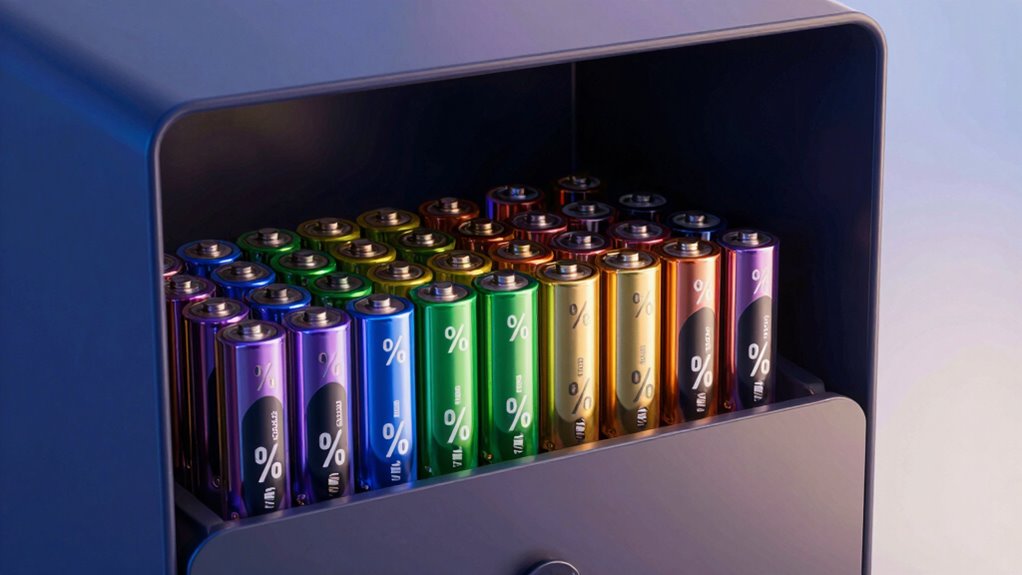

To prevent long-term damage to your cordless batteries, store them at a charge level between 40% and 60%. This range maintains reliability and prevents chemical breakdown. Regularly check and top off your batteries every three months to keep them within this ideal charge level. Be mindful of the storage environment as well, including temperature and humidity. Want to know more about battery maintenance and storage tips? There’s plenty more to evaluate.
Key Takeaways
- Store lithium-ion batteries at a charge level between 40% and 60% to prevent long-term damage.
- Avoid full charge storage to prevent chemical breakdown and overheating issues.
- Regularly check and top off batteries every three months to maintain optimal charge levels.
- Using a Battery Management System (BMS) can help prevent deep discharge and monitor voltage.
- Inspect batteries for damage and ensure they are stored in a dry, temperature-controlled environment.

When you’re storing cordless batteries, it’s essential to keep them at the right charge level to guarantee their longevity and performance. For lithium-ion batteries, aim for a charge level between 40% and 60%. This range effectively prevents long-term damage, ensuring that your batteries remain reliable and functional over time. STIHL even recommends using two green LEDs to indicate when batteries are at that ideal charge for safe storage over two years.
Keeping your batteries in a controlled environment is just as important. Ideally, you should store them at a temperature between 50°F and 77°F (10°C to 25°C). High temperatures can accelerate the fading of battery capacity. Avoid placing them in direct sunlight or near heat sources. When exposed to temperatures around 104°F (40°C), fully charged batteries can lose up to 35% of their capacity within just three months, which is why maintaining an appropriate temperature is essential. Lithium-ion batteries have an ideal storage temperature range of -10°C to +50°C, so it’s critical to monitor the environment carefully.
Store batteries in a temperature-controlled environment between 50°F and 77°F to maintain optimal capacity and longevity.
Humidity also plays a role in battery health. Store your batteries in dry locations, possibly using silica gel packs to control moisture. Moisture can lead to corrosion and electrical shorts, which could jeopardize the battery’s performance. Utilize insulated shelving or plastic bins instead of concrete floors, as these materials can retain moisture and damage your batteries. A well-ventilated area will help reduce overheating risks.
In addition to proper storage conditions, consider implementing a Battery Management System (BMS) if possible. This system can monitor cell voltage and prevent deep discharge, ensuring that your batteries remain within the safe charge range. It automatically switches to sleep mode if the voltage dips too low and helps with calibration during charging.
To maintain battery life, remember that lithium-ion batteries typically self-discharge at a rate of about 1-3% per year. Checking the charge levels every three months and topping off to the 40%-60% range can be beneficial. It’s also important to avoid storing batteries at full charge, as this can lead to chemical breakdown and heat issues.
Lastly, inspect your batteries regularly for any signs of damage or swelling, and always follow manufacturer procedures for charging. By taking these steps, you’ll guarantee that your cordless batteries stay in top shape, ready for use whenever you need them.
Frequently Asked Questions
How Often Should I Check My Battery’s Charge Level?
You should check your battery’s charge level every month to guarantee it stays within the ideal range. Keeping it around 30-50% helps preserve its lifespan. If you notice it dropping too low, recharge it to avoid permanent damage. Also, if you’re storing it for an extended period, check it more frequently, as temperature and other factors can affect its charge. Regular checks will keep your battery in good shape and performing well.
Can I Store Batteries in a Garage During Winter?
You might be surprised to know that fully charged batteries can lose 35% of their capacity in just three months if stored at high temperatures. So, when it comes to winter storage, keep your batteries in a temperature-controlled garage. Avoid extreme cold, as it can cause cell reversal failures. Guarantee good ventilation and keep them away from windows and heat sources to maintain their longevity and performance.
Is It Safe to Leave Batteries in a Vehicle?
It’s not safe to leave batteries in a vehicle, especially during extreme temperatures. High heat can increase the risk of capacity loss and even fires, while cold can cause performance issues and potential damage. If you have to store batteries in your car, keep them in a temperature-controlled space or take them inside when not in use. Proper care guarantees your batteries last longer and operate safely when you need them.
How Do I Know if My Battery Is Degrading?
To tell if your battery’s degrading, watch for warning signs like reduced runtime, slower charging, or swelling. If it gets unusually hot during use or doesn’t hold a charge as long, it’s time to take action. Regularly check its voltage and performance; if you notice drastic drops, that’s a clear clue. Keeping an eye on these factors helps you maintain your battery’s health and extend its life considerably.
What Should I Do if a Battery Swells?
If a battery swells, stop using it immediately. Don’t attempt to puncture or dispose of it yourself, as it can be hazardous. Place it in a safe location away from flammable materials and contact your local waste disposal service for guidance on proper disposal. Always wear protective gear while handling it. Keep an eye on it for any further changes, and remember that safety should be your top priority.
Conclusion
In summary, storing your cordless batteries at the right percentage is vital, like keeping a delicate flower in just the right amount of sunlight. Aim to keep them between 40-60% charged for long-term health. This simple practice can prevent damage and extend their lifespan, ensuring you get the most out of your devices. So, treat your batteries with care, and they’ll reward you with reliable performance when you need it most.