
TL;DR

Get cleaning gear delivered free with Prime
- Fast, free delivery on millions of items
- Prime Video, Amazon Music and more included
- Member-only deals all year
Livingetc’s report outlines five Japanese kitchen storage principles: declutter before adding organizers, match containers to their contents, keep frequently used items easy to reach, choose cookware that can also serve food, and limit counter displays. The advice comes from designer Yoko Kloeden and Nakagawa executive vice president Tasuku Ogino; it is design guidance, not a measured comparison of Japanese and other kitchens.
Livingetc has published five kitchen-storage lessons drawn from Japanese approaches to compact, purposeful spaces, including decluttering before buying organizers and keeping counters for items that are both useful and visually considered. The report features advice from London-based designer Yoko Kloeden and Tasuku Ogino, executive vice president of the Japanese home-goods company Nakagawa.
The first recommendation is to remove what is no longer needed before adding storage. Kloeden advises examining a shelf and asking what each item is for, rather than assuming another rack, box or divider will solve a crowded kitchen. The report presents this as a way to avoid spending money and using space on organizers that store belongings a household may not need.
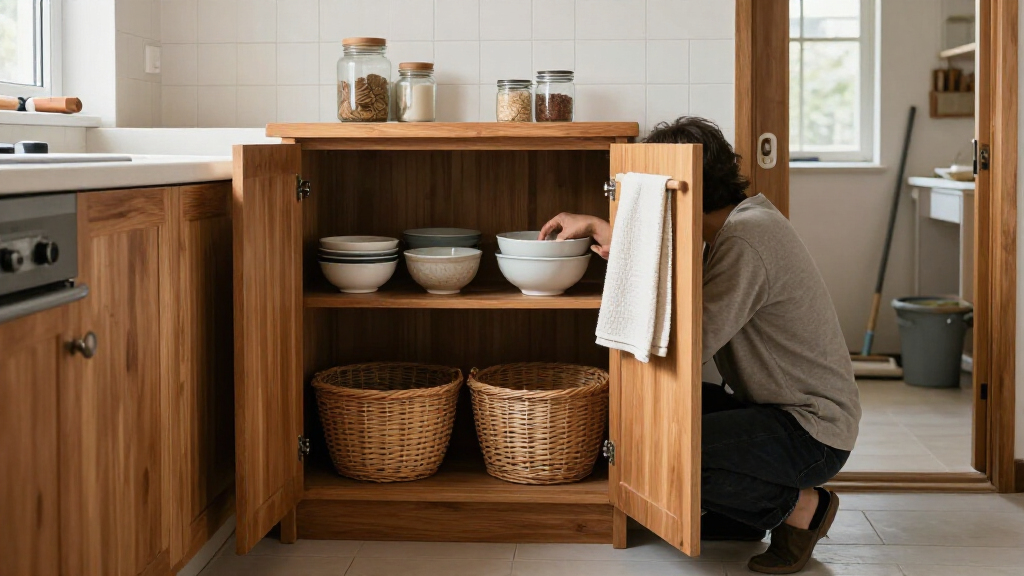
The next two lessons concern containers and access. Kloeden says storage materials should suit their contents: the report describes paulownia wood boxes for dry goods and tea, while clear containers can help people see what is inside. For items used repeatedly during cooking, such as salt, sugar, spices and utensils, the advice is to use dedicated vessels that are easy to open or reach. Kloeden says the point of decanting is function, not making every jar match.
The final lessons are to choose cookware that can move from cooking to serving, and to keep only selected items on display. Kloeden describes vessels that can store leftovers, reheat them and go to the table, reducing transfers between dishes. For counters, she cites a two-part test: whether an object is used daily and whether it has visual presence. Ogino describes the resulting contrast as “merihari,” a deliberate distinction between what is displayed and what is put away.
A Practical Case for Less Storage
The advice matters to readers because it reframes kitchen organization as a question of what to keep, where to put it and how often it is used, rather than simply how much storage to buy. That can offer a low-cost starting point for people dealing with crowded cabinets or counters: review one shelf, group items by task and then decide whether additional containers are actually needed.
Combining cooking and serving vessels may also reduce the number of dishes used, while reserving counter space for frequent-use items can make routine meal preparation more convenient. These are practical suggestions, not guarantees: the report does not provide comparative research showing that the approach saves a set amount of time, space or money. The useful takeaway is the decision-making framework, which households can adapt to their own kitchens and habits.
Japanese style kitchen storage containers
As an affiliate, we earn on qualifying purchases.
As an affiliate, we earn on qualifying purchases.
The Report’s Japanese Design References
The article connects its advice to Japanese domestic design and the demands of working in a smaller kitchen footprint. Kloeden, whose West London studio combines Japanese aesthetics with natural materials, describes storage choices as needing to justify the space they occupy. That is her account of the design principle, rather than a survey establishing how all Japanese households organize their kitchens.
Several specific terms and objects give the advice its cultural and material context. The article refers to kiri, or paulownia wood, for dry goods; an ohitsu, a lidded vessel used for cooked rice; and ichibutsu tayō, which Kloeden explains as one object serving many uses. It also cites dashite totonou as the idea of displaying items while keeping the space ordered. These references support the report’s focus on useful, multipurpose objects, but they do not amount to a formal set of rules followed by every Japanese kitchen.
““Before you add storage, take one shelf and ask what each thing on it is for.””
— Yoko Kloeden, London-based interior designer, as quoted by Livingetc
As an affiliate, we earn on qualifying purchases.
How Widely These Practices Apply
The report offers expert design recommendations, not a nationwide study of Japanese kitchens or a controlled test of storage methods. It does not establish how commonly households use the cited vessels and materials, or whether the practices produce the same results in kitchens of different sizes. Kloeden’s observations should be read as her professional perspective, and the article supplies no quantified evidence for claims about space or cost savings.
Some material-specific claims, including the reported moisture-buffering and insect-repellent properties of paulownia, are presented through Kloeden’s advice; the source does not provide independent testing or product guidance. Readers should also check that any container is suitable for its intended food, heat and cleaning requirements. The report does not set out a universal checklist for choosing safe storage vessels.
As an affiliate, we earn on qualifying purchases.
Start With One Shelf
There is no announced follow-up or formal implementation schedule in the source report. For readers applying its advice, the proposed first step is straightforward: clear and review one shelf, identify what is used and why, then group remaining items by task. Only after that review should a household decide whether a container, divider or rack would address a specific need.
From there, readers can test the other suggestions selectively: move frequently used cooking items within reach, choose containers that suit their contents and keep the counter display limited to useful objects they want visible. The article does not prescribe a single layout; the next step is to judge whether those changes make the individual kitchen easier to use.
As an affiliate, we earn on qualifying purchases.
Key Questions
What are the five kitchen-storage lessons in the report?
Declutter before buying organizers; choose containers for their contents and function; keep frequently used cooking items easy to reach; use cookware that can also serve food; and leave counters clear except for selected daily-use items with visual presence.
Who provides the advice?
The report quotes Yoko Kloeden, a London-based architecture and interior designer, and Tasuku Ogino, executive vice president of the Japanese home-goods company Nakagawa.
Does the article show that these methods work for every kitchen?
No. It presents design advice and expert observations, not research comparing outcomes across households. Readers can adapt the principles to their available space, cooking routines and storage needs.
What does the report recommend doing before buying storage?
Review a shelf and ask what each item is for. The recommendation is to remove or reconsider unnecessary belongings first, then buy an organizer only if it solves a clear storage problem.
Source: rss
Halloween Picks
halloween
As an affiliate, we earn on qualifying purchases.