When using a wet/dry vacuum, you can safely pick up dust, pet hair, and lightweight debris, but never vacuum chemicals, biological waste, or large or sharp objects that could damage the machine or pose health risks. Always make sure you use the right attachments and handle wet substances with a suitable model. To keep your vacuum safe and effective, it’s vital to follow proper safety tips and maintenance practices—all details to help you avoid costly mistakes.
Key Takeaways
- Vacuum only loose, dry debris; avoid liquids, biological waste, or hazardous chemicals to prevent damage and health risks.
- Use vacuums designed for wet use when handling liquids, and turn off and unplug before suctioning water.
- Avoid vacuuming sharp, heavy, or construction materials like nails, glass, or asbestos to prevent internal damage.
- Regularly inspect and maintain filters, hoses, and cords; never use damaged equipment or overload the vacuum.
- Follow safety guidelines for electrical grounding, keep liquids away from outlets, and dispose of hazardous waste properly.
Acceptable Materials to Vacuum

When using a wet/dry vacuum, it’s important to know which materials are safe to vacuum and which are not. You can typically vacuum dust debris, such as dirt and small particles, without issues. Pet hair also poses no problem, especially if your vacuum has a brush attachment designed for it. These vacuums are great for cleaning up after your furry friends and handling light dust debris on surfaces like floors and furniture. Just make certain that the debris isn’t packed or clumped together, which could clog the system. Always check your manufacturer’s guidelines for specific recommendations. Using a vacuum with the appropriate filter system can help prevent damage and improve airflow. Proper maintenance and following safety precautions will ensure your vacuum remains effective and safe to use over time. Additionally, avoid vacuuming liquids or wet materials that are not specified as safe by the manufacturer, as this can cause damage or safety hazards. To prevent clogging or damage, ensure debris is loose and not packed tightly before vacuuming. Being aware of your vacuum’s capabilities can help you avoid unnecessary repairs and extend its lifespan. By sticking to these acceptable materials, you’ll keep your vacuum running smoothly and avoid damage.
Materials to Avoid Vacuuming
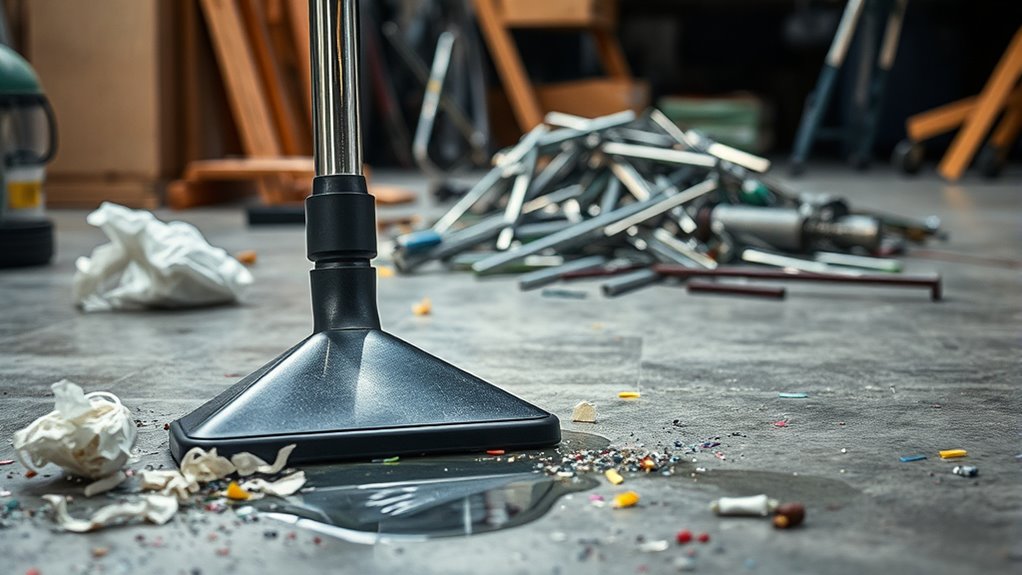
While it’s safe to vacuum dust and pet hair, certain materials can damage your wet/dry vacuum. Chemical spills, in particular, pose a risk because they can corrode internal parts or leave dangerous residues. Avoid vacuuming liquids contaminated with chemicals, as this can compromise the motor and seals. Biological hazards, such as mold, bacteria, or biological waste, should also be avoided. These materials can create health risks and may contaminate your vacuum, making cleaning and maintenance difficult. Never vacuum materials that could cause clogs or harm the vacuum’s components. If you’re unsure whether a substance is safe, consult your vacuum’s manual or manufacturer. Protect your vacuum and yourself by steering clear of these hazardous materials. Additionally, vacuuming vetted materials ensures you are using products that are safe and effective for your equipment and health. Properly identifying hazardous substances can prevent costly repairs and health issues. Always be aware of vacuum safety guidelines to prevent damage and ensure proper operation. Being familiar with the types of debris your vacuum can handle helps maintain its longevity and performance.
Safely Handling Wet Substances
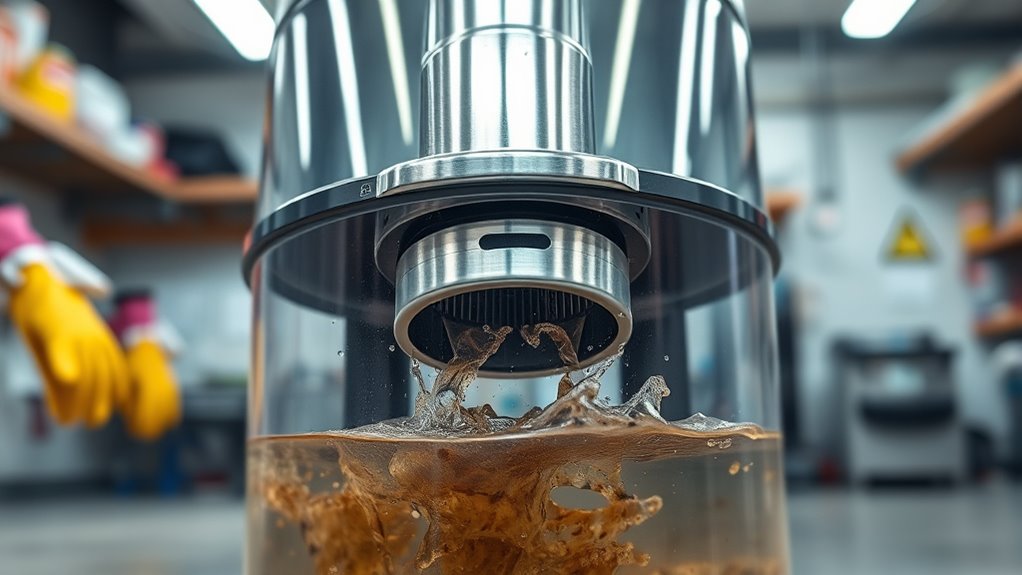
Handling wet substances with your vacuum requires careful attention to safety to prevent damage and health risks. When dealing with liquid spillage, make certain your vacuum is designed for wet use. Always turn off and unplug the device before starting to avoid electrical hazards. Use caution when suctioning liquids near electrical outlets or equipment, as moisture can cause short circuits. Never vacuum standing water near electrical sources, and avoid overfilling the tank to prevent leaks. Keep the vacuum’s filters and parts dry and inspect them regularly. If you notice any damage or exposed wiring, don’t use the vacuum until it’s repaired. Additionally, choosing the right soil for your plants can prevent future water-related issues in your garden. Proper piercing aftercare is also essential to prevent infection and irritation if your vacuum inadvertently causes skin contact or injury. It’s also wise to check the horsepower of electric dirt bikes for any appliances used in high-demand situations. Regular maintenance and understanding of electrical safety can significantly reduce hazards during wet vacuuming. By following these safety tips, you protect yourself from electrical hazards and ensure effective cleanup of wet substances.
Protecting Your Vacuum From Damage
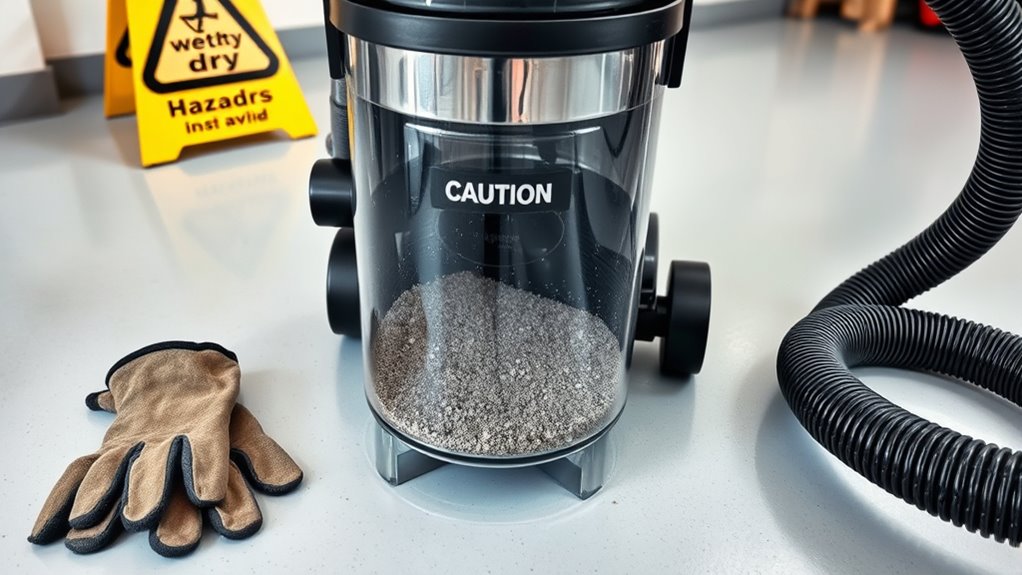
To keep your vacuum working well, use the right attachments for different tasks and avoid forcing them into place. Regularly check for obstructions to prevent clogs and damage. Also, steer clear of sharp or heavy objects that could harm the vacuum’s components. Additionally, utilizing vacuum features to consider like app support can help you troubleshoot and maintain your equipment more effectively. Being aware of support breakfast options can also inspire you to choose the best start to your day, whether you’re enjoying local favorites or preparing a nutritious meal at home. Understanding proper maintenance practices is essential for prolonging your vacuum’s lifespan and ensuring optimal performance.
Use Appropriate Attachments
Choosing the right attachments for your wet/dry vacuum is essential to prevent damage and guarantee ideal performance. Using the correct vacuum nozzle or extension wand helps you clean efficiently without risking damage to your unit. For delicate surfaces, opt for soft nozzles; for heavy-duty messes, a sturdy wide nozzle works best. Always match the attachment to the task. Improper use can cause motor strain or damage to the vacuum components. Ensuring compatibility with your vacuum model and understanding the proper usage of each attachment can prolong its lifespan and maintain optimal function. Additionally, consulting the manufacturer’s guidelines or product specifications can help you select the most suitable tools for your specific vacuum. Proper maintenance and using recommended accessories can also enhance your vacuum’s performance and longevity. Recognizing correct attachment techniques is key to avoiding common mistakes that could compromise your vacuum’s safety and effectiveness. Being aware of common mistakes can help you prevent costly repairs and extend the life of your equipment.
Clear Obstructions Regularly
Using the right attachments helps you clean effectively, but regular maintenance is key to keeping your vacuum running smoothly. One vital step is to clear obstructions regularly. Dust buildup and debris can clog your vacuum’s hoses and filters, reducing suction power and risking damage. Make it a habit to inspect the vacuum’s intake and attachments for blockages, especially after heavy use. Removing debris and accumulated dust prevents strain on the motor and prolongs its lifespan. Consistent debris clearance also guarantees peak performance, preventing overheating and mechanical issues. Don’t ignore obstructions—taking a few minutes to clear them keeps your vacuum functioning efficiently and helps you avoid costly repairs down the line. Regular maintenance is your best defense against damage and inefficient cleaning. Understanding modern art can also inspire creative ways to approach cleaning and maintenance routines.
Avoid Sharp or Heavy Items
Ever wonder what can harm your wet/dry vacuum the most? Sharp objects and heavy debris pose serious risks. Sharp objects like nails, glass, or metal scraps can puncture or tear the vacuum’s hoses and filters, leading to costly repairs. Heavy debris, such as large rocks or dense construction materials, can strain the motor or cause blockages that reduce suction. To protect your vacuum, always inspect debris before vacuuming and pick up sharp items separately. Avoid forcing the vacuum over heavy, bulky materials that could damage internal components. Using the right attachments for rough or heavy cleaning tasks also helps prevent damage. By being cautious with sharp or heavy items, you extend your vacuum’s lifespan and ensure it functions efficiently whenever you need it.
Electrical Safety Precautions
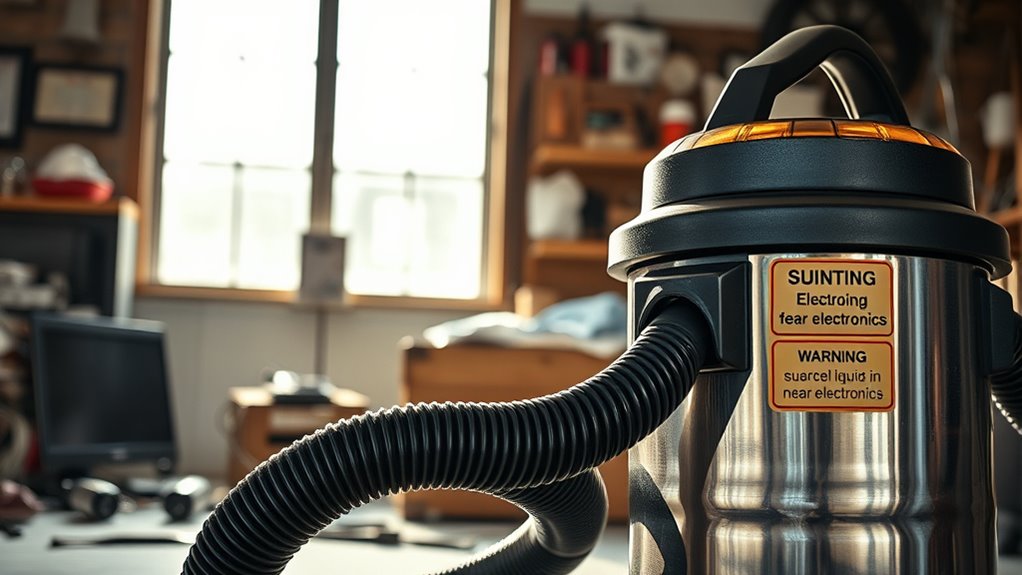
Electrical safety is crucial when operating a wet/dry vacuum to prevent shocks or fires. Always confirm proper grounding techniques are followed, which means plugging the vacuum into a grounded outlet to reduce the risk of electrical faults. Check that your electrical cord is in good condition—avoid frayed or damaged cords, and never use a damaged plug. Keep the cord clear of water, sharp objects, and heavy traffic areas to prevent accidental damage. When unplugging, pull the plug, not the cord, to avoid stressing the connection. Use a GFCI outlet if working in damp environments, and never override safety features. Practicing these electrical cord safety tips helps ensure your vacuum operates safely and effectively.
Recognizing Hazardous or Toxic Materials

When operating a wet/dry vacuum, it’s important to be able to identify hazardous or toxic materials that may be present in the debris you’re cleaning. Hazardous substances can pose serious health risks if inhaled or touched. Look out for signs like unusual odors, discoloration, or containers labeled with warning symbols. Toxic materials often include chemicals, asbestos, mold, or biological waste. To stay safe, watch for:
Identify hazardous materials like chemicals, asbestos, mold, or biological waste before vacuuming to stay safe.
- Chemical drums or spills
- Moldy or damp debris
- Asbestos-containing materials
- Biological waste like blood or bodily fluids
- Containers with hazard labels
Recognizing these dangerous substances helps prevent exposure. Never vacuum materials that you suspect are hazardous substances or toxic materials unless you have proper training and protective gear. Safety always comes first.
Proper Disposal of Vacuumed Materials

When disposing of vacuumed materials, you need to separate hazardous waste from regular trash to stay safe. Make sure you avoid clogging your filters by emptying them properly and regularly. Always follow your local disposal laws to prevent environmental harm and legal issues.
Separate Hazardous Waste
Properly disposing of vacuumed materials is essential to prevent health and environmental risks, especially if you’re dealing with hazardous waste. When handling materials like liquid chemical hazards or radioactive waste, you need to follow strict disposal protocols. Avoid mixing hazardous waste with regular trash to prevent contamination. Always use designated containers for hazardous materials and label them clearly. Remember, improper disposal can lead to serious consequences, including exposure or environmental damage. Be familiar with local regulations on radioactive waste management and hazardous waste disposal. It’s imperative to handle these materials carefully and responsibly.
- Use approved containers for hazardous waste
- Wear protective gear during disposal
- Follow local hazardous waste guidelines
- Never dispose of radioactive waste in regular trash
- Consult professionals for hazardous waste disposal
Avoid Clogging Filters
To prevent filter clogs and maintain your vacuum’s efficiency, you must dispose of vacuumed materials correctly. Proper disposal ensures ideal filter maintenance and helps sustain airflow optimization. Avoid dumping large debris or wet materials directly into the filter area, as these can cause blockages. Instead, empty the vacuum canister or bag frequently, especially when it’s full or contains fine dust. Be mindful of fine particles that can settle on the filter, reducing airflow and increasing strain on the motor. Regularly check and clean or replace filters as needed to prevent buildup. Proper disposal not only prolongs your vacuum’s lifespan but also ensures it operates at peak performance, making cleaning safer and more effective.
Follow Local Disposal Laws
Following local disposal laws is essential to guarantee you’re handling vacuumed materials safely and responsibly. Different areas have specific regulations for hazardous waste, so knowing what’s allowed prevents fines and environmental harm. Always check local regulations before disposing of debris, especially if it includes chemicals or toxic substances. Failing to do so could contaminate water supplies or harm wildlife. Be aware that some materials require special handling, like hazardous waste, which can’t go in regular trash. To stay compliant, consider these tips:
- Separate hazardous waste from regular trash
- Use approved containers for chemicals
- Follow instructions for disposal sites
- Label contaminated materials clearly
- Contact local authorities if unsure about disposal rules
Staying informed helps protect the environment and keeps you within legal boundaries.
Regular Maintenance for Safe Operation
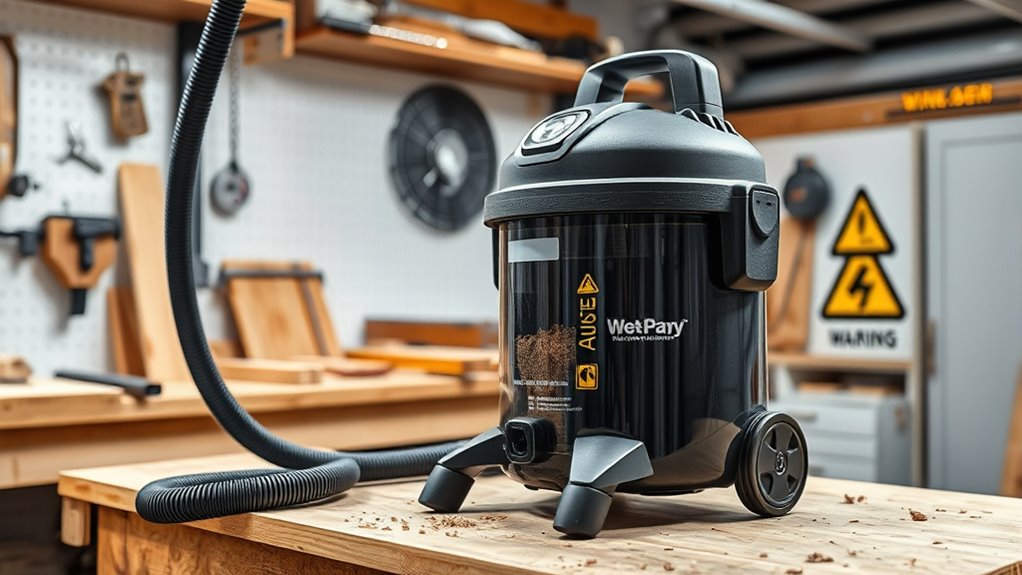
Regular maintenance is essential to keep your wet/dry vacuum operating safely and efficiently. Start by regularly checking and replacing filters to guarantee optimal airflow and prevent clogs. Clean or replace filters as needed, especially after heavy use or when suction decreases. Inspect the power cord for signs of damage, like cuts or frays, and replace it immediately if you find any issues to avoid electrical hazards. Keep the tank and filters free of debris to prevent blockages and maintain suction power. Also, ensure all connections are secure before use. Regularly inspecting and maintaining your vacuum helps prevent malfunctions, reduces safety risks, and extends the equipment’s lifespan. Always follow the manufacturer’s maintenance guidelines for the best results.
Frequently Asked Questions
Can I Vacuum Liquid Spills With a Standard Household Vacuum?
You shouldn’t vacuum liquid spills with a standard household vacuum. These vacuums aren’t designed for liquids and can get damaged or cause electrical hazards. Instead, use a wet/dry vacuum designed for spill cleanup techniques. Proper vacuum maintenance guarantees safety and efficiency. Always check your vacuum’s capabilities before attempting spill cleanup. Using the right equipment prevents damage and keeps your home safe during spill emergencies.
What Should I Do if My Vacuum Starts to Smell Unusual?
When your vacuum smells off, it’s time for a little maintenance magic. Don’t just ignore that funky odor—it’s begging for odor removal! Empty the bin, clean the filter, and check for trapped debris. A quick wash or replace can do wonders. Regular vacuum maintenance keeps odors at bay, so you can breathe easy. Remember, a fresh-smelling vacuum means happier cleaning and a healthier home.
Is It Safe to Vacuum Dust From Electronics or Delicate Equipment?
Vacuuming dust from electronics or delicate equipment isn’t safe because it risks damaging sensitive components. For electronics safety, avoid using your vacuum directly on these items. Instead, use compressed air or a soft brush to remove dust gently. This approach prevents static buildup and potential damage. Always unplug devices before cleaning and handle them with care to make sure your electronics stay safe and functional.
How Do I Prevent Mold Growth Inside My Wet/Dry Vacuum?
Ever wonder how to keep mold from thriving inside your vacuum? To prevent mold growth, you should practice regular vacuum maintenance by emptying the tank, cleaning filters, and drying all parts thoroughly after use. Keep the interior dry and guarantee no moisture lingers. Mold prevention is key to extending your vacuum’s lifespan and maintaining a healthy environment, so make these steps part of your routine. Wouldn’t you want a cleaner, safer space?
Can I Vacuum Combustible Dust or Flammable Liquids Safely?
You should never vacuum combustible dust or flammable liquids because of explosive hazards. These materials pose serious risks, so always check chemical compatibility before use. Using the wrong vacuum can cause sparks or fires, endangering you and your surroundings. For hazardous materials, use specialized equipment designed for chemical safety. Always follow manufacturer guidelines and safety protocols to prevent accidents and guarantee safe handling of dangerous substances.
Conclusion
By paying close attention to what you bring into your vacuum, you create a safer environment for both your space and your equipment. Respecting the subtle boundaries between the acceptable and the risky helps guarantee smooth, worry-free cleaning adventures. When you handle each spill with care and avoid the tempting allure of the unknown, you preserve your vacuum’s harmony. Ultimately, mindful choices keep your cleaning routine effortless and your surroundings beautifully maintained.