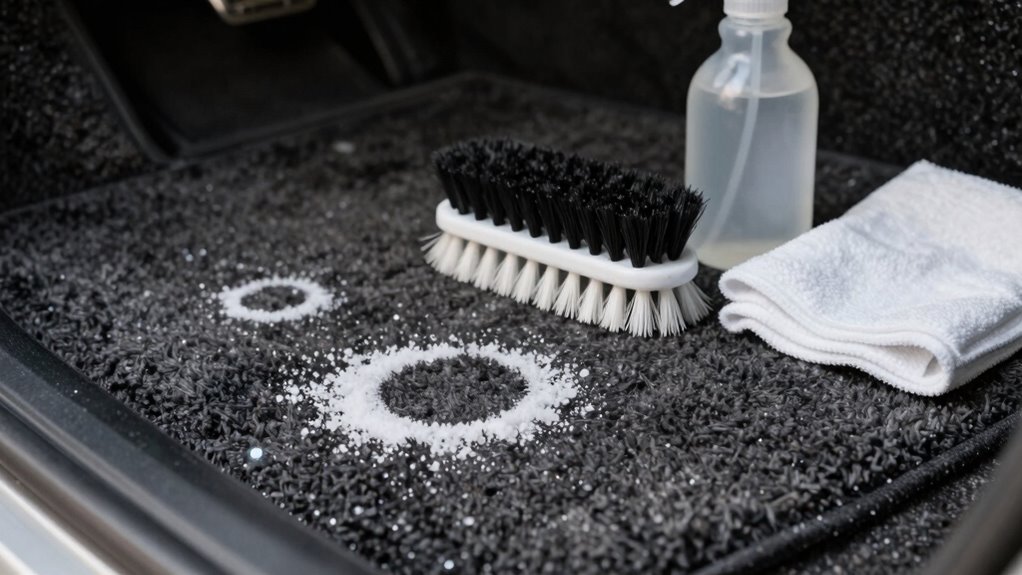
To remove white rings from salt stains on your car carpets, start by vacuuming the area to eliminate loose debris. Then, mix equal parts warm water and white vinegar. Apply this solution to the stains and let it sit for 2–5 minutes. Scrub gently with a stiff-bristle brush to loosen the salt, then rinse with plain water. Always remember to blot excess water and make certain the carpet dries completely to prevent new stains. There’s more to know about effective maintenance and prevention techniques.
Key Takeaways
- Vacuum the affected area to eliminate loose debris before attempting to clean the salt stains.
- Create a cleaning solution using equal parts warm water and white vinegar, and apply it to the stains.
- Let the vinegar solution sit for 2–5 minutes, then scrub with a stiff-bristle brush to loosen the salt.
- Rinse the area thoroughly with plain water and blot to prevent residue and odors from forming.
- Consider using commercial products like SSX Salt Stain Remover for stubborn stains, following the manufacturer’s instructions.

When winter hits, road salt can wreak havoc on your car’s carpets, leaving behind unsightly white rings and crusty deposits. These stains often result from sodium chloride and other salts that embed themselves in the fibers, hardening over time and creating a tough mess to clean. The longer you wait to address these stains, the more ingrained they become, leading to discoloration and possible degradation of your carpet. Salt deposits bond with fibers, making stains resistant to standard cleaning and actively damaging the interior materials. Proper maintenance practices can help mitigate the impact of these stains over time.
Road salt can damage your car’s carpets, causing tough stains that worsen over time if not addressed promptly.
To prevent these salt stains from taking hold, you can adopt a few effective in-car habits. First, invest in heavy-duty winter floor mats that can intercept the salt before it touches your carpet. Make it a routine to shake or tap your mats outside the vehicle to remove loose salt and grit. Additionally, consider placing a door mat or boot scraper at home or the garage entrance to minimize the salt transferred from your footwear. Allowing wet shoes to dry on absorbent pads outside the vehicle can also help limit salt spread.
If you find yourself facing stubborn salt stains, you can try a simple DIY cleaning method using a 1:1 solution of warm water and white vinegar. Begin by vacuuming the affected area to remove loose debris. Then, use a stiff-bristle brush to loosen any crusted salt. Lightly spray the vinegar solution onto the stained areas, allowing it to sit for 2–5 minutes. Afterward, agitate the area with the brush, blotting or extracting the dissolved salts with a damp towel or a wet/dry vacuum. Always rinse with plain water afterward to eliminate any lingering vinegar odor.
For tougher stains, consider using commercial products like SSX Salt Stain Remover, designed to tackle embedded calcium and salt. These products can often neutralize alkaline salts effectively, making your cleaning process much simpler. Regardless of the method you choose, ensure thorough rinsing and drying to prevent new rings from forming.
Lastly, keep in mind that regular maintenance is key. Vacuuming frequently during winter helps catch minor accumulations before they become a bigger problem. After treating stains, allow the carpet to dry completely with good airflow to avoid odors and mildew. If you notice recurring stains, track the locations to see if your entry habits or mat fit need adjustment. By staying proactive, you can protect your car’s carpets from the ravages of winter salt.
Frequently Asked Questions
Can Salt Stains Damage My Car’s Upholstery?
Yes, salt stains can damage your car’s upholstery. If left untreated, the salt can degrade fibers and alter dyes, leading to discoloration and wear over time. Salt residues also trap dirt and oils, creating crusty rings that are tough to remove. To prevent damage, it’s essential to clean up salt stains promptly and use protective mats during winter. Regular maintenance will help preserve your upholstery’s appearance and longevity.
How Often Should I Clean My Car Mats in Winter?
Cleaning your car mats in winter isn’t just a chore; it’s essential for maintaining your vehicle’s interior. You should vacuum and shake them out weekly to prevent salt buildup and dirt from embedding in the fibers. If you notice heavy salt residue, give them a deeper clean every two weeks. By staying proactive, you’ll keep your mats looking fresh and extend their lifespan, protecting your car from the harsh winter elements.
What Type of Mats Are Best for Winter?
For winter, heavy-duty rubber mats are your best bet. They’re designed to trap snow, salt, and dirt, protecting your car’s carpet. Look for mats with raised edges to contain liquid and prevent spills from spreading. Additionally, consider mats with a non-slip backing to keep them securely in place while driving. Regularly shake them out or rinse them to maintain cleanliness and effectiveness throughout the winter months.
Can I Use Bleach to Remove Salt Stains?
You might think bleach would be a quick fix for salt stains, but it’s not your best option. Using bleach can actually damage your carpet’s fibers and lead to discoloration, making the stains worse. Instead, stick to milder solutions like vinegar and water. They’ll effectively tackle the salt without harming your carpet. Always test any cleaner in a small, hidden area first to avoid surprises. Your carpet will thank you for it!
How Long Do Salt Stains Typically Last on Carpets?
Salt stains on carpets typically last until you remove them, but if left untreated, they can become more difficult to eliminate over time. The longer you wait, the more the salt can bond with the carpet fibers, leading to potential discoloration and damage. You should act quickly to tackle these stains, using appropriate cleaning methods to guarantee your carpet stays in good condition. Regular maintenance can help prevent salt stains from setting in.
Conclusion
In winter, those pesky salt stains can turn your car into a real eyesore. But don’t worry! With just a few simple steps, you can banish those white rings faster than a smartphone can connect to Wi-Fi. Remember to act quickly and use the right solutions to keep your carpets looking fresh. So, roll up your sleeves, grab your tools, and tackle those stains head-on—your car will thank you for it!