
If your shop vac’s noise is driving you crazy, you can easily quiet it down. Try lining a muffler box with acoustic insulation or using inline mufflers that can cut noise by up to 80%. Isolate your vacuum on rubber feet or an elevated platform to reduce vibrations. Improving duct design and using cyclone separators can also help lower sound levels while maintaining airflow. Want to learn more tips to tackle that brutal noise?
Key Takeaways
- Line the shop vac enclosure with acoustic insulation to absorb sound and reduce noise levels significantly.
- Use inline mufflers or silencers to cut perceived noise by up to 80% without sacrificing performance.
- Elevate the vacuum on an isolation platform to minimize vibration transfer to the floor and surrounding areas.
- Implement zig-zag duct runs lined inside to create acoustic losses and reduce turbulence noise.
- Regularly clean filters and use larger-diameter hoses to maintain optimal airflow and decrease motor strain and noise.
When you fire up a shop vac, the last thing you want is to be overwhelmed by noise, but many models can reach levels between 85 and 95 dB—louder than a miter saw. If you’ve dealt with this racket, you’re likely looking for ways to make your cleanup experience more bearable. Fortunately, there are several methods to reduce that harsh sound without sacrificing performance.
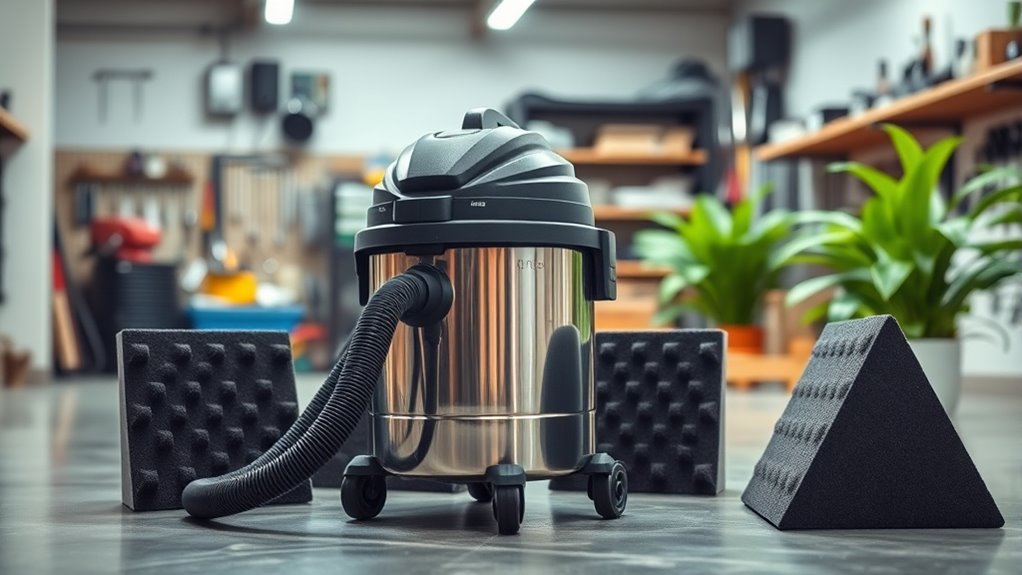
One effective approach is to build a baffled muffler box. By lining a box with mineral wool or acoustic insulation, you can considerably lower the noise from around 87 dB to about 61 dB at 24 inches. This design uses a baffle layout to absorb high-frequency sounds while maintaining airflow. Just ensure that the outlet port size is several times larger than the vacuum exhaust to avoid backpressure issues. A removable top helps you access the internals for maintenance, keeping the acoustic performance consistent. Sound pressure level (dBA) measurement is crucial for understanding how these changes affect perceived loudness. Additionally, using materials that are eco-friendly options helps in creating sustainable solutions for noise reduction.
Another option is to add a dedicated muffler or silencer to the exhaust. Inline mufflers can cut perceived noise by as much as 80% while keeping power intact. Simple designs, like cylindrical or packed-mesh silencers, effectively absorb high frequencies. Make sure the muffler’s free area is at least equal to the original exhaust opening to keep everything running cool and efficiently.
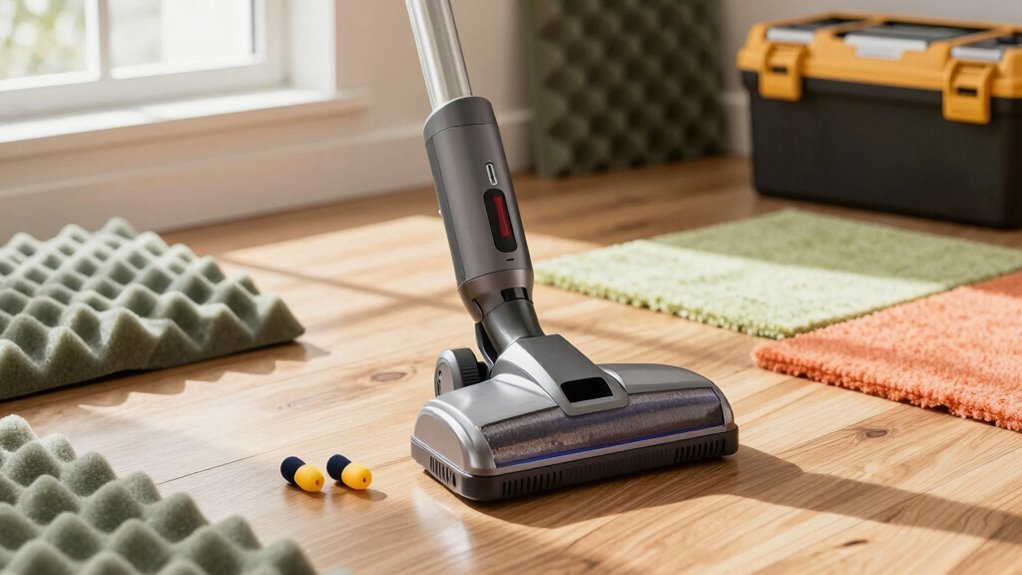
You can also focus on vibration isolation and enclosure decoupling. Using rubber feet or neoprene pads helps reduce noise transferred through the floor or workbench. Elevating the unit on an isolation platform maintains airflow while lowering the noise level. Line your enclosure walls with sound-deadening materials to minimize resonance, and consider using casters with soft-rubber wheels for easy movement without the extra noise.
Modifying intake and exhaust routing can further decrease sound levels. Long, zig-zag duct runs lined on the inside create acoustic losses while allowing good airflow. Replace small passages with larger, parallel options to keep noise down. Don’t forget the importance of keeping intake screens and filters clean; clogged filters can increase motor noise and risk overheating.
Lastly, consider airflow-preserving upgrades. Using cyclone separators can eliminate coarse dust before it reaches your filters, allowing the vacuum to run cleaner and quieter. Larger-diameter hoses and smooth inner walls also minimize turbulence noise. Regular maintenance is crucial; clean filters and check seals to ensure peak performance. By implementing these strategies, you can enjoy a quieter, more peaceful cleaning experience without sacrificing the power you need.
Frequently Asked Questions
What Materials Are Best for Soundproofing a Shop Vac?
For soundproofing your shop vac, use mineral wool or acoustic insulation to line a baffled muffler box. These materials effectively absorb high-frequency noise. Additionally, consider using vibration-damping mats around the enclosure and rubber feet or neoprene pads for isolation. You can also incorporate heat-resistant packing inside mufflers. Remember to guarantee proper airflow while maintaining these materials for peak performance and noise reduction. Regular maintenance keeps everything running smoothly and quietly.
Can I Use a Regular Muffler for My Shop Vac?
You might think a regular muffler won’t work for your shop vac, but it actually can. Using a muffler designed for vacuums can substantially reduce noise without sacrificing power. Just ensure the muffler’s free area matches or exceeds the original exhaust opening to prevent overheating. Additionally, using heat-resistant packing inside helps maintain safety. Monitor your motor’s temperature after installation to ensure everything’s running smoothly. It’s a practical solution for quieter operation.
How Often Should I Clean My Shop Vac Filters?
You should clean your shop vac filters regularly, ideally after every use or at least once a month if you use it frequently. Clogged filters can cause your vacuum to work harder, increasing noise and reducing efficiency. If you notice a drop in suction or hear unusual sounds, it’s time to check and clean them. Keeping filters clean not only enhances performance but prolongs the lifespan of your vacuum, ensuring it runs smoothly.
Are There Specific Brands Known for Quieter Shop Vacs?
Yes, several brands are known for quieter shop vacs. Look into models from Fein, Festool, or Makita, as they often prioritize noise reduction without sacrificing performance. Additionally, brands like Ridgid and DeWalt offer options with improved sound levels. When choosing, check customer reviews and specifications for decibel ratings to find the quietest model that fits your needs. Investing in a quieter shop vac can make your cleaning tasks much more pleasant.
How Does Temperature Affect My Shop Vac’s Noise Levels?
Temperature can considerably affect your shop vac’s noise levels. When the motor gets hot, it may run less efficiently, leading to increased noise due to higher RPMs and potential strain. Cooler temperatures help maintain ideal performance and quieter operation. Additionally, if the vacuum’s components, like filters, overheat, they might vibrate more, amplifying sound. Regular maintenance and ensuring airflow can help keep your shop vac running smoothly and quietly, regardless of temperature fluctuations.
Conclusion
So, you’ve tackled the noise issue, but what if there’s more lurking beneath the surface? You’ve sealed those gaps and added insulation, yet the sound still creeps in. As you approach your next project, consider this: could a simple upgrade or a clever hack be the key to a quieter experience? The answer might just be hiding in plain sight, waiting for you to discover it. Don’t stop now; the ultimate silence could be just around the corner.