Using the wrong vacuum setup for drywall dust can quickly damage your filters, reduce suction, and release dust back into the air. Standard vacuums often aren’t designed to handle fine, abrasive drywall particles, leading to clogged or torn filters. This not only shortens filter life but also risks dust recirculation and equipment failure. If you want to avoid these pitfalls, keep exploring to find out how proper setup protects your investment and health.
Key Takeaways
- Incorrect vacuum setup can cause drywall dust to bypass filters, leading to filter damage and reduced filtration efficiency.
- Using unsuitable vacuums or improper sealings increases filter clogging and accelerates wear.
- Excessive suction force from wrong setup can damage filters and reduce vacuum lifespan.
- Poorly maintained or damaged filters allow dust recirculation, harming indoor air quality.
- Neglecting proper filter lifecycle management results in filter failure, increased maintenance costs, and ineffective drywall dust removal.
Common Vacuum Types Used for Drywall Dust and Their Limitations

When choosing a vacuum for drywall dust cleanup, it’s important to understand the different types available and their limitations. Many standard vacuums rely on a vacuum bag to trap fine particles, but drywall dust can quickly clog these bags, reducing suction and damaging the filter system. Additionally, not all vacuums have motor insulation designed for fine, abrasive particles; drywall dust can seep into motor components, causing overheating or failure. Shop vacuums with sturdy filters and sealed motors are better suited, but even they may struggle if not equipped with the right filtration. Be cautious of models that lack proper dust containment features, as drywall particles can bypass filters, leading to poor performance and potential damage. Choosing the right vacuum helps protect your equipment and ensures effective cleanup. Proper dust containment features are essential to prevent drywall dust from damaging your vacuum and compromising cleanup efficiency. Selecting a vacuum with advanced filtration systems can significantly improve dust capture and extend the lifespan of your equipment. Also, consider the filter maintenance requirements, as regular cleaning or replacement is necessary to maintain optimal performance and prevent filter clogging. Moreover, understanding the limitations of standard vacuums can help you avoid equipment damage and ensure a more thorough drywall dust cleanup. Properly equipped vacuums with specialized filters reduce the risk of dust infiltration into motor parts and improve overall cleanup results.
Why Standard Household Vacuums Fail With Drywall Particles

Standard household vacuums often struggle with drywall particles because they aren’t designed to handle fine, abrasive dust. These particles quickly clog filters, causing airflow restrictions that reduce suction power. As airflow drops, your vacuum works harder, leading to overheating and potential damage. Additionally, drywall dust rapidly accumulates on filters, demanding frequent filter maintenance to keep performance *exemplary*. If you ignore these issues, your vacuum’s motor can overheat or burn out prematurely. To ensure optimal performance, consider using vacuums equipped with HEPA filters that are capable of trapping fine particles effectively. Proper filtration systems are essential for maintaining vacuum longevity and ensuring thorough cleanup. Regularly inspecting and replacing filters prevents buildup that could impair filter efficiency, ultimately extending the life of your equipment. Inadequate filtration can also cause air quality issues by recirculating dust into the environment. Using a standard vacuum for drywall dust often results in filter damage and ineffective cleaning, making specialized equipment the *superior* choice.
Standard vacuums clog filters and overheat when cleaning drywall dust.
Furthermore, choosing a vacuum with powerful suction capabilities designed for fine dust can significantly reduce the risk of filter damage and improve overall dust containment.
The Impact of Incorrect Setup on HEPA Filter Longevity
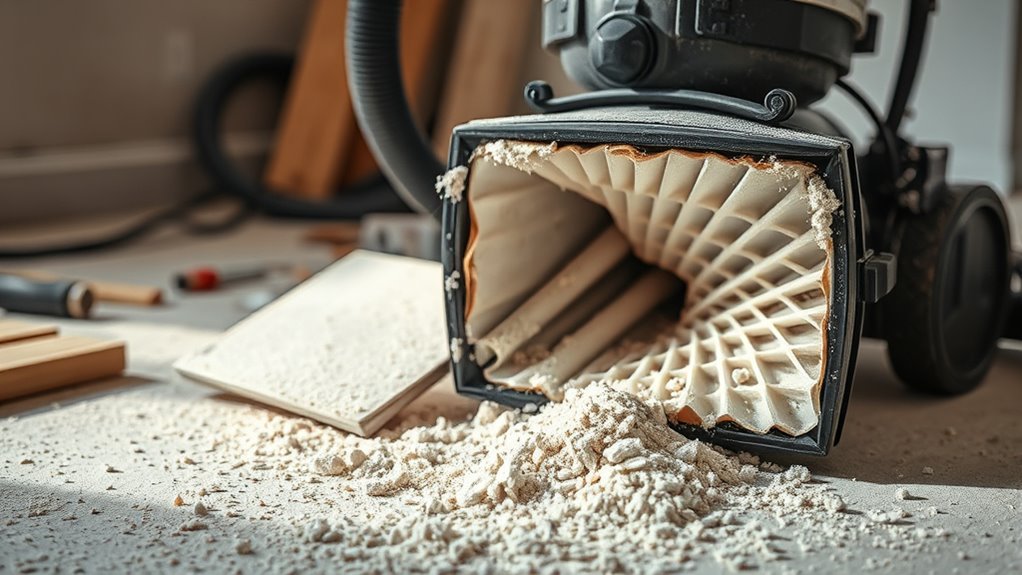
Incorrect setup of your HEPA filter can substantially shorten its lifespan, often leading to costly replacements. When filters aren’t properly installed or maintained, filter degradation occurs more rapidly, reducing their effectiveness. Poor configuration can cause dust to bypass the filter, hindering dust containment efforts and allowing drywall particles to settle elsewhere. This not only damages the filter but also increases the workload on your vacuum or air purifier, accelerating wear. Additionally, incorrect airflow direction or loose fittings can cause unfiltered dust to escape, making cleanup less efficient and potentially damaging the filter. To maximize longevity, ensure your HEPA filter is correctly installed, sealed tightly, and used according to manufacturer instructions. Proper setup preserves filter health, maintains dust containment, and saves you money over time. Vetted Maintaining the correct airflow direction is crucial to prevent unfiltered dust escape and ensure the filter remains effective. Properly configured systems also support the filter’s efficiency, which is essential for protecting indoor air quality, and understanding how HEPA filters operate can help you troubleshoot setup issues more effectively.
Recognizing Signs of Filter Damage and Ineffective Cleanup

If your HEPA filter shows signs of damage or your cleanup efforts seem ineffective, it’s a clear indication that something’s wrong. You might notice dust escaping back into the air or dust settling quickly after vacuuming. To identify filter damage and poor cleanup:
- Increased dust escape during or after vacuuming, indicating compromised filter integrity.
- Visible tears, holes, or deformities on the filter surface, showing physical damage.
- Reduced airflow or suction power, meaning the filter may be clogged or damaged, preventing proper dust retention.
- The presence of persistent dust residues suggests the filter’s filtration capacity has been compromised and needs inspection or replacement. Additionally, improper vacuum setup can cause filter damage, further reducing cleaning effectiveness. Ensuring proper vacuum maintenance can help prevent such issues. Regularly checking for airflow problems can also indicate early signs of filter compromise, and maintaining the correct filter integrity is essential for optimal performance.
These signs suggest your filter isn’t performing as it should. Continuing to use a damaged filter leads to dust escape, defeating the purpose of your cleanup and risking recontamination. Recognizing these signs early helps maintain effective drywall dust removal.
Tips for Proper Vacuum Configuration to Protect Filters

To guarantee your vacuum safeguards its filters and maintains peak performance, you should carefully configure it before each use. Start by confirming a proper vacuum seal around the dust container or bag to prevent dust from bypassing the filter. Check that all connections are tight and secure. Adjust the suction power to avoid excessive force that can strain filters; too strong a vacuum can cause damage or reduce filter life. Regularly inspect your filters and replace them when they show signs of wear or clogging. Proper filter replacement is vital for effective drywall dust cleanup and filter protection. Additionally, monitoring filter indicators if available on the device can alert you when filters need attention. By maintaining a good vacuum seal and replacing filters as needed, you prolong your vacuum’s lifespan and ensure it continues to perform effectively without damaging sensitive filters. Proper airflow management helps prevent filter damage and keeps your vacuum functioning optimally. Recognizing the importance of filter lifecycle can help you plan timely replacements and avoid costly repairs. Ensuring your vacuum has a proper filtration system is essential for protecting both the device and indoor air quality.
Frequently Asked Questions
Can Specific Vacuum Models Better Handle Drywall Dust Than Others?
Yes, some vacuum models handle drywall dust better than others. Look for ones with superior vacuum filtration and dust containment features, like HEPA filters and sealed systems. These models prevent fine drywall dust from escaping back into the air, protecting your filters and improving cleanup efficiency. Choosing the right vacuum guarantees you contain dust effectively, avoiding filter damage and maintaining a healthier work environment.
What Are the Long-Term Costs of Filter Damage From Improper Vacuum Setup?
Filter degradation from improper vacuum setup can lead to significant long-term costs, as you’ll need to replace filters more frequently and perform additional maintenance. Over time, damaged filters reduce suction power and increase wear on your vacuum, making cleaning less effective and potentially damaging the motor. Investing in the right setup minimizes these maintenance costs, guarantees ideal performance, and prolongs your vacuum’s lifespan, saving you money in the long run.
Are There DIY Methods to Test HEPA Filter Integrity After Drywall Cleanup?
You can’t judge a book by its cover, so it’s wise to perform HEPA testing and filter inspection after drywall cleanup. DIY methods include using a HEPA filter tester, which detects leaks or damage, or performing a smoke test to observe airflow changes. Keep in mind, though, professional testing supplies more accuracy, but these simple steps can help you catch obvious issues early and ensure your vacuum’s filter remains effective.
How Often Should Vacuum Filters Be Replaced After Drywall Dust Exposure?
You should replace your vacuum filters after drywall dust exposure whenever you notice reduced suction, visible dirt buildup, or after heavy dust cleanup sessions. Regular filter replacement guarantees peak performance and prevents dust recirculation. It’s a good idea to check your filter’s condition regularly, especially after significant dust exposure, and follow your vacuum manufacturer’s guidelines for replacement intervals to maintain effective dust containment and protect your air quality.
What Safety Precautions Should Be Taken During Drywall Dust Vacuuming?
Like a shield protecting a knight, you should wear protective gear such as masks, goggles, and gloves during drywall dust vacuuming. Make sure to improve ventilation strategies by opening windows and using fans to direct dust outside. This keeps airborne particles in check, reducing inhalation risks. Always double-check your vacuum setup to avoid filter damage, and stay alert to dust levels, ensuring your safety throughout the cleanup process.
Conclusion
To keep your filters in perfect shape, always set up your vacuum correctly. A wrong configuration isn’t just a small mistake — it can destroy filters faster than you can say “dust disaster.” Protect your investment and guarantee a thorough cleanup by following proper setup tips. Remember, a properly configured vacuum isn’t just good; it’s your best defense against drywall dust turning your home into a dusty disaster zone. Stay vigilant and keep those filters safe!