
Maintaining proper indoor humidity, ideally between 30-50%, helps control dust mites, mold, and musty odors that can affect air quality and comfort. Too much moisture encourages mold growth and dust mite proliferation, which can trigger allergies and cause persistent smells. Excess humidity also leads to condensation and dampness. By managing humidity levels with ventilation and dehumidifiers, you can reduce these indoor air issues effectively. Keep exploring to learn more about creating a healthier home environment.
Key Takeaways
- Maintaining indoor humidity between 30-50% reduces mold, dust mites, and musty odors.
- High humidity promotes mold growth and dust mite proliferation, causing persistent musty smells.
- Proper ventilation and dehumidification control moisture, preventing dampness and related odors.
- Dust mites thrive in 50-70% humidity, increasing allergens and odors; lowering humidity curbs their growth.
- Regular monitoring of indoor humidity helps prevent surface condensation, mold, and associated musty odors.
The Role of Humidity in Indoor Air Quality

Humidity plays an essential role in maintaining good indoor air quality because it directly affects comfort and health. Proper humidity levels improve indoor plant benefits, making your environment healthier and more vibrant. When humidity is balanced, it helps reduce airborne allergens that can trigger allergies, creating a more comfortable space. Too much humidity, however, can promote mold growth and dust mites, which worsen allergy symptoms. Conversely, low humidity dries out nasal passages and skin, increasing susceptibility to illness and discomfort. Maintaining ideal humidity levels keeps allergens in check and supports the natural benefits of indoor plants, such as air purification and moisture regulation. Controlling humidity also involves understanding air quality management strategies to optimize your indoor environment. Proper humidity control can also help prevent the growth of mold and mildew, which are common issues in damp indoor spaces. Additionally, understanding humidity levels and their impact is crucial for creating a healthy living space. Regular monitoring of indoor moisture can help identify problem areas before they develop into more serious issues, ensuring a healthier atmosphere. Employing smart home devices such as humidity sensors and automated humidifiers can help maintain consistent indoor humidity, enhancing overall air quality. By controlling humidity, you create a healthier, more comfortable indoor environment that promotes well-being and reduces allergy symptoms.
How Dust Mites Thrive in Different Humidity Levels

Dust mites thrive best when indoor humidity is between 50% and 70%, which provides ideal conditions for their survival and reproduction. When humidity drops below this range, their population decreases markedly, making your environment less hospitable. Understanding how humidity levels influence mite activity helps you control their numbers and improve indoor air quality. Maintaining proper ventilation can also help regulate indoor humidity and reduce dust mite proliferation. Additionally, choosing appropriate dehumidification methods can further limit dust mite growth and enhance overall comfort.
Optimal Humidity Range
Maintaining the right level of moisture in your indoor environment is essential because dust mites thrive within specific humidity ranges. Typically, keeping indoor humidity between 40% and 50% creates an environment that’s less inviting for them. During warmer months, outdoor humidity and plant transpiration can naturally raise indoor moisture levels, so using dehumidifiers or air conditioning helps control this. Conversely, in dry seasons, adding moisture with humidifiers can prevent conditions that favor mold growth. Dust mites prefer the mid-range humidity because it supports their life cycle without risking mold or bacteria issues. Monitoring indoor humidity with a hygrometer ensures you stay within this suitable range, reducing dust mite populations and improving overall air quality. Proper humidity management is a simple yet effective step toward healthier indoor air. Additionally, incorporating natural ventilation can help regulate moisture levels and improve air circulation. Maintaining optimal humidity also minimizes the risk of mold and bacteria growth, which can compromise indoor air quality and health.
Mite Population Dynamics
Dust mites respond quickly to changes in indoor humidity, with their populations expanding or shrinking based on moisture levels. When humidity is high, their reproduction accelerates, leading to population fluctuations that can increase allergen levels. In humid environments, dust mites thrive because moisture supports their growth and sustains their food sources like skin flakes. Conversely, lowering humidity causes mite reproduction to slow down or halt, reducing their numbers over time. These population shifts happen rapidly, making humidity control a vital step in managing dust mite infestations. Proper humidity management can significantly reduce dust mite populations and improve indoor air quality. Additionally, understanding dust mite biology helps in developing targeted strategies to minimize their impact. Recognizing how humidity levels influence dust mite activity enables more precise control measures. Understanding these dynamics helps you develop effective strategies to minimize dust mite-related allergies and improve indoor air quality. Maintaining optimal indoor humidity is essential for preventing rapid dust mite population growth and maintaining healthier air quality.
The Connection Between Moisture and Musty Odors

Moisture in indoor environments often leads to musty odors because it creates the perfect conditions for mold and mildew to thrive. When humidity fluctuates, it can cause condensation on walls, ceilings, and fabrics, fostering mold growth that produces persistent smells. These odors become more noticeable in damp, poorly ventilated areas. Additionally, high moisture levels can worsen dust mite allergies, as dust mites thrive in humid conditions and contribute to the musty scent. Addressing humidity control and maintaining proper ventilation can significantly reduce mold growth and dust mite populations, breaking the cycle of dampness and odors. Proper ventilation strategies help prevent excess moisture buildup and improve indoor air quality. Controlling indoor humidity helps prevent mold development and reduces dust mite populations, breaking the cycle of dampness and odors. Keeping indoor humidity between 30-50% minimizes these issues, ensuring your space remains fresh and healthier. Implementing humidity monitoring devices can assist in maintaining optimal moisture levels and prevent odor problems. Addressing moisture problems is essential for eliminating musty odors and improving overall indoor air quality. Proper humidity levels are key to maintaining a clean and odor-free environment.
Impact of Humidity on Mold Growth and Indoor Air

When humidity levels stay high, mold can quickly take hold in your home. Keeping humidity in check reduces the risk of mold growth and improves indoor air quality. Controlling moisture is key to creating a healthier living environment. Regularly monitoring air quality considerations can help identify humidity issues before they promote mold growth. Additionally, understanding cold medication side effects can help you manage symptoms effectively and safely. Being aware of privacy policies and cookie management practices ensures a safer online experience while researching indoor air quality solutions. Incorporating a whole-house water filtration system can also contribute to overall home health by reducing waterborne contaminants that may exacerbate indoor humidity problems.
Excess Moisture Promotes Mold
Excess moisture in indoor environments creates ideal conditions for mold growth, which can substantially compromise air quality and health. When humidity regulation fails, moisture seeps into walls, carpets, and furniture, fueling mold development. Visualize these common scenarios:
- Water leaks pooling on ceilings or floors.
- Condensation forming on windows overnight.
- Damp towels or clothes left in the laundry room.
- Humid air lingering without ventilation.
This excess moisture not only promotes mold but also encourages dust mite proliferation, worsening allergies. Controlling humidity levels helps prevent mold spores from settling and growing. Keeping indoor humidity below 60% is key to dust mite prevention and maintaining healthier air quality. Regular ventilation and dehumidification are essential steps to break this indoor air triangle.
Humidity Levels and Mold Risk
Maintaining proper humidity levels is essential because mold thrives in environments where moisture is abundant. When humidity rises above 60%, you’re more likely to see airborne allergens and indoor condensation, which create perfect conditions for mold growth. Excess moisture not only encourages mold but also increases the presence of airborne allergens that can trigger allergies and asthma. By keeping humidity between 30-50%, you reduce the chances of indoor condensation forming on walls, windows, and surfaces, which can serve as breeding grounds for mold. Controlling humidity helps prevent the damp conditions mold needs to develop and keeps airborne allergens at bay. Utilizing at-home air quality monitors can help you stay vigilant about humidity levels and indoor air quality. Staying vigilant about humidity levels is a key step in protecting your indoor air quality and maintaining a healthier living environment.
Controlling Indoor Humidity
Controlling indoor humidity is essential because it directly influences mold growth and air quality. When humidity levels stay between 30-50%, you create an environment less inviting for mold and dust mites. To achieve this, consider using DIY dehumidifiers—such as placing silica gel packs or homemade desiccants in damp areas. Proper humidity sensor placement is key; position sensors high on interior walls away from windows or vents to get accurate readings. Visualize these steps:
- Installing a dehumidifier in your basement or bathroom.
- Setting up humidity sensors in central locations.
- Monitoring humidity levels regularly.
- Adjusting ventilation or dehumidifier settings accordingly.
Balancing Humidity for Optimal Comfort and Health

Have you ever noticed how your skin feels dry in winter or how condensation forms on windows during humid days? Maintaining beneficial humidity levels helps you stay comfortable and supports your health. The ideal indoor humidity ranges from 30% to 50%. To achieve this balance, use humidity sensors to monitor moisture levels accurately. These devices provide real-time readings, so you can adjust humidifiers or dehumidifiers as needed. Properly balanced humidity reduces dry skin, prevents respiratory irritation, and minimizes dust mite activity. It also helps prevent mold growth and musty odors. Remember, small adjustments make a big difference. Keeping humidity within the most favorable range creates a healthier, more comfortable environment that benefits your well-being all year round.
Identifying Signs of Excessive Indoor Moisture
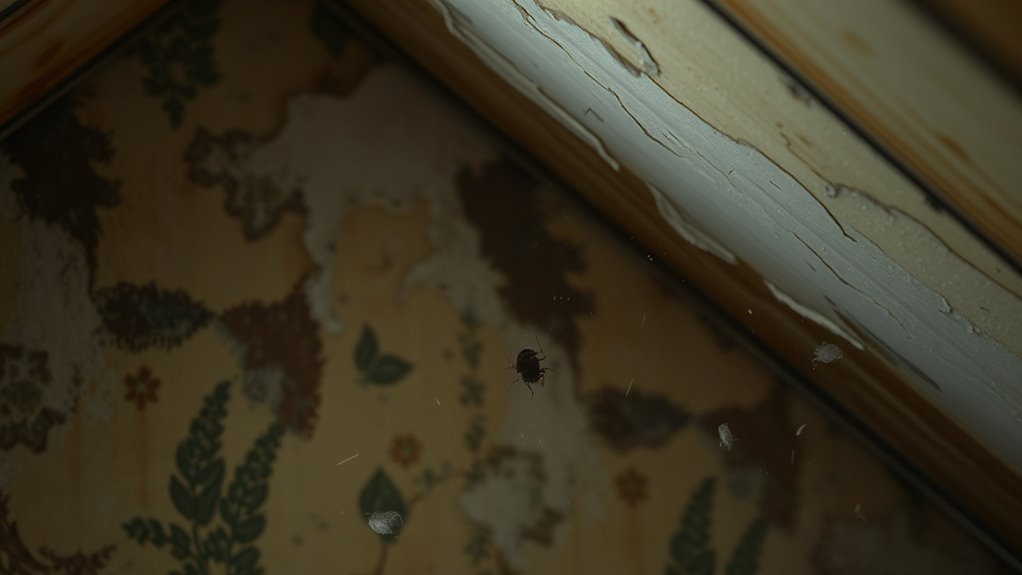
When humidity levels climb above the recommended range, noticeable signs of excessive indoor moisture can appear. You might notice:
- Damp or musty odors lingering in the air
- Visible mold or mildew spots on walls, ceilings, or windows
- Condensation buildup on windows or pipes
- Peeling paint or wallpaper, indicating moisture intrusion
These signs often point to poor HVAC maintenance or improper indoor plant management, which can trap moisture indoors. Regularly inspecting and maintaining your HVAC system helps control humidity levels, while managing indoor plants prevents excess moisture from spreading. If you observe these indicators, it’s essential to address them promptly to prevent mold growth and maintain healthy indoor air quality. Recognizing these signs helps you take early action to keep your home dry and comfortable.
Strategies for Controlling Humidity and Reducing Dust Mites

Maintaining ideal indoor humidity levels is essential for reducing dust mites and improving air quality. Keep humidity between 30-50% using dehumidifiers or air conditioners, which help create an environment less hospitable for dust mites. Enhance airflow with effective ventilation techniques like opening windows or installing exhaust fans to promote fresh air exchange. Air purifiers with HEPA filters can also help trap dust mites, allergens, and other airborne particles, further improving air quality. Regularly wash bedding, curtains, and upholstery in hot water to eliminate mites and reduce dust buildup. By combining humidity control, proper ventilation, and air purification, you notably lower dust mite populations and create a healthier indoor environment. These strategies work together to minimize allergens and improve overall air quality.
Preventing and Eliminating Musty Smells in Your Home

Controlling humidity levels and ensuring proper ventilation not only reduce dust mites but also help prevent musty odors from developing indoors. To eliminate existing smells, start by using an air purifier equipped with a carbon filter to absorb odors. Improve airflow with a reliable ventilation system that exchanges stale air for fresh air. Here are additional steps:
- Open windows regularly to let in fresh air
- Use exhaust fans in bathrooms and kitchens during activities that produce moisture
- Keep areas like basements dry with dehumidifiers
- Clean and dry any damp fabrics or carpets promptly
These actions reduce moisture buildup that fuels musty smells. Consistent maintenance of your air purifier and ventilation system keeps indoor air fresh, preventing musty odors from returning and creating a healthier living environment.
Frequently Asked Questions
How Does Humidity Affect Allergy Symptoms Indoors?
When humidity levels are too high indoors, your allergy symptoms can worsen because excess moisture encourages mold growth and dust mites. Proper humidity control helps reduce these allergens, making allergy mitigation easier. You should aim to keep indoor humidity between 30-50%. Using a dehumidifier or air conditioner can effectively maintain this range, helping you breathe easier and minimizing allergy flare-ups caused by damp, moldy environments.
Can Low Humidity Help Reduce Dust Mites?
Yes, lowering humidity levels can help reduce dust mite populations. Dust mites thrive in humid environments, so by keeping indoor humidity below 50%, you create less favorable conditions for them. Use dehumidifiers and air conditioning to control moisture, and regularly ventilate your space. Maintaining ideal humidity levels is a simple, effective way to enhance dust mite control and improve overall indoor air quality.
What Are the Health Risks of Persistent Musty Odors?
Persistent musty odors can pose health risks like mold growth, which can trigger respiratory irritation and worsen asthma symptoms. Breathing in mold spores may lead to coughing, sneezing, and throat irritation. If you notice a lingering smell, it’s essential to address the source promptly. Improving ventilation and removing mold can reduce these health risks, helping you breathe easier and maintain a healthier indoor environment.
How Do I Measure Indoor Humidity Accurately?
To measure indoor humidity accurately, you should use a hygrometer and make certain it’s properly calibrated regularly. Place it in a central location away from windows or vents for the most precise readings. Keep an eye on the display to maintain ideal humidity levels, typically between 30-50%. Proper calibration and monitoring help prevent issues like mold growth and dust mites, ensuring a healthier indoor environment.
Are Air Purifiers Effective Against Dust Mites and Mold?
Absolutely, air purifiers can effectively combat dust mites and mold. They work by filtering airborne allergens, improving indoor air quality, and reducing dust mite presence. While they’re not a complete cure, air purifier effectiveness depends on the device’s quality and filtration system. For ideal dust mites control, choose purifiers with HEPA filters, which trap tiny particles and mold spores, making your space healthier and more comfortable.
Conclusion
Keeping your indoor humidity balanced isn’t just about comfort; it’s key to preventing dust mites, musty odors, and mold. Some say lower humidity always leads to better air quality, but too dry can cause other issues. The truth? Aim for that sweet spot around 40-50%. Regularly monitor moisture levels, ventilate well, and control humidity — it’s the best way to breathe easier and keep your home healthier.