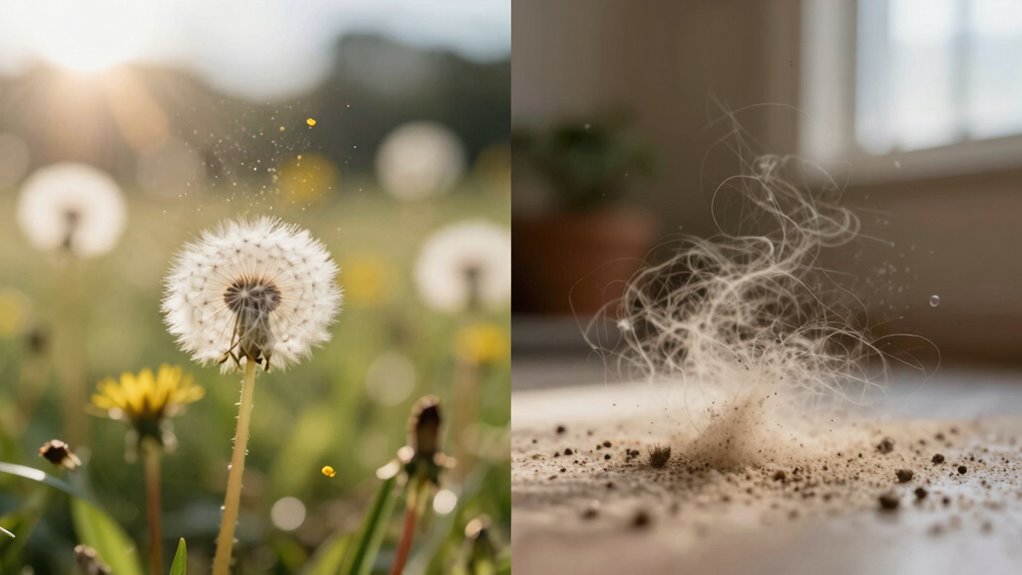

Dust comes from both outdoor air pollutants and indoor fibers. Outdoor sources include vehicle emissions, wildfires, and construction dust that can easily enter your space. Inside, dust consists of fibers from pet dander, mold spores, and particles from activities like cooking and cleaning. Curiously, sometimes indoor dust levels can surpass outdoor ones, especially during smoky conditions. To understand these dust sources better, you’ll discover more about their impacts on your health and home environment.
Key Takeaways
- Outdoor dust primarily originates from vehicle emissions, wildfires, and construction activities, contributing significantly to particulate matter in the air.
- Indoor dust is composed of biological materials, such as mold spores and pet dander, alongside particles from cooking and cleaning activities.
- Particle sizes differ, with outdoor sources often producing larger PM10 particles, while indoor dust mainly consists of ultra-fine particles like PM2.5.
- The infiltration of outdoor dust into indoor spaces can significantly impact indoor air quality, especially during wildfire events or high pollution days.
- Effective strategies to improve indoor air quality involve minimizing outdoor dust infiltration and managing indoor dust generation from various activities.

When you step inside your home, you might not realize just how much dust is swirling around you, both from the outdoors and within. Dust is a mix of particles that infiltrate your living space, with a significant portion coming from outside. Outdoor sources like vehicle emissions, wildfires, and even construction sites contribute to the particles known as PM2.5 and PM10, which can easily find their way indoors through open windows, doors, and tiny gaps in your building’s structure. Interestingly, the particles can also be influenced by high refresh rates that enhance visibility in certain conditions.
When you cook, burn candles, or even clean your home, you add to the indoor dust problem. Activities like these release various particles into the air, making your indoor environment a cocktail of allergens and pollutants. Biological sources such as mold spores, dust mites, and pet dander also play a significant role in your indoor air quality. Surprisingly, many of these allergens can come from your own skin or hair, mingling with the dust that settles around your home.
Outdoor air can be particularly problematic during certain events like wildfires, which can triple the indoor PM2.5 levels through infiltration. The smoke and fine particles that enter your home can exacerbate respiratory issues and allergies. In urban areas, the combination of vehicle exhaust and dust from paved roads makes the air even more polluted, leading to higher concentrations of dust infiltrating your home.
Interestingly, while outdoor PM2.5 often dominates, indoor sources can surpass outdoor levels, especially if you smoke or use certain cooking fuels. The indoor concentration of PM can be driven higher than recommended limits, particularly in homes that rely on biomass fuels for cooking. The pathways for outdoor PM infiltration are varied, including natural ventilation and mechanical systems, but once those particles enter, they can linger and accumulate.
In terms of particle size, most indoor dust is made up of ultra-fine particles, while outdoor dust includes larger particles from sources like agriculture and construction. You might not see it, but the dust swirling around you can have a complex makeup, influenced by both your indoor activities and the air quality outside. Understanding where dust comes from allows you to take steps to improve your indoor air quality. By minimizing outdoor infiltration and reducing indoor dust generation, you can create a healthier living environment for yourself and your family. Additionally, both indoor and outdoor dust are impacted by particulate matter (PM) levels, which can significantly affect respiratory health.
Frequently Asked Questions
How Do Indoor Dust Particles Affect Health Over Time?
Indoor dust particles can negatively impact your health over time. They contain allergens, bacteria, and harmful chemicals that may trigger respiratory issues, allergies, or exacerbate existing conditions. Prolonged exposure can lead to chronic illnesses, affecting your quality of life. You might experience symptoms like coughing, sneezing, or asthma attacks. Regular cleaning and proper ventilation can help reduce dust accumulation, ultimately protecting your health and well-being in your living space.
What Are Effective Ways to Reduce Indoor Dust Accumulation?
To reduce indoor dust accumulation, you should regularly vacuum with a HEPA filter, use damp cloths for dusting, and minimize clutter. Keeping your home well-ventilated helps too; open windows when weather permits. Consider using air purifiers to capture airborne particles. Wash bedding and rugs frequently, and control humidity levels to keep dust mites at bay. Regularly clean your HVAC system to prevent dust circulation and guarantee a healthier indoor environment.
Can Air Purifiers Significantly Lower Indoor PM2.5 Levels?
Air purifiers can markedly slash indoor PM2.5 levels. They swiftly sift through the air, capturing pesky pollutants and particulate matter. When you choose a quality purifier with a HEPA filter, you’ll notice cleaner air and reduced allergens. Just remember to keep those filters fresh and change them regularly. Pairing the purifier with proper ventilation and cleaning habits will boost your battle against dust, ensuring a healthier home for you and your family.
How Does Humidity Influence Indoor Dust Composition?
Humidity considerably influences indoor dust composition by encouraging the growth of dust mites and mold, which thrive in moist environments. When humidity levels rise, you’ll likely find increased allergens like pollen and pet dander in your dust. Higher humidity can also lead to more chemical emissions from building materials and household products. So, keeping your indoor humidity balanced helps reduce these contaminants and improves overall air quality in your home.
Are Certain Building Materials Worse for Indoor Air Quality?
Absolutely, some building materials are like dust magnets, making your indoor air quality suffer dramatically! For instance, certain paints, insulation, and pressed wood products release volatile organic compounds (VOCs) that can pollute your space. If you’re using cheap materials, you might be inviting harmful particles into your home. Opt for low-VOC or natural materials to keep your air fresh and your lungs happy! Don’t let poor choices trap you in a dust-filled nightmare!
Conclusion
As you look around your space, you might wonder: where’s all that dust coming from? With outdoor pollutants swirling in the air and indoor fibers shedding silently, the answer isn’t as straightforward as you think. Each tiny particle tells a story of its journey from outside to inside, intertwining and settling in your home. But what if you could uncover the hidden sources lurking in the shadows? The next time you dust, remember: there’s more to the story than meets the eye.