CADR, or Clean Air Delivery Rate, shows how quickly an air purifier can clean your air. It combines airflow and filter efficiency to measure how much clean air it produces per minute. Picking the right CADR means your purifier will work effectively in your room size without wasting energy or money. If you want to guarantee your space’s air quality needs are met, understanding CADR helps you choose the perfect fit. Keep going to learn how to find the right one for you.
Key Takeaways
- CADR measures how quickly an air purifier cleans the air, indicating its efficiency for specific pollutants like dust or smoke.
- Higher CADR means faster pollutant removal, but it must match your room size to avoid oversizing or undersizing.
- Match CADR ratings to your room’s size: lower for small rooms, higher for large spaces, to ensure effective air cleaning.
- Oversized units waste energy and can be noisy, while undersized units won’t effectively improve air quality.
- Select a CADR that aligns with your space and pollution concerns for optimal, cost-effective air purification.
What Does CADR Mean in Simple Terms

Ever wonder what CADR really means? CADR, which stands for Clean Air Delivery Rate, measures how effectively an air purifier can improve your air quality. Think of it as a way to see how much clean air your device produces per minute, helping you maintain healthier indoor air. When choosing a purifier, a higher CADR indicates better air quality maintenance, meaning it clears dust, pollen, and smoke faster. It also hints at purifier durability, as models with higher CADR often have stronger motors and filters that last longer under regular use. By understanding CADR, you guarantee your air purifier is powerful enough for your space without overloading it or risking early wear and tear. This knowledge helps you make smarter choices for cleaner, fresher air at home. Additionally, selecting a proper CADR rating ensures your air purifier meets your specific room size and air quality needs effectively. Room size compatibility is crucial for maximizing your purifier’s efficiency and lifespan. Moreover, choosing the right CADR can prevent over-sizing or undersizing your air purifier, which can lead to inefficiency or unnecessary expenses. Recognizing how CADR relates to air purification efficiency can help you select the most suitable model for your needs.
How CADR Measures Air Purifier Effectiveness
CADR measures how well an air purifier can clean the air by considering its airflow rate, which shows how much air it processes each minute. It also accounts for particle removal efficiency, indicating how effectively it filters out pollutants. Additionally, matching CADR to your room size guarantees you select a purifier that works best for your space. Understanding air filtration technologies can help you choose a device that aligns with your specific needs. For example, knowing how filter types impact pollutant removal can guide your purchase. For those investing in air purifiers, understanding Gold IRA Markets can help you make informed decisions about alternative investment options for future financial stability. Knowing how air quality standards are established can further assist you in choosing the right device for your needs. Being aware of Free Floating pollutants can help you select a purifier with features tailored to your specific environment.
Airflow Rate Significance
Have you ever wondered how effectively an air purifier can clean the air in your space? Airflow rate plays a vital role in this, as it determines how much air passes through the purifier each minute. A higher airflow rate usually means better air cleaning, but only if the device maintains good particle removal efficiency. Matching the airflow rate to your room size ensures the purifier meets air quality standards without overworking your HVAC system. Proper airflow also promotes better circulation, preventing stagnation zones. If airflow is too low, the purifier won’t effectively filter the air; too high, and it might cause noise or energy waste. Additionally, air circulation helps distribute clean air evenly throughout the room, enhancing overall air quality. So, understanding airflow rate helps you select an air purifier that works efficiently within your home’s HVAC integration, guaranteeing healthier, cleaner air. Recognizing the airflow rate’s significance can help you avoid oversizing or undersizing your device for optimal performance.
Particle Removal Efficiency
While a high airflow rate can move more air through your purifier, it doesn’t guarantee cleaner air if the device can’t effectively remove particles. Particle removal efficiency measures how well your air purifier captures or destroys harmful particles like dust, pollen, or smoke. A higher efficiency means better improvement in air quality, guaranteeing your indoor environment stays healthier. This directly impacts filter lifespan because more effective filters don’t need frequent replacement. If your purifier struggles to remove particles, the filters may clog faster or wear out sooner, reducing overall effectiveness. Look for CADR ratings that reflect high particle removal efficiency to guarantee your device performs well and maintains optimal air quality over time. Additionally, understanding the Particle removal efficiency can help you choose the right purifier for specific contaminants, ensuring your space remains safe and healthy. Recognizing the filter performance can also aid in selecting models that provide consistent and reliable air purification results. Moreover, considering air flow patterns can enhance the overall effectiveness of your air purifier by ensuring even distribution of clean air throughout your space. A thorough understanding of air purifier features can further optimize your selection process and improve your indoor air quality. Knowing how air quality standards impact product ratings can also help in making informed purchasing decisions.
Room Size Compatibility
Understanding how well an air purifier suits your room size is essential for effective air cleaning. If the purifier’s CADR isn’t matched to your space, you risk failing to meet air quality standards or creating unnecessary noise levels. Choosing the right size ensures the air is purified efficiently, making your environment healthier and more comfortable. When selecting an air purifier, consider these emotional factors:
- Feel confident knowing your air quality improves as promised
- Enjoy peaceful, quiet nights without disruptive noise
- Experience the relief of cleaner, fresher air in your daily life
- Ensuring your purifier’s Room Size Compatibility maximizes its performance and longevity.
Understanding CADR ratings helps you select an appropriate purifier that delivers optimal results for your space. Getting the right fit means your purifier will perform at its best, providing peace of mind and a healthier home environment. Don’t settle for less—make sure your purifier matches your room size for the best results.
Why CADR Is Important When Choosing a Purifier
When choosing a purifier, knowing its Clean Air Delivery Rate (CADR) is essential because it directly indicates how effectively the device can purify the air in your space. A higher CADR means faster and more efficient removal of pollutants like dust, smoke, and pollen. This measurement helps you match the purifier to your room size for optimal performance. This helps you maintain better air quality, especially if you have allergies or respiratory issues. Additionally, a good CADR helps you gauge how often you’ll need to replace filters—devices with appropriate CADR typically require less frequent filter changes, saving you money and effort. Many purifiers now include air quality sensors that monitor real-time air conditions, ensuring your purifier operates at the right level. Focusing on CADR ensures your purifier is suitable for your room size, providing healthier, cleaner air. Understanding brewing methods can also influence your awareness of air quality factors, as certain environments may benefit from tailored air purification solutions. Considering air circulation can further enhance your overall indoor air quality, making the purifier more effective. An understanding of air quality sensors can help you choose a model that adapts to changing conditions, optimizing purification. Additionally, knowing how CADR is measured relates to real-world performance can help you make more informed purchasing decisions. Recognizing the types of pollutants that a purifier can target ensures it addresses your specific air quality concerns.
How to Read and Compare CADR Numbers
Reading and comparing CADR numbers helps you determine which air purifier best fits your needs. Higher CADR ratings indicate faster removal of smoke, dust, and pollen, but don’t forget to contemplate other factors. Look at noise levels to guarantee quiet operation during sleep or work. Check the filter replacement schedule to avoid surprises and maintain ideal performance. When comparing units, focus on the CADR for the specific pollutants you want to target. Remember, a higher CADR isn’t always better if it results in increased noise or frequent filter changes that become costly. Balance your priorities by evaluating these numbers carefully, and you’ll find an air purifier that cleans effectively without disrupting your daily life. Choose wisely, and breathe easier every day. Additionally, understanding the filtration efficiency of each unit can help you select a device that not only cleans quickly but also maintains consistent removal of harmful particles over time.
Finding the Right CADR for Your Space

How do you choose the right CADR for your space? Start by evaluating your room size and air quality needs. Use air quality sensors to monitor pollutants and get real-time feedback on your indoor environment. These sensors help you determine if your current setup is effective or if you need a higher CADR. Keep noise levels in mind, especially if you want a quiet environment for sleeping or working. A higher CADR often means a louder unit, so balance your air purification needs with comfort. For smaller spaces, a lower CADR may suffice, while larger rooms require higher ratings. By combining data from air quality sensors and considering noise levels, you can select an air purifier that efficiently cleans your air without unnecessary oversizing.
The Difference Between Small and Large Room CADR
Choosing the right CADR depends on your room size, as smaller spaces need lower ratings for effective purification. If you select an air purifier with a too-high CADR for a small room, it can be overkill and less efficient. Conversely, a larger room requires a higher CADR to guarantee the air stays clean and fresh.
Room Size Compatibility
Understanding the difference between small and large room CADR is essential to selecting the right air purifier for your space. Your choice impacts not only air quality but also compliance with ventilation standards and air quality metrics. Using an undersized unit can leave you feeling frustrated and helpless against pollutants, while oversizing might waste energy and money. To find the perfect fit, consider your room’s size, typical pollutant levels, and airflow needs. Properly matching CADR guarantees effective purification without overburdening your system. Remember, a well-chosen air purifier creates a healthier environment and peace of mind.
- Feel confident knowing your air purifier is tailored to your space’s needs
- Experience cleaner air that genuinely improves your health
- Avoid the frustration of ineffective or inefficient air cleaning
Air Purifier Effectiveness
Have you ever wondered why some air purifiers seem more effective in certain rooms than others? The key is understanding the difference between small and large room CADR. A higher CADR indicates faster air cleaning, but many air purifier myths suggest bigger is always better. In reality, CADR limitations mean choosing a device suited for your room size is vital. An undersized purifier won’t clean effectively, while an oversized one may waste energy. Use this table to compare:
| Room Size | Recommended CADR |
|---|---|
| Small (up to 300 sq ft) | 100-150 |
| Large (over 300 sq ft) | 200+ |
Matching CADR to room size ensures ideal air purifier effectiveness, avoiding misconceptions and maximizing air quality.
Tips for Picking an Air Purifier That Fits Your Needs
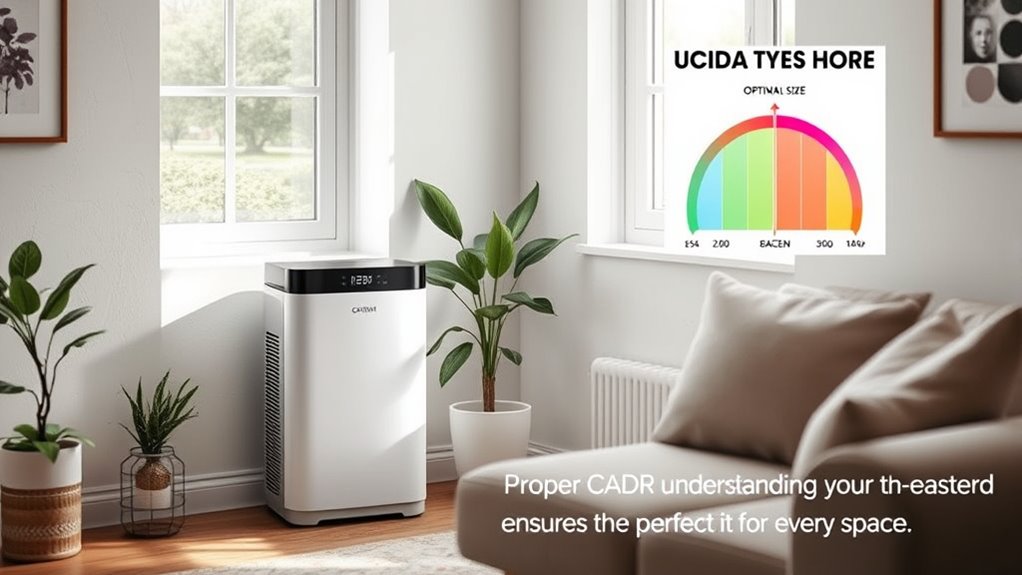
Selecting the right air purifier starts with evaluating your specific needs and the environment where you’ll use it. Consider factors like room size, common pollutants, and whether features like air quality sensors are essential for real-time monitoring. Look for models that offer easy filter replacement to avoid frustration and ensure consistent performance.
To help you choose, keep these tips in mind:
- Prioritize air purifiers with smart air quality sensors that automatically adjust to your home’s conditions, giving you peace of mind.
- Choose a unit with straightforward filter replacement, saving you time and effort.
- Match the CADR rating to your room size, ensuring effective purification without oversizing or undersizing.
These steps help you find a purifier that genuinely fits your needs and keeps your air clean.
Frequently Asked Questions
Can CADR Be Affected by Air Purifier Placement?
Yes, CADR can be influenced by your air purifier placement. If you don’t optimize airflow and consider room size compatibility, the CADR rating might not reflect real-world performance. Place your purifier away from walls and obstructions to guarantee proper airflow, which helps it work efficiently. This way, you maximize filtration, maintain accurate CADR performance, and ensure your room gets the clean air it needs.
How Often Should I Check CADR Ratings?
You should check your CADR ratings at least once a year—unless you enjoy breathing questionable indoor air quality. Regular air purifier maintenance, including filter changes and performance checks, guarantees peak CADR. Don’t assume your purifier is still working perfectly; dust and debris can reduce efficiency. Staying vigilant guarantees your space stays fresh and healthy. So, mark that annual check on your calendar, and breathe easier knowing your air remains first-rate.
Do All Air Purifiers List Their CADR?
Not all air purifiers list their CADR ratings. Many do, especially those with certifications like AHAM, which follow strict CADR testing standards. When shopping, check the product details for CADR ratings to make certain you’re getting an effective purifier. Certifications help verify that the unit has undergone reliable CADR testing standards, giving you confidence in its ability to clean your indoor air efficiently.
Is a Higher CADR Always Better?
Think a higher CADR is always better? Not necessarily. While it boosts airflow dynamics and cleans air faster, it often cranks up noise levels, turning your peaceful space into a jet engine zone. You want a balance—enough airflow to purify efficiently without drowning out your favorite tunes. So, choose wisely: higher isn’t always better if it compromises comfort and quiet. Find that sweet spot for healthy, happy air.
How Does CADR Relate to Filter Replacement Frequency?
A higher CADR can improve airflow efficiency, helping your air purifier clean air faster, but it doesn’t directly determine filter replacement frequency. When CADR is high, your filter may need replacing more often because it captures more particles, reducing its lifespan. To balance performance and filter longevity, monitor your filter regularly and follow the manufacturer’s recommendations. This way, you maintain ideal airflow and extend your filter’s effective lifespan.
Conclusion
Now that you understand CADR, choosing the right air purifier is like wielding a sword in a medieval battle—precision matters. Think of CADR as your trusty compass guiding you through the fog, ensuring you don’t overshoot or undershoot your needs. Just like a ship’s captain relies on a good map, you can confidently select a purifier that fits your space perfectly. With this knowledge, your air will be as fresh as a spring morning, ready to face any challenge.