To optimize your sleep with an air purifier, place it 1 to 3 meters from your bed, ideally on a nightstand about 0.5 to 1 meter high. Make certain the clean air flows toward your sleeping area without hitting your face. Keep it at least 15 to 30 cm away from walls and furniture for best airflow. Running it on a lower setting at night can also help reduce noise. Want to know more tips for perfecting your air setup?
Key Takeaways
- Position the air purifier 1 to 3 meters from the bed, ideally near the head for optimal air quality.
- Ensure the purifier is 0.5 to 1 meter above mattress level to effectively capture air around the sleeping area.
- Maintain at least 15 to 30 cm clearance from walls and large furniture to maximize airflow and filtration efficiency.
- Select a purifier with an appropriate CADR rating for your bedroom size to achieve at least 4 to 5 air changes per hour.
- Operate the purifier on lower fan settings or sleep mode at night to minimize noise and support restful sleep.

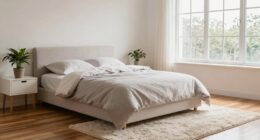
Have you ever wondered how the air quality in your bedroom affects your sleep? It turns out that the placement of your air purifier can notably enhance your slumber. To get the best results, position your purifier within 1 to 3 meters of your bed, ideally near your head. This positioning ensures the cleaned air travels a shorter distance, creating a more effective breathing zone. Placing the unit on a nightstand or small table about 0.5 to 1 meter above the mattress level can help capture air moving around you more efficiently.
Position your air purifier 1 to 3 meters from your bed for optimal sleep quality and cleaner air.
Avoid directing high-speed airflow straight at your face, as this can lead to sleep disruptions and morning headaches. Instead, orient the purifier so that the cleaned air flows toward the sleeping area without hitting you directly. For larger bedrooms, place the unit slightly off-center toward the bed rather than hiding it in a corner. This way, you’ll improve the delivery of clean air right where you need it most. Make sure to maintain at least 15 to 30 cm of clearance from walls and large furniture; this prevents obstructions that could reduce airflow. Keeping the unit slightly away from walls and furniture is essential for maintaining optimal airflow and maximizing its efficiency. Additionally, ensuring proper airflow patterns can greatly enhance the overall effectiveness of your air purification system.
It’s also essential to match the air purifier’s capacity, measured by Clean Air Delivery Rate (CADR), to your bedroom’s size. Underpowered units won’t achieve enough air changes per hour, which can compromise your sleep quality. Check the manufacturer’s recommendations for room sizes and consider investing in multiple smaller purifiers for larger spaces or apartments. Aim for at least 4 to 5 air changes per hour during sleep, especially if you suffer from allergies or asthma.
In terms of airflow, keep the intake and outlet faces unobstructed. Avoid placing your purifier behind curtains or flush against walls, as this reduces its performance. The orientation should promote clean air delivery toward your sleeping zone while maintaining comfort. Also, account for existing air currents from ceiling fans or HVAC systems, positioning the purifier where it complements these movements.
Lastly, consider noise levels. Running your air purifier on lower fan settings during the night minimizes disturbances while still providing continuous filtration. Many models feature a sleep mode designed for quiet operation. Choose a unit that produces minimal noise, allowing you to enjoy a restful night’s sleep without interruptions. With the right setup, you’ll breathe easier and sleep better.
Frequently Asked Questions
Can I Use an Air Purifier in Other Rooms Besides the Bedroom?
Yes, you can definitely use an air purifier in other rooms besides the bedroom! Placing it in your living room, kitchen, or home office can help reduce allergens and improve air quality throughout your space. Just guarantee it’s positioned away from walls and obstacles for ideal airflow. With cleaner air, you’ll breathe easier and enjoy a more comfortable environment, whether you’re working, relaxing, or entertaining guests. Don’t hesitate to move it around as needed!
How Often Should I Change the Air Purifier Filters?
You should change your air purifier filters every 6 to 12 months, depending on usage and air quality. If you notice reduced airflow or increased noise, it’s time for a change. Regularly check the filter indicator if your purifier has one. If you have pets or allergies, consider changing filters more frequently to maintain peak performance. Keeping your filters fresh helps guarantee you breathe clean air and enjoy the best benefits your purifier offers.
Will an Air Purifier Eliminate Odors From Pets?
Like a gust of fresh air, an air purifier can markedly reduce pet odors in your home. It filters out dander, hair, and the unpleasant smells that come with having pets. While it won’t eliminate every odor completely, it does a fantastic job of minimizing them, leaving your space feeling cleaner and more inviting. You’ll notice a difference, and your guests will too. So go ahead, breathe easy and enjoy your furry friends!
Can I Sleep With the Air Purifier on All Night?
Yes, you can sleep with the air purifier on all night. In fact, it’s beneficial for your sleep quality. The purifier continuously removes allergens and pollutants, creating a healthier breathing environment. You’ll notice improved air quality, which can lead to deeper sleep and reduced nighttime disturbances. Many models operate quietly, ensuring you won’t be disturbed. Just make sure it’s placed correctly for peak airflow, and you’ll enjoy restful nights.
Are There Air Purifiers Specifically Designed for Larger Bedrooms?
Yes, there are air purifiers designed specifically for larger bedrooms. You’ll want to look for models with a higher Clean Air Delivery Rate (CADR) and larger coverage areas to effectively purify the air in your space. These purifiers often have advanced filtration systems to tackle pollutants and allergens efficiently. Make sure to check the specifications to guarantee peak performance in your larger bedroom, so you can enjoy cleaner air and better sleep.
Conclusion
In summary, strategically setting your air purifier in the sweet spot of your sanctuary can notably enhance your sleep quality. Position it away from walls and obstructions, ensuring a steady stream of soothing, clean air circulates throughout your bedroom. Embrace the benefits of better breathing and blissful slumber, and you’ll wake up rejuvenated and ready to seize the day. Prioritize your peaceful retreat, and let fresh, filtered air work wonders for your well-being.