
Implementing a microfiber color-coding system is a simple yet effective way to prevent cross-contamination in healthcare and hospitality settings. By assigning specific colors to different tasks, you create clear visual cues that improve hygiene compliance and reduce the spread of germs. Consistent use, staff training, and proper protocols are key to maintaining system effectiveness. Keep exploring to learn how to implement and sustain these practices successfully.

Get cleaning gear delivered free with Prime
- Fast, free delivery on millions of items
- Prime Video, Amazon Music and more included
- Member-only deals all year
Key Takeaways
- Assign specific microfiber colors to different areas or tasks to prevent cross-contamination.
- Use consistent color schemes and clear signage to reinforce proper cleaning protocols.
- Train staff regularly on color-coding rules and the importance of adhering to assigned colors.
- Incorporate durable, bacteria-resistant microfiber materials to maintain hygiene standards over time.
- Conduct routine audits and feedback sessions to ensure compliance and address any deviations promptly.
How Microfiber Color-Coding Enhances Hygiene

Have you ever wondered how cleaning routines can prevent the spread of germs more effectively? Microfiber color-coding helps by reducing dirt tracking, which happens when a cloth picks up germs from one area and spreads them elsewhere. When you assign specific colors to different zones, you eliminate color confusion, so you won’t accidentally use the same cloth in a bathroom and kitchen. This targeted approach keeps germs contained, preventing cross-contamination. By following a simple color scheme, you make sure each microfiber cloth stays dedicated to its designated area, boosting hygiene. Less dirt tracking and clear color distinctions work together to create a safer, more efficient cleaning process, giving you peace of mind that germs aren’t hitching a ride between spaces. Incorporating color-coding systems further enhances your cleaning efficiency by providing a clear visual cue to maintain proper sanitation practices. Additionally, using well-designed organization strategies can improve overall cleaning effectiveness and reduce the risk of contamination. Understanding the importance of proper sanitation techniques is essential for environments where hygiene protocols are critical for health and safety. Implementing these practices can also be supported by modern smart home technologies that automate reminders and monitor cleaning routines to ensure consistent hygiene standards.
The Key Principles Behind Color-Coded Systems
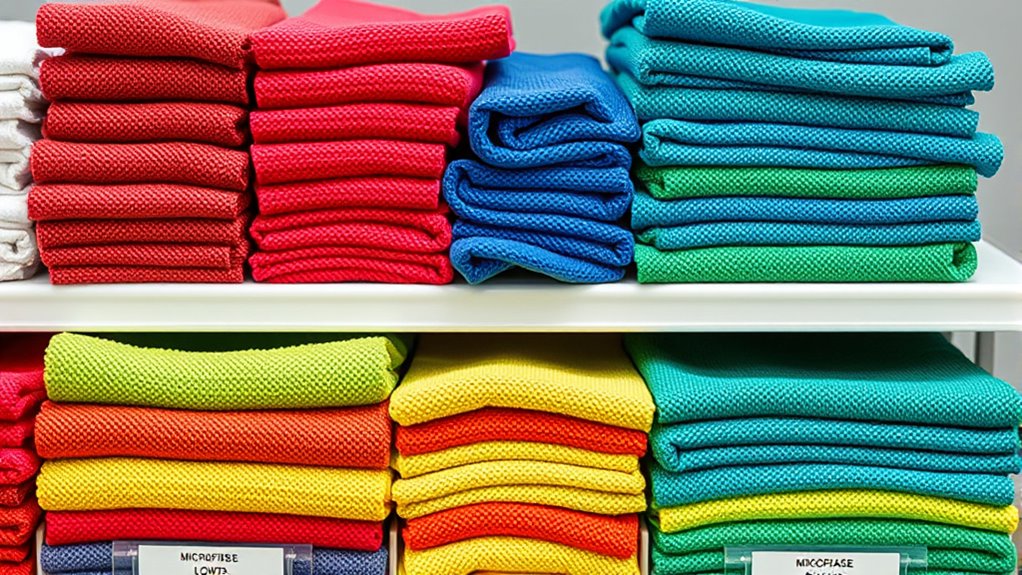
Implementing a color-coded microfiber system relies on key principles that guarantee its effectiveness. The color coding rationale is based on creating clear visual cues that prevent cross-contamination by differentiating cleaning tools for specific areas. Consistency is essential; using the same color for the same task every time helps everyone recognize and adhere to the system. This uniformity minimizes confusion and errors, ensuring that microfiber cloths are used correctly across all staff members. A well-designed system also incorporates logical color assignments aligned with cleaning priorities, making it easier to remember and follow. Additionally, understanding UST projector rankings and ALR screen pairing guides can inspire innovative approaches to environmental cleanliness and organization. Recognizing the importance of standardized procedures contributes to the system’s reliability and helps maintain high hygiene standards. Furthermore, establishing clear documentation of procedures ensures all team members are aligned and can reference the system easily. By maintaining system consistency and understanding the underlying color coding rationale, you ensure the system works reliably, keeping environments safer and more hygienic. Moreover, implementing training protocols ensures that all team members are knowledgeable about the color-coding system and its significance, which is crucial for long-term success. Regular audits and feedback help identify areas for improvement and reinforce proper usage.
Assigning Colors to Specific Cleaning Tasks
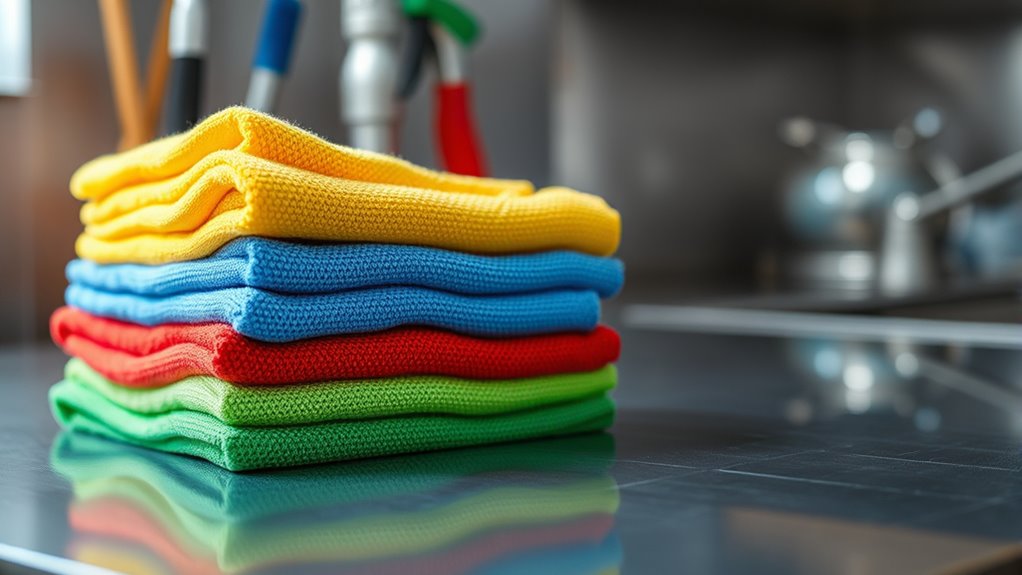
Assigning specific colors to different cleaning tasks is crucial for maintaining an effective microfiber color-coding system. Proper color assignment helps you differentiate between cleaning areas and reduces the risk of cross-contamination. For example, designate red for bathrooms, blue for general surfaces, and green for food preparation areas. By clearly defining each color’s purpose, you prevent confusion and ensure staff follow consistent protocols. This straightforward approach enhances contamination prevention by restricting the movement of cleaning tools between areas. When everyone understands the specific task linked to each color, it becomes easier to maintain hygiene standards and avoid accidental transfer of germs. Consistent color assignment is a simple yet powerful step toward a safer, more organized cleaning process. Additionally, understanding the evolving language of the internet can help staff stay informed about new hygiene practices and terminologies, including microfiber technology and its role in effective sanitation. Moreover, implementing standardized color-coding helps reinforce training and improves overall compliance with hygiene protocols, aligning with best practices in infection control. Incorporating water-based cleaning protocols can further enhance effectiveness by emphasizing the importance of water-efficient and environmentally friendly practices.
Training Staff to Follow Color-Coding Protocols
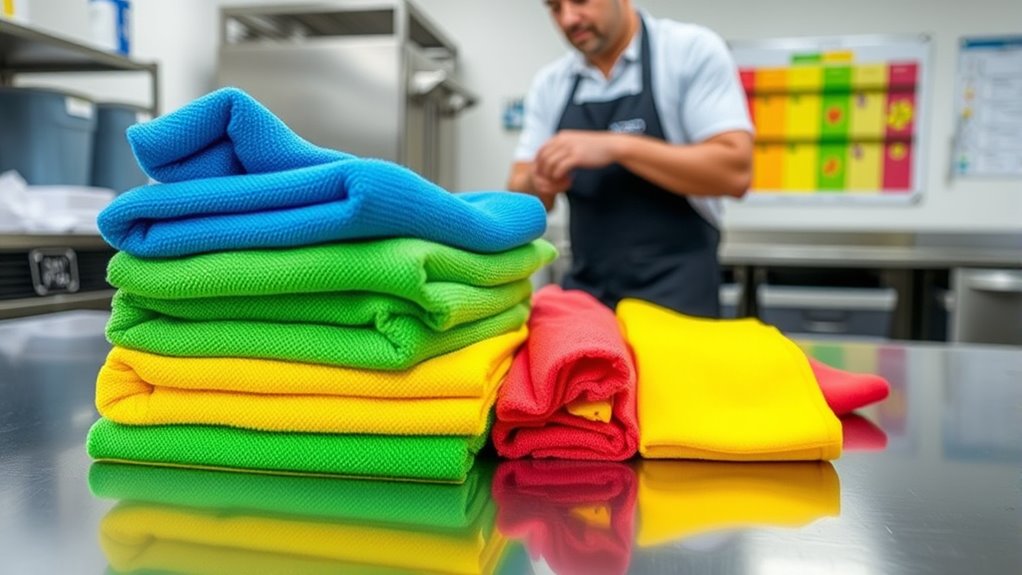
To guarantee the microfiber color-coding system works effectively, you need to train your staff thoroughly on the protocols. Your training should emphasize visual reinforcement to make color assignments memorable. Use these strategies to inspire confidence and accountability:
- Demonstrate each color’s purpose with clear visual cues.
- Reinforce protocols regularly through quick refresher sessions.
- Encourage staff to ask questions and clarify doubts immediately.
- Promote ongoing education to keep everyone updated on best practices.
- Incorporate training techniques to enhance learning retention and ensure consistency across staff. Additionally, emphasizing the importance of sustainable practices can help staff understand the long-term benefits of proper adherence to protocols. Recognizing infection prevention standards can also be integrated into training to ensure all staff are aware of safety guidelines and proper hygiene procedures.
Common Challenges and How to Overcome Them
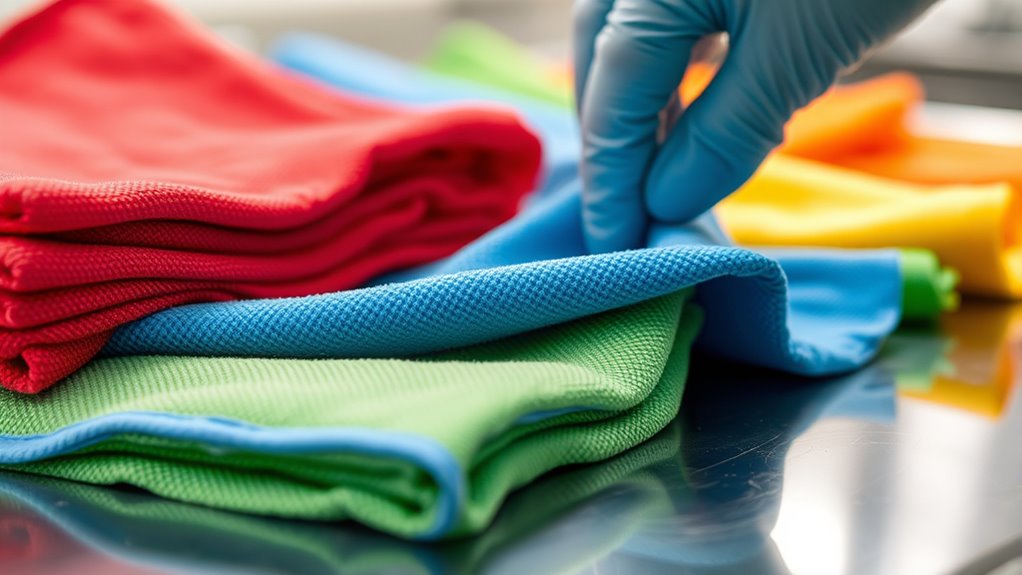
Even with thorough training, staff may encounter common challenges that hinder the effectiveness of the microfiber color-coding system. One major issue is color coding inconsistencies, which can occur if staff misunderstand or forget the assigned color protocols. This often results in cross-contamination risks and reduces system reliability. To overcome this, reinforce clear, visual cues and regularly review protocols with your team. Ensuring staff compliance is also essential; some employees might revert to old habits or ignore color rules under pressure. Addressing this by conducting routine audits, providing ongoing education, and fostering accountability is crucial. When staff understand the importance of consistent adherence and recognize the system’s benefits, compliance improves, minimizing errors and strengthening the overall effectiveness of your microfiber color-coding approach. Additionally, understanding the science behind device safety and proper use can help staff appreciate the importance of following protocols precisely. Regular training sessions can also help reinforce protocol adherence and prevent lapses in compliance, especially when staff are aware of cross-contamination risks. Incorporating visual reminders, such as charts or color-coded signage, can further support consistent adherence and reduce mistakes. Furthermore, emphasizing the role of vetted information can help ensure that staff stay updated with best practices and current standards.
Real-World Applications in Healthcare and Hospitality

Microfiber color-coding systems are widely applied in healthcare and hospitality settings to enhance cleanliness and prevent cross-contamination. By using innovative materials and effective color management, you can guarantee hygiene standards are consistently met. Imagine the impact of:
Implement microfiber color-coding to ensure hygiene, prevent cross-contamination, and promote safety across healthcare and hospitality environments.
- Protecting patients and guests from harmful pathogens through precise color assignments.
- Streamlining staff routines, reducing confusion, and increasing efficiency.
- Minimizing the risk of costly infections and reputational damage.
- Feeling confident that your cleaning protocols meet industry regulations and safety standards.
These systems enable you to easily identify and assign specific colors for different areas or tasks, leveraging innovative materials that resist bacteria and wear. Proper color management creates a safer environment, giving everyone peace of mind.
Tips for Implementing an Effective Color-Coding System

Implementing an effective color-coding system begins with careful planning and clear communication. First, choose a consistent color scheme that everyone understands, and document it thoroughly. Regular color coding maintenance is essential to guarantee labels and markers remain visible and accurate. Train staff on the system’s importance and proper usage, emphasizing how it prevents cross-contamination. Incorporate sustainability benefits by selecting reusable or eco-friendly microfiber materials that support your environmental goals. Establish protocols for routine checks and updates to keep the system effective over time. Encourage feedback from staff to identify challenges early and make adjustments. Clear signage and ongoing training are key to maintaining compliance. With these tips, your color-coding system will be reliable, sustainable, and easy to sustain.
Frequently Asked Questions
How Often Should Microfiber Color Codes Be Reviewed or Updated?
You should review the microfiber color codes at least every six months to guarantee they remain effective. Regular review frequency helps identify any outdated or ineffective codes. Update protocols should be followed immediately if there are changes in cleaning procedures or new contamination risks arise. Staying proactive with review frequency and update protocols keeps your system efficient, reduces cross-contamination, and maintains a safe environment for everyone involved.
Are There Industry Standards for Microfiber Color-Coding Systems?
Yes, there are industry standards for microfiber color-coding systems to guarantee industry compliance. You should follow specific color coding guidelines established by organizations like the CDC or OSHA, which help prevent cross-contamination. These standards recommend assigning distinct colors for different areas or tasks, and you must regularly review and update your color-coding system to stay compliant and maintain effective infection control practices.
Can Color-Coding Reduce Overall Cleaning Time?
Sure, color coding can dramatically cut your cleaning time—if you enjoy playing a game of “Where’s the Right Cloth?” faster. It boosts color coding efficiency by helping you quickly identify the right microfiber for each task, reducing guesswork and cross-contamination. With a clear system, you spend less time searching and more time actually cleaning, making your workflow smoother and more productive overall.
What Materials Are Best Suited for Microfiber Color-Coded Tools?
You should choose microfiber tools made from durable materials that withstand frequent use and washing. Look for fibers with high tensile strength and resistance to wear, guaranteeing longevity. Additionally, verify the materials are compatible with cleaning agents and methods used in your facility. This combination of material durability and cleaning compatibility helps maintain effective color-coding, prevents cross-contamination, and extends the lifespan of your microfiber tools.
How Do Color-Coding Systems Integrate With Existing Cleaning Protocols?
Think of color-coding as a compass guiding your team through a clean environment. You guarantee color-coding consistency by clearly defining roles and protocols, seamlessly integrating them into your existing cleaning routines. Staff training becomes the map that helps everyone understand and follow these signals. By doing so, you prevent cross-contamination, making your cleaning process more efficient and reliable, much like a well-orchestrated symphony.
Conclusion
By embracing microfiber color-coding, you protect your environment and guarantee hygiene. Consistent training and clear protocols are key to success. Remember, “A chain is only as strong as its weakest link,” so stay vigilant and committed. When you implement these simple rules, you minimize cross-contamination and foster a safer space. Keep it simple, stay disciplined, and the benefits will follow—cleanliness truly begins with smart, color-coded choices.
Fall Picks
fall essentials
As an affiliate, we earn on qualifying purchases.