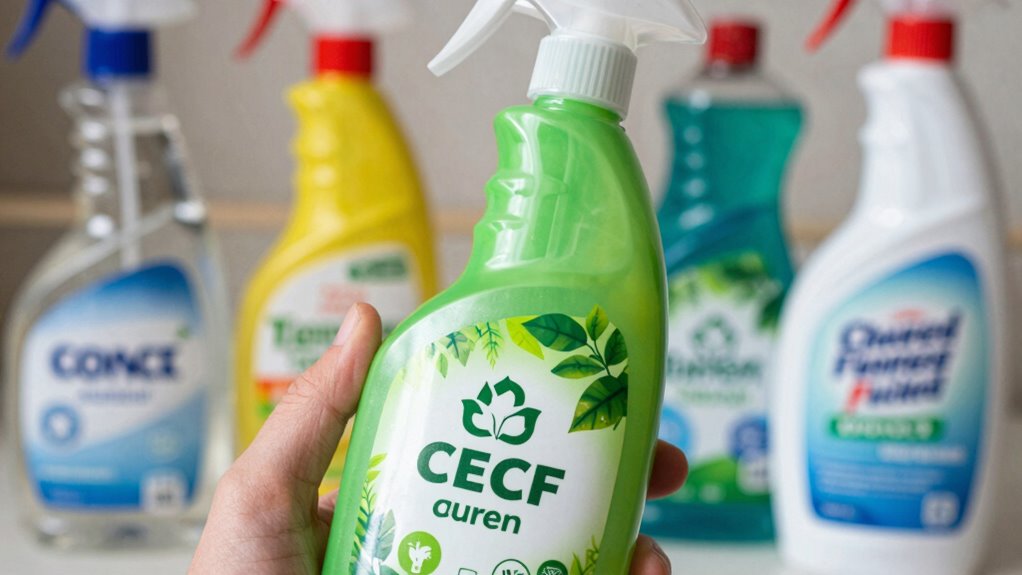

To spot greenwashing in cleaning labels, look for recognized third-party ecolabels like EPA Safer Choice or Green Seal. Be cautious of vague terms like “eco” or “natural” without certification. Check for complete ingredient lists and performance testing evidence. Watch out for misleading claims highlighting single traits while ignoring harmful components. Make sure the label has independent oversight to verify claims. Want to learn how to make informed choices about eco-friendly products? There’s more to uncover.
Key Takeaways
- Look for recognized ecolabels like Green Seal or EPA Safer Choice that indicate rigorous safety and environmental testing.
- Be cautious of vague claims such as “eco” or “natural” without certification, as they may indicate greenwashing.
- Ensure products disclose complete ingredient lists; partial disclosures can signal misleading marketing practices.
- Verify that ecolabels are managed by independent organizations to confirm their legitimacy and prevent greenwashing.
- Watch out for exaggerated claims that highlight one positive trait while ignoring harmful ingredients, which can mislead consumers.
Have you ever wondered how to tell if a cleaning product is truly eco-friendly? With the prevalence of greenwashing, it’s vital to learn how to identify genuine eco-friendly labels. A staggering 95% of products marketed as “green” are guilty of some form of greenwashing, making it a challenge for consumers like you to sift through misleading claims. To navigate this minefield effectively, you need to familiarize yourself with recognized third-party ecolabels that can help you make informed choices.
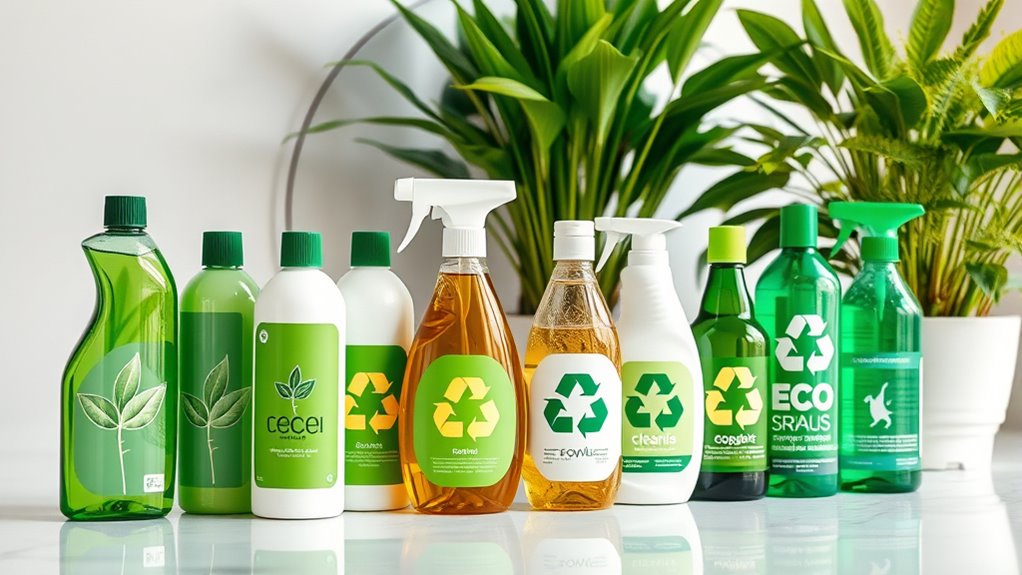
Look out for labels such as Green Seal, EPA Safer Choice, ECOLOGO, EU Ecolabel, and Cradle to Cradle Certified™. These labels don’t just decorate products; they signify that the product has undergone rigorous testing for ingredient safety, performance, and environmental impact. For instance, the EPA Safer Choice label requires a detailed review of every ingredient, excluding those deemed hazardous. This level of transparency is key when you’re researching cleaning products. Additionally, many of these certifications are recognized by reputable bodies that ensure compliance with environmental standards. These organizations often follow strict guidelines and protocols to maintain their credibility.
Look for trusted ecolabels like Green Seal and EPA Safer Choice, ensuring rigorous testing for safety and environmental impact.
When examining a product, check for vague claims. If you see terms like “eco,” “green,” or “natural” without an accompanying certifier, that’s a red flag. Also, steer clear of decorative seals that lack independent verification. These proprietary logos often mislead consumers. A legitimate ecolabel should link to an established, independent standard, so verifying the certifier’s name is a smart move.
Ingredient disclosure is another essential factor. If a product only lists some ingredients or omits them entirely, it raises suspicion. Certified products, especially those with the Safer Choice label, should provide thorough ingredient lists. Furthermore, check if the product has undergone performance testing. A credible label will require documented efficacy to ensure it meets cleaning claims.
It’s also vital to look for third-party oversight. Genuine ecolabels are administered by independent organizations with transparent criteria and review processes. When you encounter a label, search for its certifier’s database online to confirm its legitimacy. This step ensures you’re not falling victim to greenwashing tactics.
Finally, be cautious of irrelevant claims, like highlighting a single benign trait while ignoring toxic ingredients. A product may promote itself as “biodegradable” but still contain harmful substances. By being vigilant and following these guidelines, you can spot greenwashing fast and choose truly eco-friendly cleaning products, contributing positively to the environment while keeping your home safe.
Frequently Asked Questions
What Are the Most Common Greenwashing Tactics Used by Companies?
Companies often use tactics like vague language, misleading labels, and exaggerated claims to promote their products as eco-friendly. You might see terms like “natural” or “green” without any real proof. They may highlight one small environmentally friendly aspect while ignoring harmful effects entirely. Look out for unverified certifications or absence of concrete evidence supporting their claims. These tactics aim to create a false image of sustainability, so stay skeptical and do your research.
How Can Consumers Verify Eco-Friendly Claims on Cleaning Products?
To make certain you’re not getting duped by clever marketing, start by checking for third-party certifications, like EcoLogo or Green Seal. Look for clear, specific claims rather than vague terms like “natural” or “green.” Research the company’s practices and transparency about ingredients. Don’t hesitate to ask questions or seek out independent reviews. By doing your homework, you can confidently choose cleaning products that truly care for the environment without falling for fancy wording.
Are There Certifications That Guarantee a Product Is Genuinely Eco-Friendly?
Yes, there are certifications that can help you identify genuinely eco-friendly products. Look for labels from trusted organizations like EPA’s Safer Choice, Green Seal, or USDA Organic. These certifications guarantee products meet specific environmental standards. However, be cautious, as not all claims are verified. Always research and check for transparency in the product’s ingredients and manufacturing processes to make informed choices. It’s worth taking the extra time to make sure your purchases are truly sustainable.
What Should I Do if I Suspect Greenwashing in a Product?
If you suspect greenwashing, don’t just shrug it off—dive deep into the product’s claims! Check for certifications, scrutinize the ingredient list, and research the company’s practices. You deserve transparency, not vague promises that make your eco-heart race with doubt! Don’t hesitate to ask questions and share your findings. Together, you and other consumers can hold brands accountable and demand genuine eco-friendly options that truly respect the planet.
How Does Greenwashing Impact the Environment and Consumer Trust?
Greenwashing severely impacts the environment and erodes consumer trust. When companies exaggerate their eco-friendly claims, they mislead you into supporting harmful practices that continue damaging ecosystems. This deception frustrates your efforts to make sustainable choices, causing skepticism towards genuinely green products. As you become more doubtful, companies face less pressure to adopt real environmental practices, ultimately slowing progress towards a healthier planet. Trust and transparency are vital for fostering genuine eco-friendly initiatives.
Conclusion
As you navigate the aisles of cleaning products, keep your eyes peeled for those deceptive labels that promise a greener world but deliver mere illusions. Just like a wolf in sheep’s clothing, greenwashing hides behind catchy phrases and vibrant colors. Trust your instincts—read the fine print and research the brands. When you choose wisely, you’re not just cleaning your home; you’re nurturing the planet, transforming your space into a sanctuary of true sustainability.