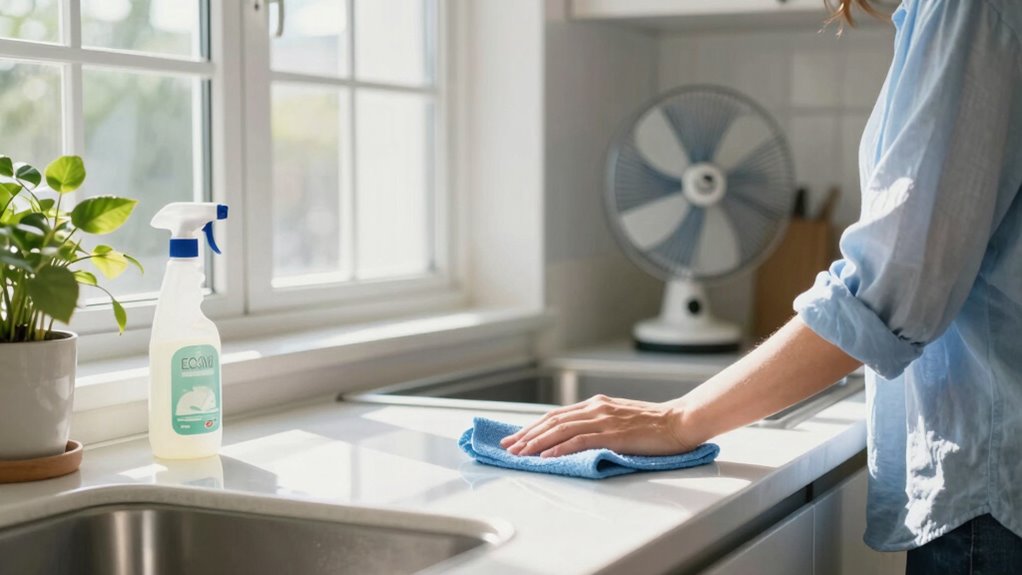

When cleaning with asthma, you should avoid aerosol sprays that can release airborne particles. Instead, pour liquids onto cloths, use pre-moistened wipes, or apply disinfectants to damp microfiber cloths. Make certain of good ventilation by opening windows and using exhaust fans. Stick to unscented cleaning products, wear a mask, and protect your eyes and skin. Regularly wash bedding and vacuum using a HEPA filter to reduce dust. There’s more helpful tips to guarantee your cleaning routine stays safe and effective.
Key Takeaways
- Use liquid cleaners applied to cloths or pre-moistened wipes to avoid aerosolized particles.
- Ensure proper ventilation by opening windows and using exhaust fans during cleaning.
- Opt for unscented and diluted cleaning products to minimize chemical fumes.
- Wear an N95 respirator mask and protective gear when handling strong cleaners.
- Implement damp dusting techniques and vacuum with a true HEPA filter to reduce allergens.
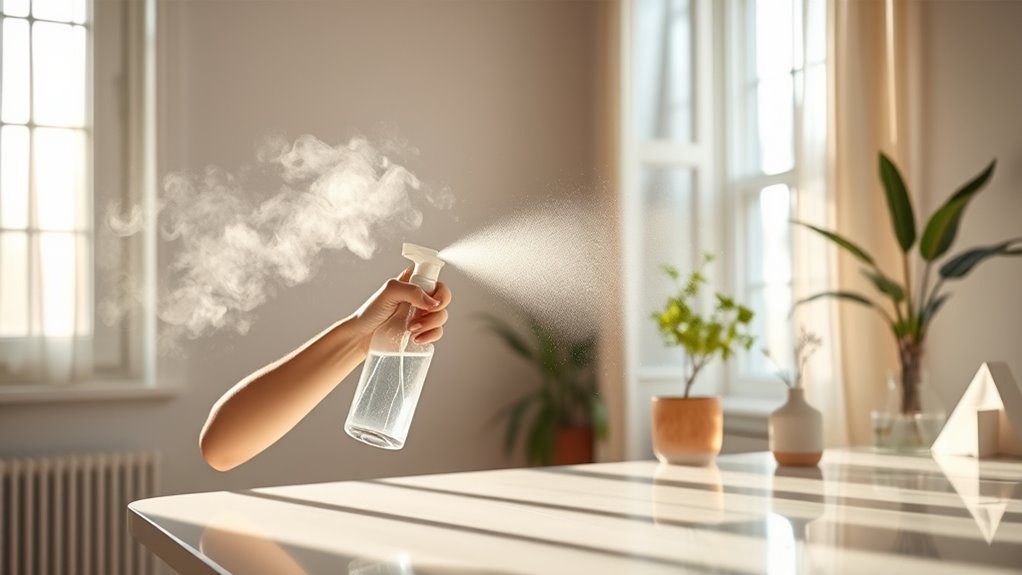
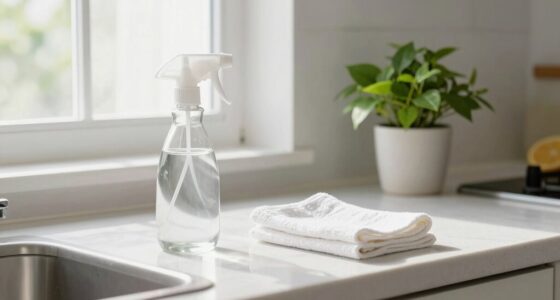
Next, steer clear of sprays and aerosols. Instead of aerosolized cleaners, pour liquids onto cloths or use pre-moistened wipes. This approach reduces airborne droplets that can aggravate your condition. For disinfecting, apply the solution to a damp microfiber cloth rather than spraying directly onto surfaces. If you need to use gel or paste cleaners for stubborn stains, these formats help minimize mist formation, keeping your environment safer. Additionally, high contrast ratios can enhance visibility when cleaning, making it easier to see any missed spots.
Ventilation is vital during cleaning. Open windows and doors to allow fresh air to flow in, and consider running exhaust fans to help dilute any fumes. If you’re in a small, poorly ventilated area, postpone cleaning if possible. After you’re done, give rooms adequate time to air out before returning, especially if someone with asthma is present. Maintaining your HVAC system and using air filters with true HEPA filtration can also help reduce airborne particles generated during cleaning. Cleaning products often contain scents, chemicals, and VOCs that can trigger asthma symptoms, so it’s essential to choose unscented options whenever possible.
Ensure proper ventilation while cleaning by opening windows, using exhaust fans, and allowing time to air out rooms afterward.
When it comes to protective methods, wear an appropriate respirator, like an N95 mask, while dusting or using stronger cleaners. Regular dust masks won’t protect you from chemical fumes. Gloves and eye protection are also important when handling concentrated cleaners. Avoid mixing products, as this can create toxic gases. Always dilute concentrated cleaners as per the label instructions to minimize exposure.
To further reduce dust and allergens, wash your bedding weekly in hot water and use dust-mite-proof covers on your pillows and mattresses. Vacuum at least once a week with a vacuum that has a true HEPA filter. If possible, have someone without asthma do the vacuuming. Use damp dusting techniques to keep particles from becoming airborne. By adopting these practices, you can create a cleaner, healthier home environment that considerably reduces your asthma triggers while still getting the cleaning done.
Frequently Asked Questions
What Symptoms Indicate I Should Stop Cleaning Immediately?
If you start feeling shortness of breath, wheezing, or tightness in your chest, you should stop cleaning immediately. Other symptoms like coughing, increased mucus production, or a sudden headache also signal it’s time to take a break. Don’t ignore any signs of discomfort, as they can worsen quickly. Step outside or to a well-ventilated area, and consider reaching out to a healthcare professional if symptoms persist. Your health is a priority.
How Can I Tell if a Product Is Low-Voc?
To tell if a product is low-VOC, check the label for “low-VOC” or “no-VOC” claims. Look for certifications like the EPA Safer Choice label, which indicates safer chemical choices. Review the Safety Data Sheet (SDS) for specific VOC content. Avoid products with strong fragrances, as they often contain higher VOC levels. If you’re unsure, opt for natural cleaning alternatives like vinegar or baking soda, which typically have minimal VOC emissions.
Are There Specific Brands Recommended for Asthma-Friendly Cleaning?
Yes, some brands are particularly asthma-friendly. Look for products from Seventh Generation, Method, and Ecover, as they offer low-VOC and fragrance-free options. Honest Company and Mrs. Meyer’s Clean Day also provide safer alternatives. Always check labels for EPA Safer Choice certification and avoid harsh chemicals. Remember, using simple ingredients like vinegar and baking soda can also work well for many cleaning tasks, ensuring you maintain a healthy home environment.
Can I Use Essential Oils for Cleaning Without Aggravating Asthma?
Imagine you’re sprucing up your living space, filling the air with the scent of lavender. While essential oils can seem appealing, they can trigger asthma symptoms for some. If you want a gentle clean, consider using essential oils in moderation, mixed with a carrier like vinegar. Always test a small area first and guarantee good ventilation. Remember, your safety comes first; prioritizing low-emission cleaning options is the best way to protect your health.
What Should I Do if I Accidentally Mix Cleaning Products?
If you accidentally mix cleaning products, leave the area immediately to avoid inhaling any harmful fumes. Ventilate the space by opening windows and doors. If you experience any irritation or difficulty breathing, seek fresh air and medical attention if needed. Don’t attempt to clean up the mixture yourself; instead, contact local hazardous waste management for safe disposal instructions. Always remember to read labels carefully and never mix products in the future.
Conclusion
Cleaning with asthma can feel like maneuvering a minefield, but with the right strategies, you can make it manageable. By choosing low-fume products, using microfiber cloths, and ensuring proper ventilation, you’ll minimize irritants and breathe easier. Remember, just like you wouldn’t plunge into a stormy sea without a life jacket, don’t tackle cleaning without your asthma-friendly tools. With a little preparation, you can keep your space sparkling while protecting your health.