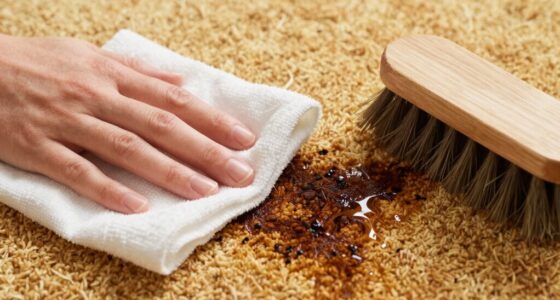
Pet stain enzymes work by breaking down organic residues like urine, feces, and vomit that cause persistent odors. But many odor removers fail because their enzymes aren’t stable, or they don’t reach deep into fibers. Factors like incorrect storage, dried stains, or textured surfaces can also hinder effectiveness. To get the best results, you need a product with proper enzyme formulation and application. Keep exploring to discover how you can maximize your odor removal efforts.
Key Takeaways
- Enzyme stability can decline over time due to poor formulation or improper storage, reducing odor removal effectiveness.
- Pet hair and dense fibers can block enzyme contact with organic stains, limiting their ability to digest odors.
- Some products contain inadequate or improperly balanced enzymes, leading to incomplete breakdown of odor-causing molecules.
- Environmental factors like temperature and pH affect enzyme activity, causing some odor removers to perform inconsistently.
- Enzymes may degrade or become inactive before use, especially if not stored properly, resulting in persistent pet odors.
What Are Pet Stain Enzymes and How Do They Work?
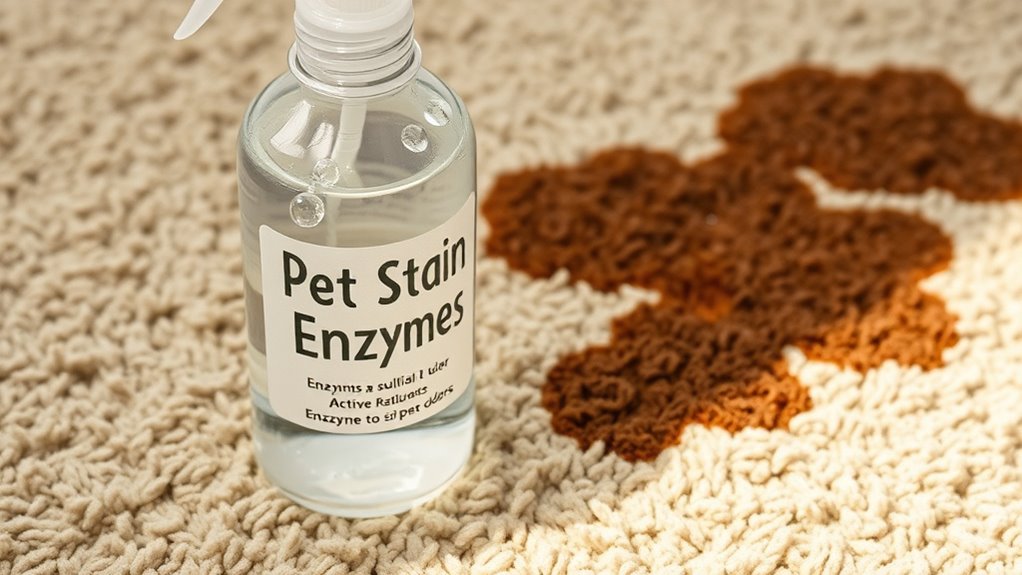
Pet stain enzymes are specialized cleaning agents that break down organic matter caused by pets, such as urine, feces, and vomit. When you apply them, enzyme activation occurs as the enzymes interact with the organic compounds, starting the chemical process that targets stains. This activation is essential because it allows the enzymes to effectively penetrate the stain, reaching deep into fibers where odors and residues hide. The enzymes digest the organic molecules, transforming them into simpler, odorless substances. This process not only helps remove visible stains but also ensures that odors are fully neutralized. Because of their ability to penetrate deep and activate quickly, pet stain enzymes are often more effective than regular cleaners at eliminating stubborn pet messes. Additionally, understanding the Free Floating nature of enzymes helps explain how they disperse and activate throughout the affected area for thorough cleaning. The enzyme activity depends on proper conditions such as pH and temperature, which can influence their effectiveness.
The Science Behind Organic Stains and Odors
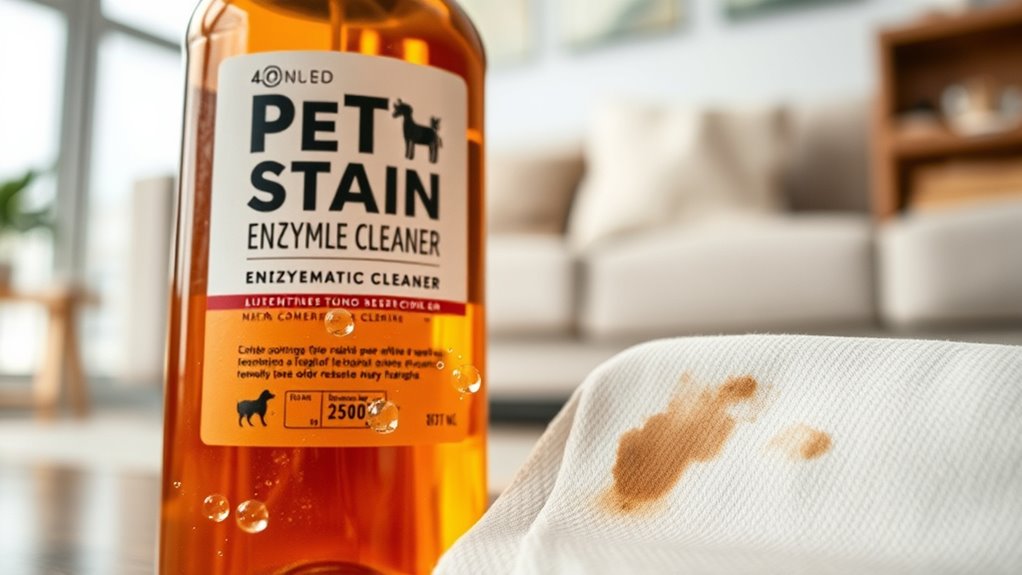
Organic stains and odors are caused by compounds like proteins, urea, and fats that break down into smaller, volatile molecules. When these substances persist on surfaces, they emit unpleasant smells and cause staining. The key to removing these stains lies in understanding biological breakdown. Enzyme stability plays a vital role because enzymes must remain active long enough to target and degrade organic molecules effectively. If enzymes denature or lose their activity prematurely, they won’t break down stains fully, leading to lingering odors. That’s why effective pet odor removers rely on enzymes engineered for ideal stability. By facilitating biological breakdown, these enzymes transform stubborn organic compounds into harmless, odorless substances, making cleaning more efficient and preventing future odor re-emergence. Additionally, the role of AI in product development is increasingly significant in designing enzymes with enhanced stability and performance. Leveraging biotechnology advances, researchers can now create enzymes tailored for specific cleaning challenges, further improving the efficacy of odor removers. Advances in enzyme engineering also help improve enzyme longevity, ensuring that enzymes stay active longer during the cleaning process for better results. Furthermore, understanding the molecular mechanisms behind enzyme action can lead to more targeted and effective formulations.
Types of Enzymes Used in Pet Odor Cleaners
Enzyme-based pet odor cleaners typically contain a combination of specific enzymes designed to target different types of organic stains. The most common enzymes include proteases, amylases, and lipases, each breaking down proteins, starches, and fats, respectively. These enzymes are derived from carefully selected microbial strains, which are chosen for their ability to produce stable enzymes that remain active in cleaning solutions. Enzyme stability is vital; if enzymes degrade quickly or lose activity due to pH or temperature changes, cleaning becomes ineffective. Manufacturers often select microbial strains optimized for durability and activity, ensuring that the enzymes can work effectively over time. By understanding the types of enzymes and their microbial sources, you can better assess the quality of pet odor cleaners. Enzyme stability plays a crucial role in ensuring long-lasting and effective odor removal, especially given the microbial strains used in production are key to enzyme performance.
Why Some Commercial Products Fail to Eliminate Odors
You might find that some commercial products don’t fully eliminate pet odors because their enzyme formulas aren’t strong enough or properly balanced. When enzymes aren’t effective, they can’t break down the odor molecules completely. As a result, lingering smells remain even after cleaning. Proper enzyme formulation is essential to ensure the breakdown of complex odor-causing compounds. Additionally, enzyme stability can impact how well these products perform over time, making proper formulation even more critical. Ensuring these enzymes are temperature resistant helps maintain their effectiveness across different environmental conditions. Incorporating insights from market research can help manufacturers develop more effective formulations that address common issues with odor removal, especially considering the piercing care and hygiene practices that can influence bacterial growth and odor persistence.
Inadequate Enzyme Composition
Many commercial pet stain products fail to fully eliminate odors because their enzyme formulations are often inadequate or improperly balanced. One major issue is enzyme stability; enzymes can degrade over time or under unfavorable conditions, reducing their effectiveness. If the formulation doesn’t protect enzymes from heat, light, or pH fluctuations, their ability to break down odors diminishes. Additionally, formulation challenges can lead to an imbalance of enzymes, meaning they might target only certain components of pet stains without addressing the full odor profile. Without proper formulation, enzymes may lose activity before use or fail to work efficiently once applied. Proper formulation techniques that consider enzyme stability are essential for maintaining effectiveness over time. Furthermore, formulation science plays a crucial role in developing products that retain enzyme activity during storage and use. As a result, these products often fall short, leaving stubborn odors behind instead of completely neutralizing them. Recognizing the importance of enzyme technology advancements can help improve the effectiveness of odor removers.
Ineffective Odor Breakdown
Often, commercial pet stain products fail to fully eliminate odors because their enzymes don’t break down all the odor-causing compounds effectively. This is due to incomplete chemical reactions or compromised enzyme stability in certain conditions. If enzymes become unstable, they can lose activity before fully degrading odor molecules. Factors like temperature, pH, or exposure to air can hinder enzyme performance. As a result, some odors persist despite the product’s claims. To better understand, consider this table:
| Factor | Effect on Enzymes | Result |
|---|---|---|
| Temperature | Too high or low | Reduced enzyme activity |
| pH level | Outside optimal range | Enzyme denaturation |
| Air exposure | Oxidation | Enzyme degradation |
| Storage conditions | Poor storage | Loss of enzyme stability |
| Odor molecules | Resistant compounds | Incomplete breakdown |
Ensuring proper conditions keeps enzymes stable, promoting effective odor removal, especially when considering enzyme stability and environmental factors.
Factors That Affect the Effectiveness of Enzyme Cleaners
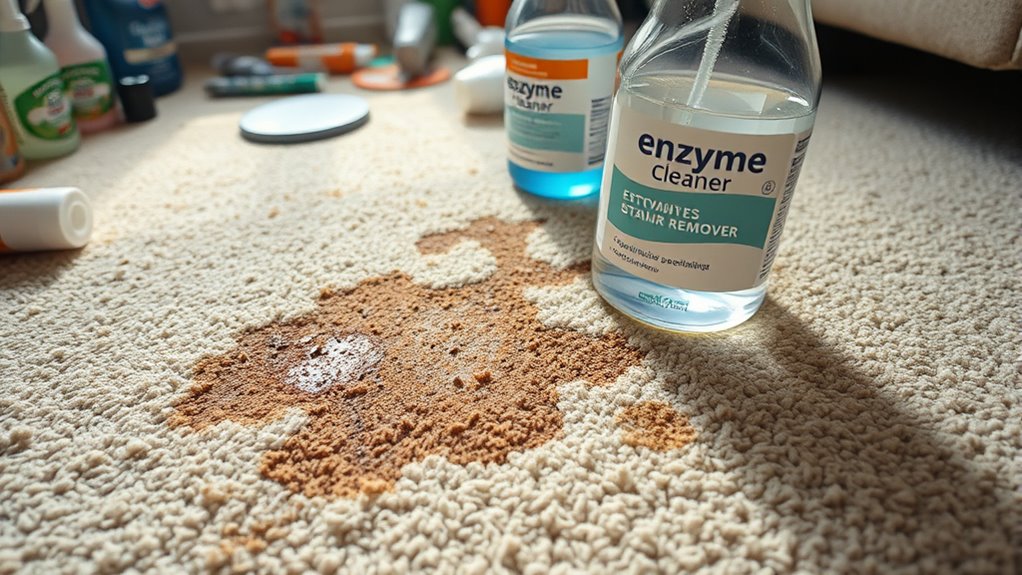
The effectiveness of enzyme cleaners depends on several key factors that influence their ability to break down stains and odors. One major factor is the presence of pet hair, which can trap dirt and enzymes, reducing contact with the stain. If pet hair clings to carpet fibers, it prevents the enzymes from reaching underlying residues. Additionally, carpet fibers can impact how well enzymes penetrate and react with stains; dense or textured fibers may block enzyme contact, limiting their effectiveness. Temperature also plays a role—warm conditions help enzymes activate, while cold environments slow them down. In conclusion, the age and type of stain matter; fresh stains are easier for enzymes to break down than dried or set-in spots. Understanding these factors helps you optimize enzyme cleaner use for better results.
Tips for Choosing the Right Enzyme-Based Odor Remover
Choosing the right enzyme-based odor remover involves considering the specific type of odor you’re dealing with and the product’s formulation. Look for options that match your needs, especially if you prefer natural remedies or eco-friendly formulations. To make an informed choice, evaluate these factors:
Choose enzyme odor removers that match your needs, prioritize natural ingredients, and check eco-friendly certifications.
- Effectiveness on the target odor
- Presence of natural enzymes over harsh chemicals
- Certifications for eco-friendliness
- Customer reviews and reputation
Opting for products with natural remedies ensures safe, non-toxic use around pets and family. Eco-friendly formulations not only help protect the environment but also tend to be gentler on surfaces. Understanding enzyme function can help you better compare products and choose the most suitable option. Additionally, recognizing how enzymes work at a cellular level can give you insight into their specific action on organic stains and odors. When selecting a product, consider the enzyme specificity, which determines how effectively it targets particular odors or stains, thus enhancing its overall performance. Moreover, paying attention to the formulation stability of the enzyme product can influence its effectiveness over time and under different storage conditions.
Proper Usage to Maximize Enzyme Cleaner Results
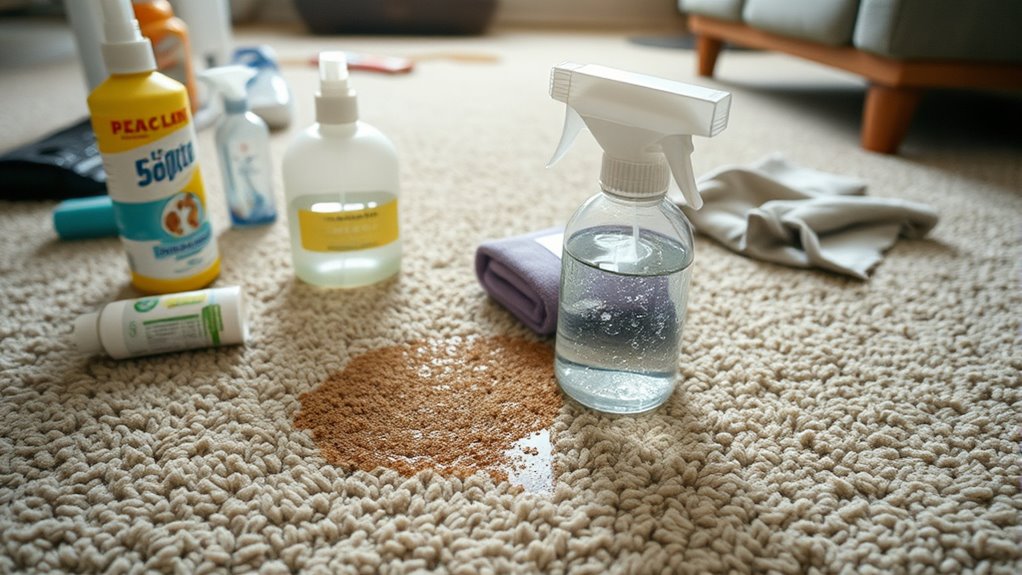
To get the best results from your enzyme cleaner, you need to apply it correctly and allow it sufficient time to work. Start by understanding that enzyme shelf life is limited, so use fresh product for ideal effectiveness. When applying, follow the recommended application techniques—use enough solution to fully saturate the stain and odor area. Avoid overspraying or partial coverage, which can reduce effectiveness. After application, allow the enzyme cleaner to sit undisturbed for at least 15-30 minutes, or longer if the stain is deep. This gives enzymes time to break down the organic matter. Remember, patience and proper technique are key to maximizing enzyme cleaner results and ensuring stubborn odors and stains are thoroughly eliminated. Additionally, storing enzyme cleaners properly can help maintain their effectiveness, preventing premature degradation. Proper storage conditions, such as keeping the product in a cool, dry place, help preserve enzyme activity for future use.
Frequently Asked Questions
Are Enzyme Cleaners Safe for Pets and Children?
Yes, enzyme cleaners are generally safe for pets and children when you choose products with pet-safe ingredients. Always check the label for enzyme ingredients that are non-toxic and specifically designed for pet safety. You should follow the manufacturer’s instructions carefully and allow the area to dry completely before allowing pets or children back onto it. This guarantees the enzyme cleaner effectively removes stains and odors without risking harm.
How Long Does It Take for Enzyme Cleaners to Work?
Imagine you’re cleaning a stubborn pet stain and wonder how long it takes. Typically, enzyme cleaners need 10-30 minutes for enzyme concentration to break down molecules effectively, but for deep stains, you might need to let it sit for up to 24 hours. The cleaning duration depends on stain severity and product formulation. Patience guarantees enzymes work thoroughly, leaving your space fresh and odor-free.
Can Enzyme Cleaners Be Used on All Types of Fabrics?
You can’t use enzyme cleaners on all fabrics, so check fabric compatibility first. Delicate materials like silk or wool may get damaged, while sturdy fabrics like cotton usually handle enzyme concentration well. Always read the label for specific instructions and test a small, hidden area before full application. Properly selecting your enzyme cleaner based on fabric type ensures effective stain removal without harming your textiles.
Do Enzyme Cleaners Require Special Storage Conditions?
You need to store enzyme cleaners carefully, as they’re more delicate than regular cleaners. Keep them in a cool, dry place to maintain enzyme stability and prevent degradation. Avoid exposure to heat, sunlight, or freezing temperatures, which can compromise their effectiveness. Think of it as keeping a fine wine—proper storage conditions are key to ensuring they work when you need them most. Proper storage helps your enzyme cleaner perform at its best.
Are Enzyme-Based Products Environmentally Friendly?
Yes, enzyme-based products are environmentally friendly because they often use biodegradable formulas and eco-friendly ingredients. You’ll find that these cleaners break down naturally without harming the environment, making them a safe choice for your home and the planet. By choosing enzyme cleaners, you contribute to reducing chemical waste and support sustainable practices. They’re effective for pet stains and odors while being gentle on the environment.
Conclusion
Understanding pet stain enzymes helps you pick the right odor remover. Did you know that over 60% of pet owners struggle with lingering odors despite using commercial products? By choosing enzyme-based cleaners and following proper application tips, you can effectively eliminate stains and odors. Don’t give up—knowing how enzymes work puts you in control, ensuring your home stays fresh and inviting for both you and your furry friends.