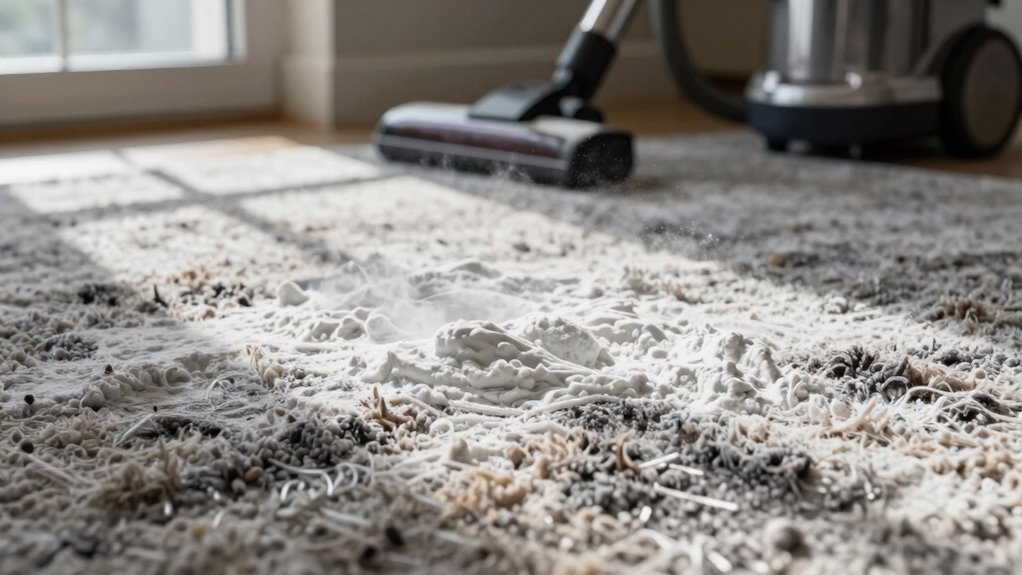

Baking soda isn’t the universal solution for carpet odors that many think it is. It only masks surface smells, leaving deeper, moisture-related odors unaddressed. If not thoroughly vacuumed, residues can attract more dirt, damaging your carpet and complicating future cleaning. Plus, using it frequently can strain your vacuum’s motor. So, while it’s a quick fix, relying solely on baking soda could make things worse. There’s much more to uncover about effective carpet care.
Key Takeaways
- Baking soda only masks surface odors and fails to eliminate deep-rooted or moisture-related smells trapped in carpet padding.
- Incomplete vacuuming can leave fine baking soda residues that attract more dirt, complicating future cleaning efforts.
- Baking soda’s abrasiveness can damage delicate carpet fibers, especially in high-end carpets, potentially voiding warranties.
- Frequent use of baking soda can strain vacuum motors and reduce suction efficiency, leading to premature wear and tear.
- Relying solely on baking soda for deodorizing carpets can create sticky residues that hinder effective professional cleaning later.
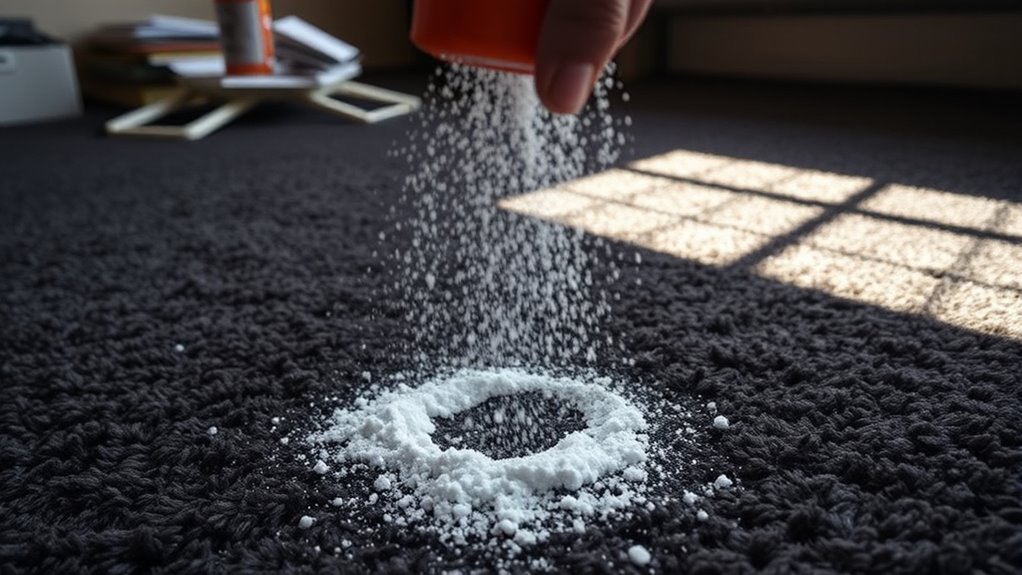
When it comes to carpet deodorizing, many people fall for common myths that can lead to ineffective cleaning and potential damage. One widely held belief is that baking soda is a miracle solution for all carpet odors. While it can help neutralize surface-level smells, it often fails to reach deeper issues—like moisture-related odors trapped in the carpet backing or padding. So, when you sprinkle baking soda on a stain and leave it overnight, you might think you’re doing a thorough job. Unfortunately, it only masks the odor temporarily without addressing the root causes, which often require professional hot-water extraction to eliminate bacteria and residue effectively. Additionally, just as high refresh rates enhance gaming experiences, addressing deeper carpet issues requires more than surface-level solutions.
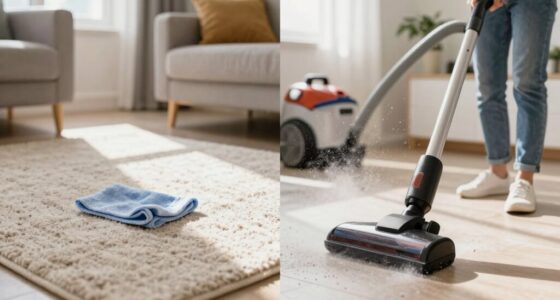
Another misconception is that baking soda won’t leave any residue behind. The truth is, incomplete vacuuming can leave fine particles that attract more dirt, making your carpet look dull and feel gritty. If you continually apply baking soda without fully removing it, you may end up needing professional cleaning to extract the buildup from your carpet fibers. Plus, combining baking soda with other powders can create sticky residues, complicating future cleaning efforts.
Baking soda can leave fine particles that attract dirt, leading to a dull, gritty carpet if not properly vacuumed.
You might also think that baking soda is harmless to your carpet fibers, but that’s not the case. Its mild abrasive properties can roughen delicate fibers over time, especially if you apply it aggressively or use mechanical agitation. This can lead to fraying and fuzzing, particularly on high-end carpets. Manufacturers often advise testing a hidden area before using any abrasive treatments, as improper use might void your warranty.
And let’s not forget about your vacuum cleaner. Frequent use of baking soda can lead to motor strain and reduced suction, especially in models with weaker filtration. Fine particles can make their way into the motor, causing premature wear. To avoid this, it’s best to use a vacuum designed to handle such powders, or switch to specialized attachments when cleaning up large amounts.
Frequently Asked Questions
Can Baking Soda Remove Tough Stains From Carpets?
No, baking soda alone can’t effectively remove tough stains from carpets. While it can help lift some light stains when combined with water or vinegar, its effectiveness is limited compared to specialized stain removers. For stubborn stains, you’ll need enzymatic or solvent-based cleaners that break down the stain molecules instead of just absorbing them. Always test a hidden area first to avoid damaging your carpet’s color or texture.
How Often Should I Deodorize My Carpets?
You should deodorize your carpets every 1 to 3 months, depending on foot traffic and pet activity. If you notice persistent odors or stains, it’s best to address them sooner. Regular vacuuming and spot cleaning can help maintain freshness. For deeper cleaning, consider professional services annually. Always test any deodorizing methods on a small area first to make sure they won’t damage your carpet’s fibers or color. Maintain a schedule for best results!
Is Baking Soda Safe for All Carpet Types?
While baking soda might seem like a carpet’s best friend, it’s not safe for all carpet types. You’ve got to tread carefully, especially with delicate fibers like wool or high-end synthetics. Its mild abrasiveness can cause wear and tear, making your carpet look tired over time. Always test a hidden area first, and consider alternatives for sensitive materials to keep your carpets looking fabulous without the risk of damage.
What Are the Best Alternatives to Baking Soda for Deodorizing?
For deodorizing carpets, try alternatives like enzymatic cleaners, which break down odor-causing substances effectively. Activated charcoal is another great choice, as it absorbs odors without leaving residues. You might also consider using white vinegar diluted with water; it neutralizes smells and cleans at the same time. If you’re dealing with strong odors, professional hot-water extraction can provide deep cleaning, ensuring that all moisture and bacteria are removed for a fresh carpet.
Does Baking Soda Help With Pet Urine Odors?
Yes, baking soda can help with pet urine odors, but it’s not a complete solution. It neutralizes surface-level smells, making it effective for light odors. However, if the urine has soaked deep into the carpet fibers or padding, it might not eliminate the smell entirely. For stubborn odors, consider using enzymatic cleaners that break down the odor-causing compounds more effectively. Always test a small area first to avoid any potential discoloration.
Conclusion
In summary, while baking soda is often hailed as a miracle deodorizer, it can sometimes trap odors rather than eliminate them. In fact, studies show that over 30% of homeowners experience lingering smells even after using baking soda on their carpets. Instead of relying solely on this common myth, consider professional cleaning methods or specialized products for truly effective results. Your carpets deserve the best care to keep your home fresh and inviting!