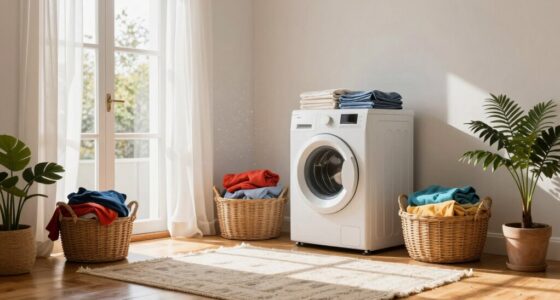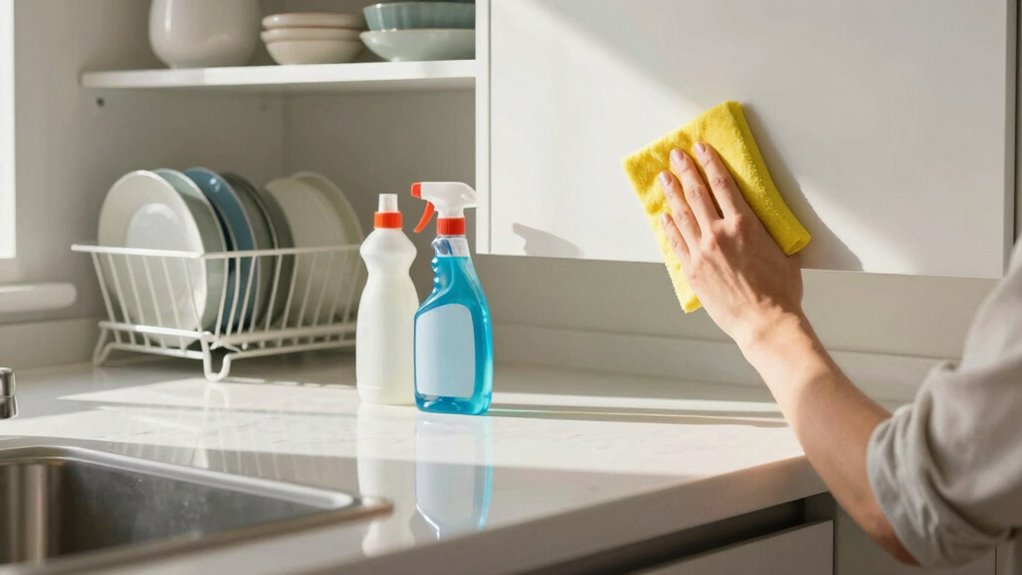

To clean faster with the top-down rule, start at the highest surfaces like ceilings and light fixtures, then work your way down to walls, furniture, and finally, floors. This method prevents dust from settling on clean areas and helps you avoid re-cleaning. If you encounter small messes, feel free to break the rule for quick cleanup. Stick with the top-down approach for larger tasks, and you’ll discover even more effective strategies ahead.
Key Takeaways
- Start cleaning from the top, including ceilings and light fixtures, to prevent dust from falling onto already cleaned surfaces.
- Use microfiber tools and extendable dusters for efficient dust capture and safe access to high areas.
- Clean floors last to avoid cross-contamination and ensure thoroughness after upper surfaces are finished.
- Maintain a structured routine to enhance motivation and reduce cleaning-related stress.
- Be flexible; break the top-down rule for immediate messes, using tools like roller sweepers for quick cleanups.
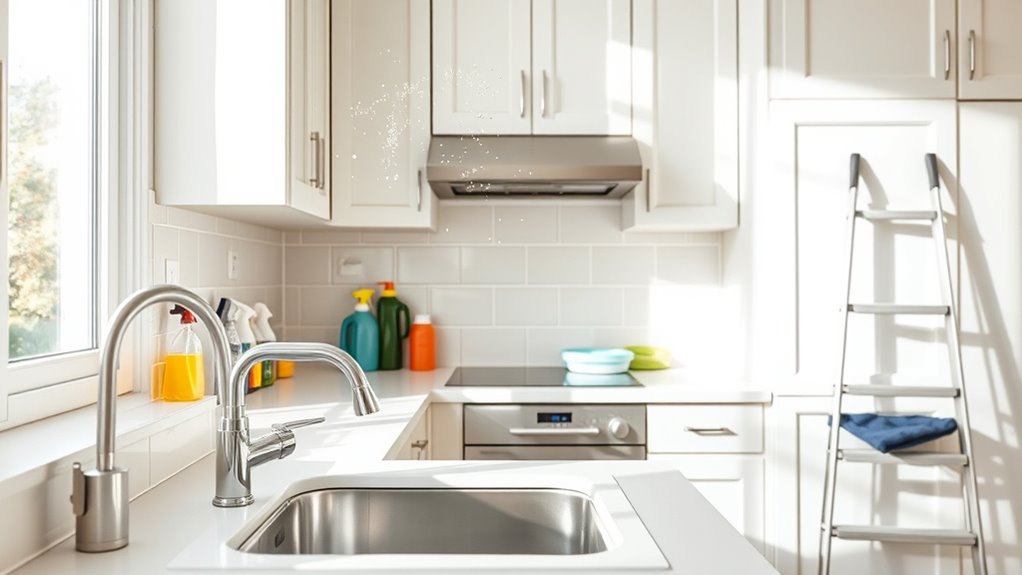
Have you ever wondered how to make cleaning feel less like a chore and more like a breeze? The top-down cleaning rule could be your new best friend. This method focuses on starting high and working your way down, which makes perfect sense—dust and debris naturally fall, so cleaning ceilings and light fixtures first prevents you from having to redo lower surfaces later. You’ll find that by following this sequence—ceilings, walls, furniture, counters, and finally floors—you’ll save time and effort, leaving your space spotless without feeling overwhelmed.
One of the key benefits of this approach is its efficiency. Studies show that a single-pass cleaning method can boost productivity by 5.5 percent. Instead of making multiple trips back and forth, you can streamline your tasks. For instance, using microfiber flat mops and cloths will help capture dust effectively without scattering particles, making your upper-surface cleaning more efficient. Plus, with extendable dusters, you can easily reach high fixtures without climbing ladders, which cuts down on time and effort considerably. Additionally, microfiber materials absorb more dirt and reduce bacteria levels, enhancing your overall cleaning effectiveness. Using essential oils such as eucalyptus or lavender can also create a refreshing environment as you clean.
The top-down cleaning method boosts efficiency, allowing you to clean smarter, not harder, while minimizing dust scattering.
When it comes to your floors, save them for last. This allows you to concentrate on heavier tasks after you’ve tackled the lighter, dry-cleaning jobs. By waiting until the end to sweep, vacuum, or mop, you minimize cross-contamination and maximize your cleaning efficiency. Consider using mechanical sweepers for quick floor collections after upper-surface work; they’ll save you from the hassle of setting up larger machines for small messes.
Beyond saving time, this cleaning order has psychological benefits too. It creates a sense of control and accomplishment, which can alleviate stress. As you see the visible progress from cleaning high to low, it reinforces your motivation and reduces the temptation to procrastinate. The structured nature of this routine lowers the cognitive load, allowing you to clean more quickly and efficiently without second-guessing your next step.
Sometimes, you might encounter small messes that need immediate attention, and that’s okay! Feel free to break the top-down rule for quick cleanups. Use a roller sweeper for those little spills or messes, as it’s designed for quick collections without the fuss of full equipment setups. Embrace the flexibility while enjoying the advantages of a top-down approach, and cleaning will become not just quicker, but also a lot more satisfying.
Frequently Asked Questions
How Often Should I Clean My Windows Using the Top-Down Rule?
You should clean your windows at least once a month using the top-down rule. Start with the sills to prevent dirt from falling onto clean surfaces. Regular cleaning helps maintain a clear view and reduces buildup. If you notice dust or spots more frequently, feel free to clean them as needed. Keeping up with this schedule guarantees your windows stay in top shape and complements the overall cleanliness of your home.
Can I Use the Top-Down Rule in Small Spaces?
Yes, you can definitely use the top-down rule in small spaces. In fact, it’s an effective way to maintain cleanliness without missing spots. Start at the highest surfaces like shelves and work your way down to counters and floors. Just remember, even in tighter areas, tackling the highest points first helps prevent dirt from falling onto already cleaned surfaces. Embrace this method, and you’ll find your small space stays cleaner and feels more organized!
What Cleaning Products Are Best for Glass Surfaces?
For glass surfaces, you’ll want to use a quality glass cleaner or a vinegar-water solution. These products effectively cut through grime and leave your glass streak-free. Microfiber cloths are your best friends here, as they won’t scratch the surface and help absorb moisture. Avoid using paper towels, as they can leave lint behind. Remember to clean on cloudy days or when the sun isn’t shining directly to prevent streaks from drying too quickly.
Is Steam Cleaning Safe for All Surfaces?
Steam cleaning isn’t safe for all surfaces. While it’s effective on many hard surfaces like tile and sealed hardwood, it can damage materials like unsealed wood, some laminates, and delicate fabrics. You wouldn’t want to ruin your favorite upholstery or flooring! Always check manufacturer guidelines before using steam, and test a small area if you’re unsure. It’s better to be cautious than to risk costly damage while trying to clean efficiently.
How Do I Maintain Cleaning Tools for Longer Use?
To maintain your cleaning tools for longer use, regularly clean and store them properly. Rinse mops and cloths after each use, and let them dry completely to prevent mold. Inspect brushes and vacuum filters for debris, replacing them as needed. Use appropriate storage solutions to keep tools organized and prevent damage. Ultimately, follow manufacturer guidelines for care, and avoid using harsh chemicals that can wear down the materials over time.
Conclusion
By embracing the top-down rule, you’ll transform your cleaning routine from a daunting chore into a breeze. This method not only saves you time but also guarantees a thorough clean. Remember, though, it’s okay to break the rule when a mess demands it—just like a painter who sometimes steps back to add a splash of color. So grab your supplies and start from the top; you’ll see how quickly you can conquer your space!