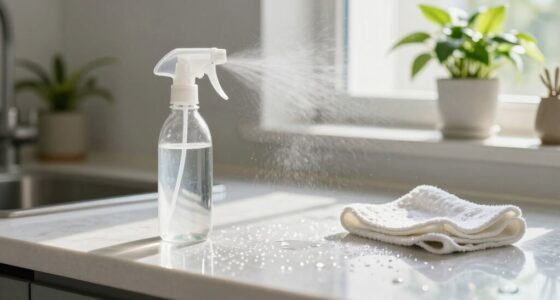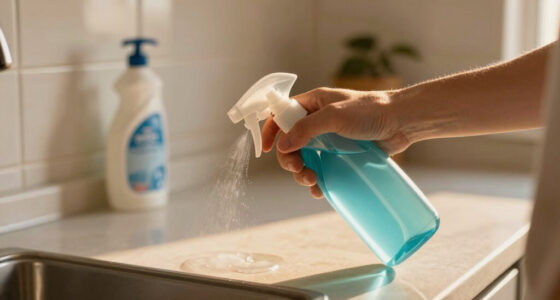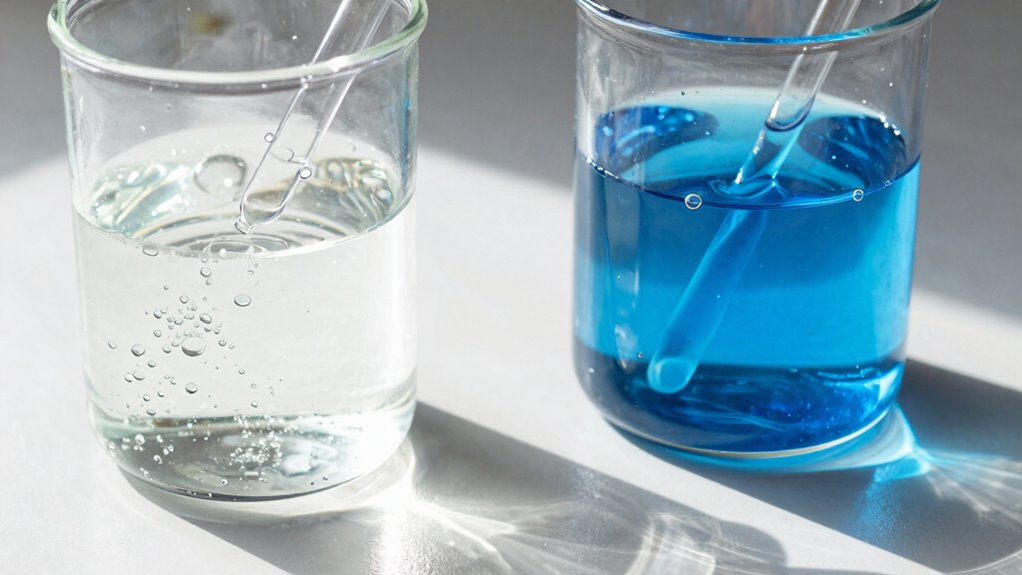

When choosing between bleach and hydrogen peroxide, it depends on your cleaning needs. Use bleach for tough stains and disinfecting hard, non-porous surfaces; it works quickly but can fade fabrics. Hydrogen peroxide is gentler on porous materials and leaves no harmful residues, making it safer around kids and pets. Remember to pre-clean surfaces for best results. Want to know more about their specific uses and safety precautions? There’s a lot to uncover!
Key Takeaways
- Bleach is effective for disinfecting hard, non-porous surfaces and removing tough stains quickly.
- Hydrogen peroxide is gentler and ideal for disinfecting porous materials, fabrics, and delicate surfaces.
- Pre-cleaning surfaces enhances the effectiveness of both bleach and hydrogen peroxide against pathogens.
- Bleach has a strong odor and can irritate respiratory systems; use it in well-ventilated areas.
- Hydrogen peroxide decomposes into safe byproducts, leaving no harmful residues, making it environmentally friendly.

When it comes to disinfecting your home, understanding the differences between bleach and hydrogen peroxide can help you make the right choice for your cleaning needs. Sodium hypochlorite, or bleach, acts as a powerful oxidizer that effectively inactivates a wide range of bacteria, viruses, and fungi. It works quickly and is particularly effective on non-porous surfaces. If you need to tackle tough stains or disinfect hard surfaces, bleach might be your go-to option. Just remember, it can corrode metals and fade fabrics if not used carefully. Additionally, maintaining pure air quality in your home can enhance the overall effectiveness of your cleaning efforts.
On the other hand, hydrogen peroxide (H2O2) is generally gentler on materials, making it a better choice for porous surfaces like grout or delicate fabrics. It decomposes into water and oxygen, leaving no harmful residues behind, which is a significant advantage if you’re concerned about safety, especially around children and pets. Hydrogen peroxide’s oxidizing power ensures that it can effectively disinfect kitchen and bathroom surfaces, although it often requires longer contact times than bleach to achieve similar disinfection levels on some surfaces.
Hydrogen peroxide is gentler on materials, making it ideal for porous surfaces while leaving no harmful residues behind.
When you’re disinfecting, remember that effectiveness can be reduced by dirt or organic materials. For both bleach and hydrogen peroxide, pre-cleaning surfaces can enhance their antimicrobial action. If you’re dealing with biofilms, bleach tends to denature proteins more effectively, while hydrogen peroxide can achieve significant reductions against organisms like S. aureus.
Safety is another vital consideration. Bleach has a strong odor and can irritate your eyes and lungs, necessitating good ventilation during use. Mixing bleach with ammonia or acids can create toxic gases, so always use it cautiously. In contrast, hydrogen peroxide, especially at household concentrations, poses a lower inhalation risk but can still irritate the skin or eyes.
When it comes to storage, hydrogen peroxide loses potency when exposed to light and heat, while bleach can degrade over time as well. Stabilized hydrogen peroxide formulations can prolong shelf life and enhance effectiveness without the toxic residues that bleach may leave behind.

USANOOKS Microfiber Cleaning Cloth Grey - 12 Pcs (12.5"x12.5") - High Performance - 1200 Washes, Ultra Absorbent Microfiber Towel Weave Grime & Liquid for Streak-Free Mirror Shine - Car Washing Cloth
- High Absorbency Microfiber: Locks in 8-10x its weight in liquids
- Durable 2.5mm Thick Design: Resists lint, scratches, and shedding
- Swirl-Free Mirror Shine: Rapid dry layers prevent damage
As an affiliate, we earn on qualifying purchases.
Frequently Asked Questions
Can I Mix Bleach and Hydrogen Peroxide for Better Cleaning?
No, you shouldn’t mix bleach and hydrogen peroxide. Combining these two can create harmful gases, like chlorine and chloramines, which pose serious health risks. Instead, use them separately for better cleaning results. Start with one cleaner, rinse the surface thoroughly, and then apply the other. This way, you’ll maximize their effectiveness while keeping your environment safe. Always follow the instructions on the labels for ideal results and safety.
How Do I Store Bleach and Hydrogen Peroxide Safely?
To keep your bleach and hydrogen peroxide in tip-top shape, store them in cool, dark places, away from sunlight and heat. Guarantee they’re in tightly sealed containers, preferably original ones, to avoid spills. Keep them separated; mixing can lead to unwanted reactions. For bleach, avoid metal containers, as they can corrode. Regularly check for expiration dates, and remember, a little care goes a long way in maintaining their effectiveness!
Are There Any Health Risks From Using These Products?
Yes, there are health risks when using bleach and hydrogen peroxide. Bleach can irritate your skin, eyes, and respiratory system, especially in poorly ventilated areas. Mixing it with acids or ammonia can produce toxic gases. Hydrogen peroxide, while generally safer, can still cause skin and eye irritation, especially in higher concentrations. Always wear protective gear and guarantee good ventilation when using these products to minimize health risks.
What Are the Effective Concentrations for Household Use?
For household use, a typical effective concentration for chlorine bleach is around 5-6% sodium hypochlorite, while hydrogen peroxide should be about 3%. You’ll want to dilute bleach with water (usually 1 part bleach to 10 parts water for disinfection) and use hydrogen peroxide undiluted or as per product instructions. Always check labels for specific recommendations, ensuring safety and effectiveness in your cleaning routine. Remember, pre-cleaning surfaces can enhance results!
How Should I Dispose of Unused Bleach or Hydrogen Peroxide?
To dispose of unused bleach or hydrogen peroxide, check your local regulations first. For small amounts, you can dilute bleach with water and pour it down the drain, followed by plenty of water. For hydrogen peroxide, you can simply pour it down the drain as well, as it breaks down into water and oxygen. Always avoid mixing these chemicals with other substances during disposal to prevent harmful reactions.

Amazon Basics Microfiber Cleaning Cloths, Ultra Absorbent, Lint Free, Streak Free, Non-Abrasive, Reusable and Washable, 16" x 12", Blue/White/Yellow, Pack of 24
- Size: 16 x 12 inches
- Pack Size: 24 cloths
- Material: Microfiber
As an affiliate, we earn on qualifying purchases.
Conclusion
In the battle between bleach and hydrogen peroxide, think of bleach as a fierce warrior, charging in to obliterate tough stains and bacteria with its relentless power. In contrast, hydrogen peroxide is a gentle healer, soothing surfaces and lifting grime with its nurturing touch. Choosing the right one is like picking the right tool for a delicate art project—each has its place, and understanding their strengths means you can craft a cleaner, safer home that reflects your care and intention.

10 Pack Microfiber Cleaning Cloths, Large 30" x 16" Absorbent Streak Free Lint Free Washable Reusable Towels for Floor Mop, Kitchen, Car, Windows, Glass, Stainless Steel, Multi-Purpose Rags, Blue
- EXTRA LARGE SIZE: Each microfiber cleaning cloth measures...
- STREAK FREE & LINT FREE: These microfiber cloths leave surfaces...
- PREMIUM MATERIAL & HIGHLY ABSORBENT: Made from high quality microfiber...
As an affiliate, we earn on qualifying purchases.
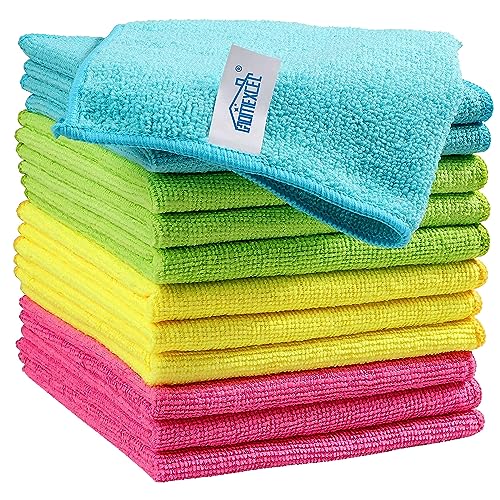
HOMEXCEL 12PK Microfiber Cleaning Cloth, Cleaning Rag for Home, 11.5x11.5in
- Streak-Free Cleaning: Effective on various surfaces with minimal effort
- Lint-Free & Scratch-Safe: Protects delicate finishes from scratches
- Highly Absorbent: Quickly soaks up liquids and grime
As an affiliate, we earn on qualifying purchases.